

French Country Accent Chairs
French country accent chairs bring provincial seating into modern rooms, combining walnut frames with painted wood and traditional upholstery.
French Country Accent Chairs
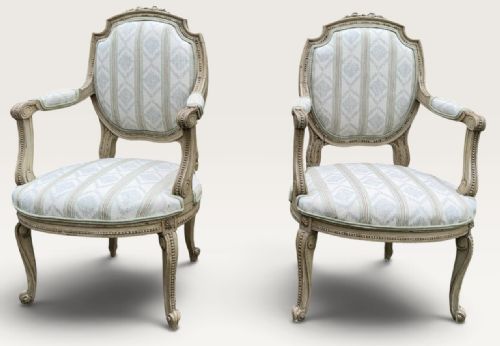
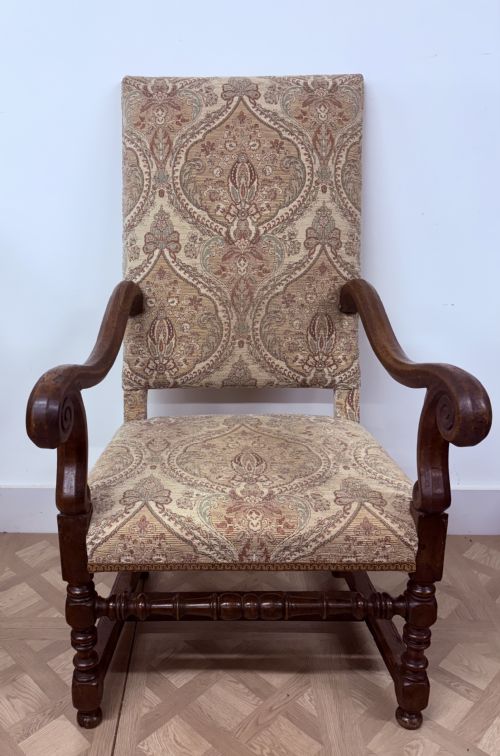
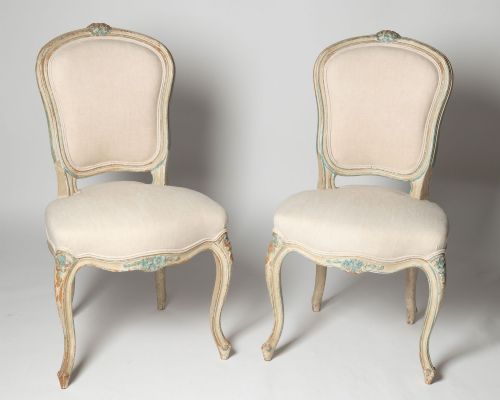
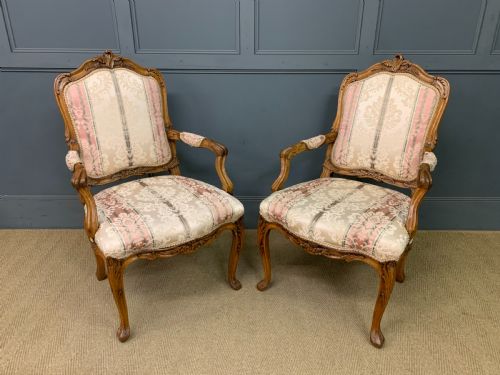
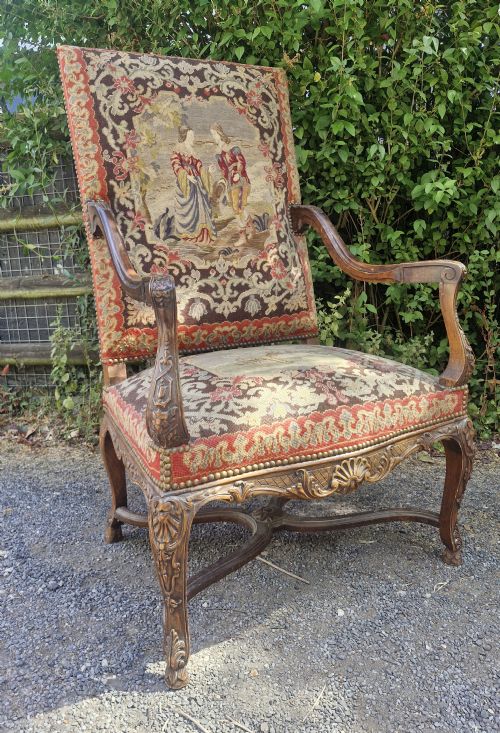
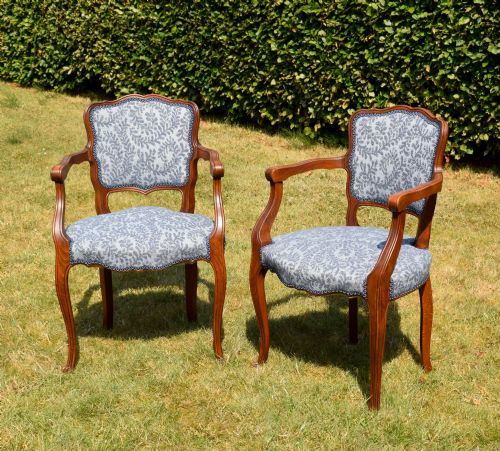
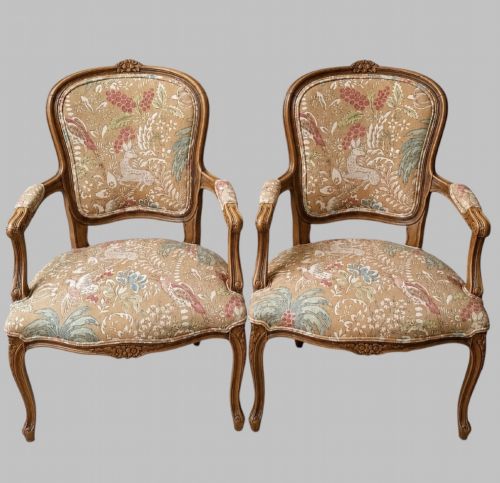
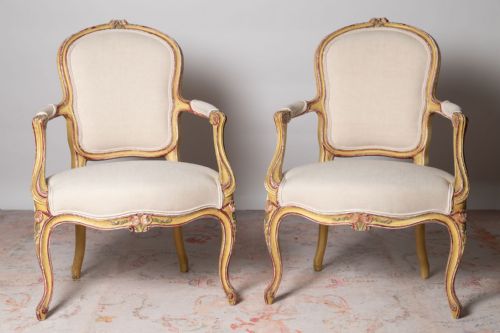
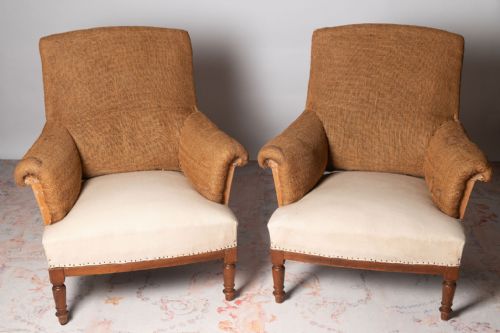
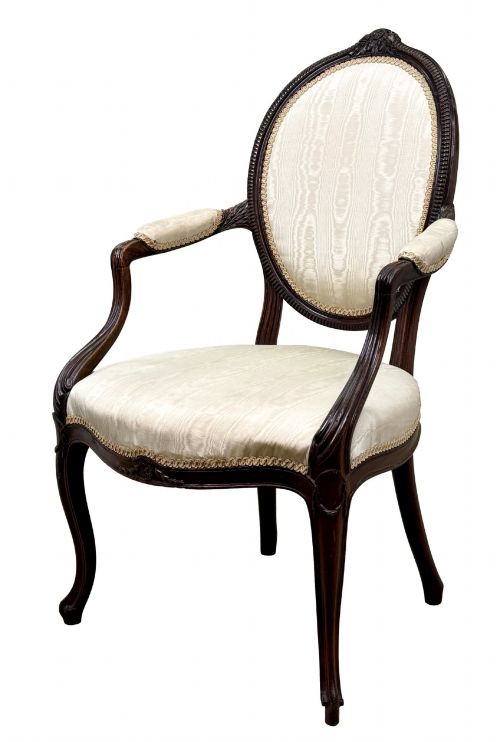
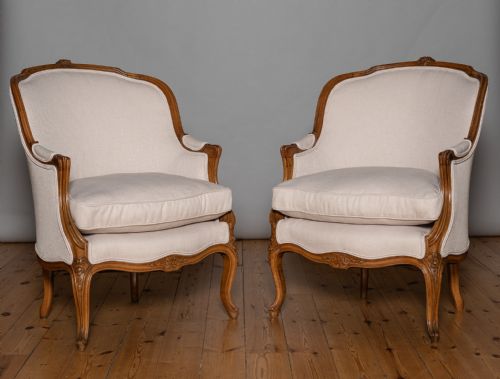
French country accent chairs encompass armchairs, side chairs, slipper chairs, and salon chairs originating from various provincial and metropolitan workshops. When searching for French country accent chairs, buyers typically encounter pieces spanning from the seventeenth century through the early twentieth century. Common forms include open armchairs, fauteuils, and bergere chairs shaped by regional woodworking traditions.
Originating across different centuries, these chairs reflect the evolving domestic tastes of French makers. Eighteenth-century pieces sit alongside nineteenth-century interpretations and early twentieth-century reproductions, each maintaining a distinct provincial character. Buyers find both finished seating ready for placement and frames awaiting fresh fabric.
Materials and construction methods
Cabinetmakers constructed these seating frames using solid hardwoods like walnut, beech, and mahogany. Skilled artisans shaped the timber through hand carving, producing flowing lines on armrests, rails, and cabriole legs. Structural joints relied on traditional woodworking techniques to ensure lasting stability.
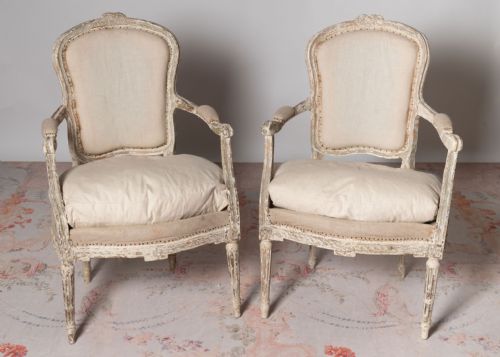
Surfaces received various treatments including applied paint, original gilt-wood, or polished finishes that highlighted the natural grain of the walnut. Workshops integrated brass hardware where appropriate to reinforce structural points or decorative mounts. Painted wood often showed deliberate distressing or survived in its original patinated coat.
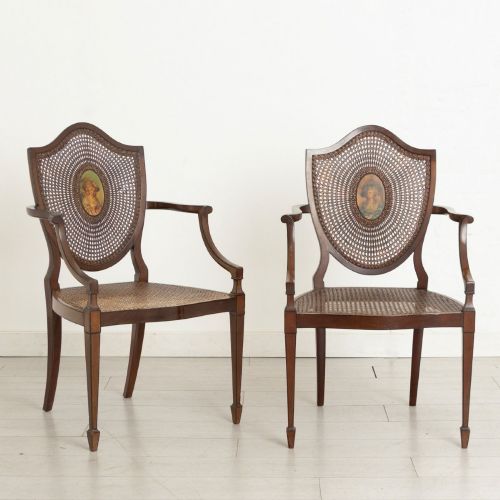
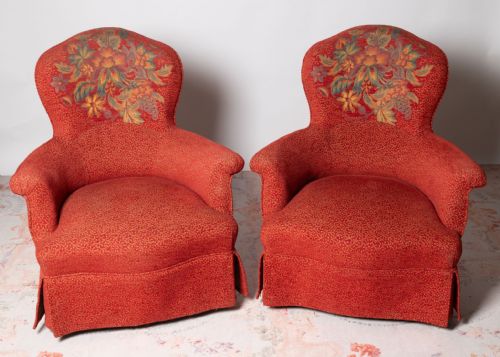
Upholstery techniques involved traditional stuffing applied over webbing, supporting coverings of needlework, silk, or modern upholstery fabric. Caned panels appeared on specific side chair designs, woven tightly into wooden frame recesses. Needlepoint panels and buttoned curved backs demonstrated specialised textile craftsmanship.
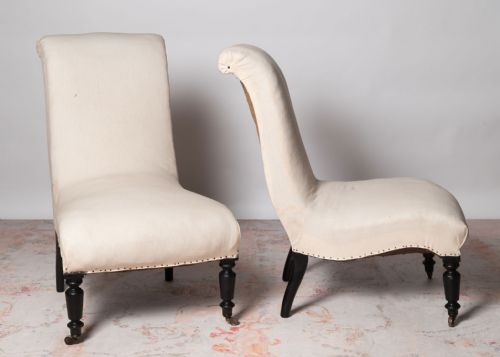
Some nineteenth-century slipper chairs arrived with low seats specifically designed for ladies negotiating bulky Victorian dresses.
Evaluating the craftsmanship
Depth and crispness of the hand carving distinguish finer seating frames from simpler commercial output. Carved floral motifs and scrollwork exhibit confident tool marks and balanced proportions rather than mechanical uniformity. The integrity of the underlying wood joints determines structural longevity.
Original surface treatments, whether aged paint or polished walnut, hold greater merit than later refinishing efforts. Surviving period textiles and needlepoint panels add authenticity, though many pieces require reupholstering. The weight and density of the timber frame indicate the grade of materials selected by the original maker.
The French Country Accent Chairs Glossary
- Fauteuil
- An open-framed armchair with upholstered back and armrests, typically featuring exposed wood. These chairs formed standard elements in formal French sitting rooms.
- Bergere
- An enclosed armchair featuring upholstered sides filled in with fabric or cane. This form offers a deeper, more enclosed seat than an open armchair.
- Cabriole
- A furniture leg that curves outward and then tapers inward, mimicking animal legs. This shape appeared frequently on provincial and revival seating frames.
- Needlepoint
- Stitched textile work executed on canvas mesh, often utilising wool or silk threads. Such panels decorated the backs and seats of nineteenth-century salon chairs.
French Country Accent Chairs: Frequently Asked Questions
How do I spot a reproduction?
Examine the timber shrinkage, tool marks on the frame, and the wear patterns on the joints. Older frames display hand-cut joinery and natural patination that modern manufacturing struggles to replicate.
Compare the carving style against established period characteristics. Revival pieces from later centuries often possess softer details and standardised machine milling.
Can I use these chairs daily?
Most antique seating frames remain structurally sound for regular daily use provided the joints stay tight. Walnut and beech provide robust support when properly maintained.
Delicate gilt-wood or antique painted finishes require careful placement away from direct sunlight and heavy moisture. Upholstery can be updated to suit contemporary comfort preferences.
What is a salon chair?
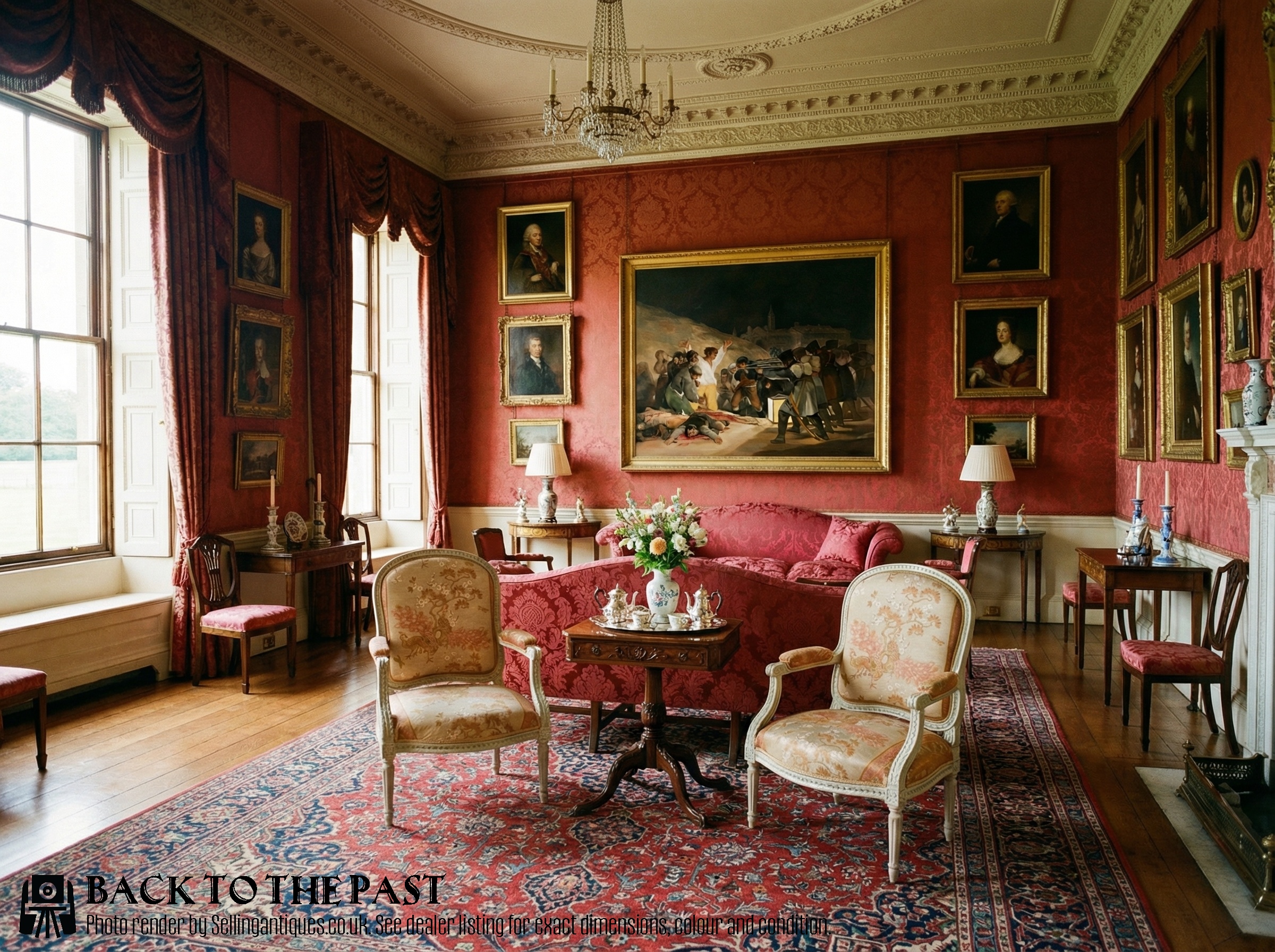
Salon chairs served as moveable seating designed for entertaining guests in drawing rooms. They typically feature lighter proportions than heavy armchairs.
These pieces prioritized decorative elegance, often incorporating carved walnut frames and upholstered panels suited for polite conversation.
How do I clean painted wood?
Dust surfaces gently with a dry, soft microfiber cloth to remove everyday debris. Avoid harsh chemical cleaners that strip aged paint layers.
Preserve original painted finishes by applying occasional microcrystalline wax where the protective coating has thinned. Consult a specialist for flaking or unstable paint.