

French Chateau Table
These pieces bring a french chateau table into a room, offering grand dining proportions or scaled console forms shaped by nineteenth-century revivals.
French Chateau Table
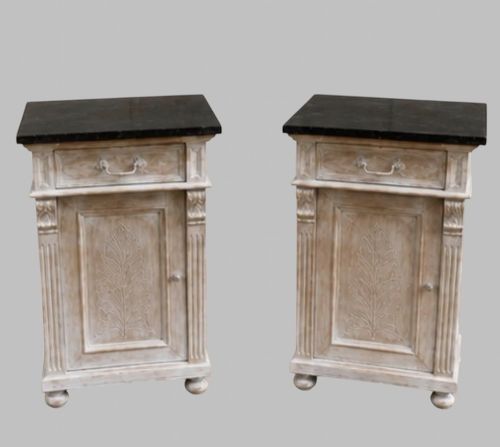
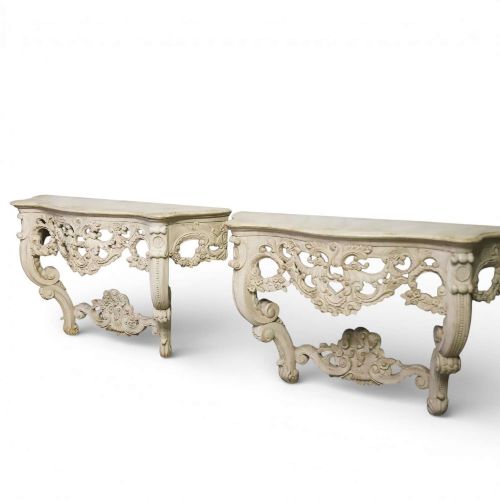
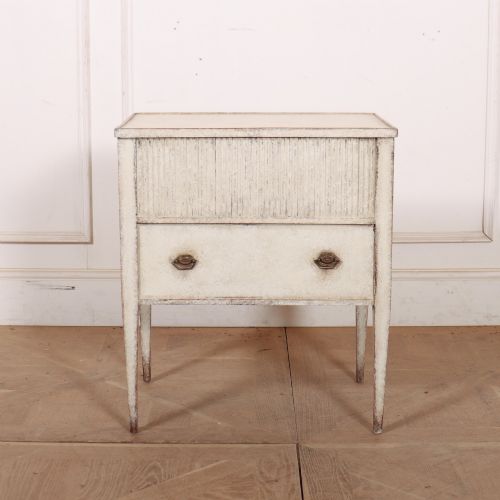
A french chateau table spans massive dining timber boards alongside smaller painted console tables, side tables, and bedside cabinets intended for domestic chambers. Pieces emerge predominantly from the nineteenth century, channeling Louis XV and Louis XVI revivals through decorative architectural silhouettes.
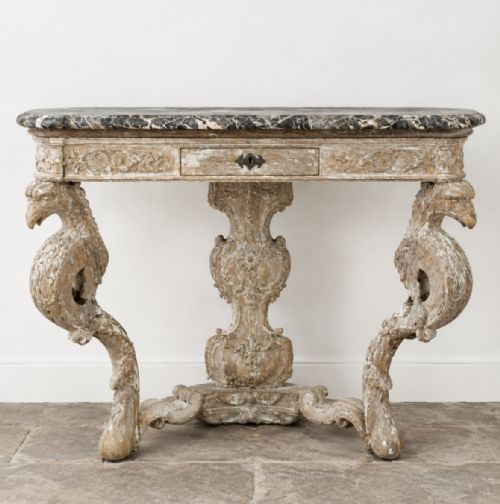
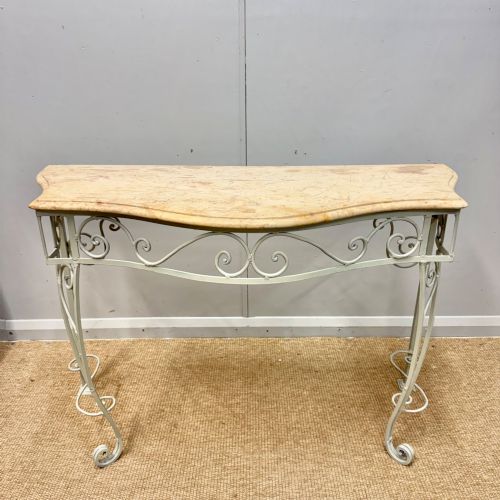
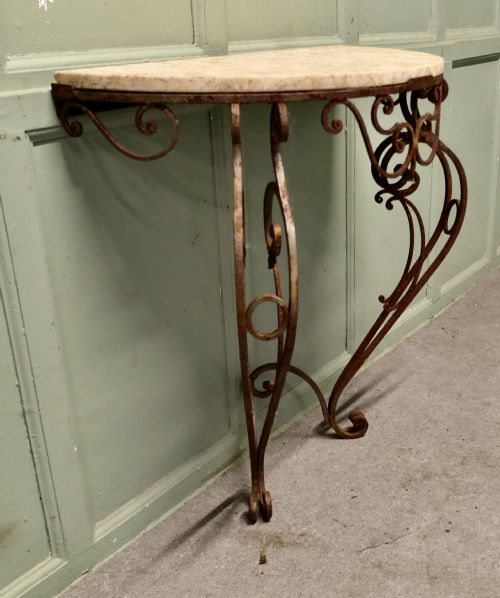
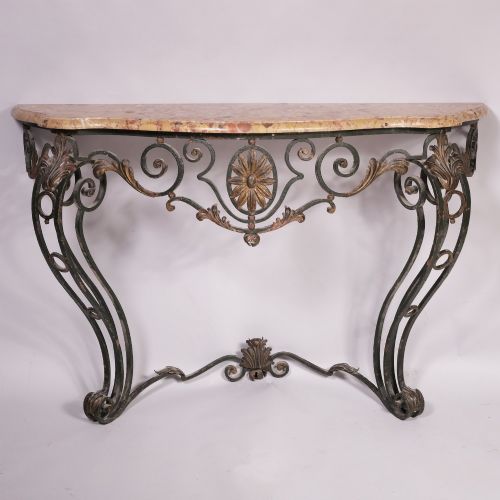
Buyers frequently encounter marble-topped console tables, wrought iron hall variants, and monumental dining surfaces originating from vineyard estates or provincial houses. Smaller objects such as dressing tables, poudreuses, and occasional tables complete the domestic repertoire found in this selection.
Materials and Construction
Construction relies heavily on solid woods, pine, and mahogany enhanced by painted finishes, giltwood, and gesso applied to carved frames. Cabinetmakers integrated inset suede tops, marquetry veneers, and serpentine marble slabs fitted directly to heavy timber or iron bases.
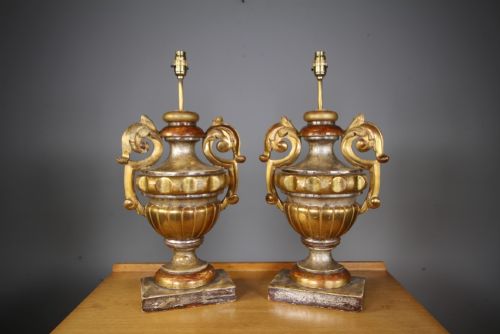
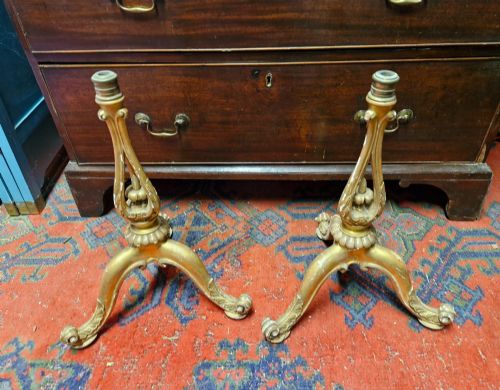
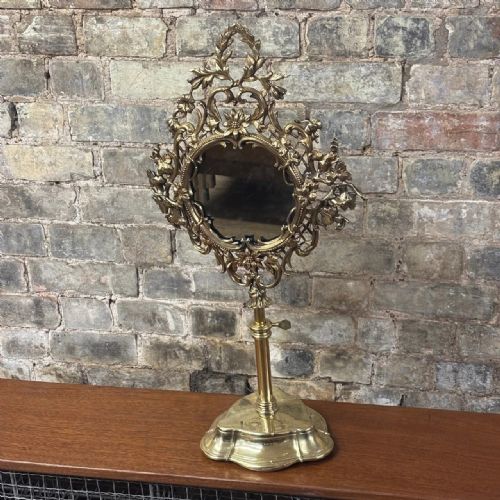
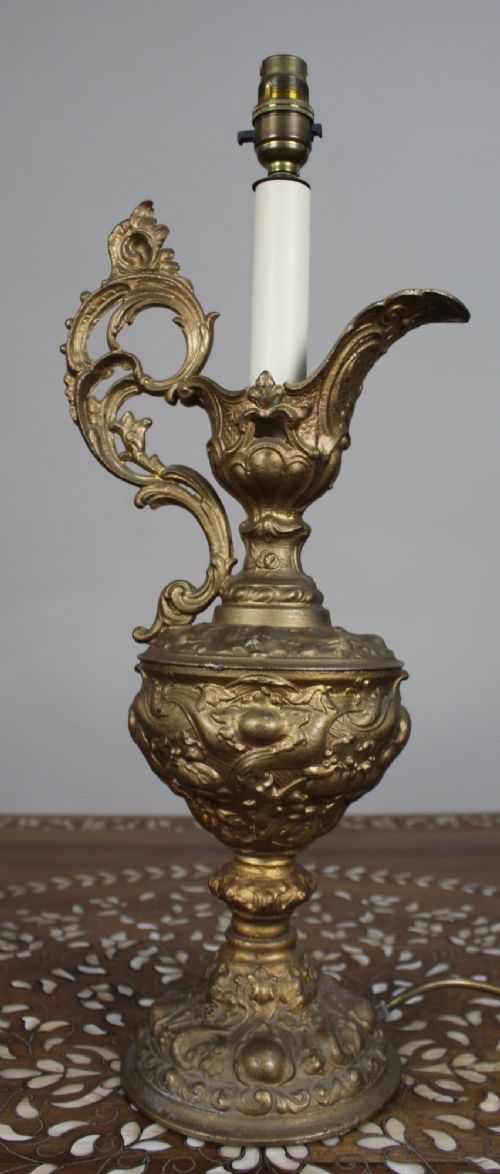
Metalwork plays a defining role, utilising cast or chased ormolu, gilt bronze, and wrought iron for mounts, lamp bases, and structural supports. Surface decoration involves layered hand-applied paint, silver gilt, and intricate porcelain or brass detailing.
Listings feature eighteenth-century origins alongside nineteenth-century Victorian pieces, utilising marble, wrought iron, giltwood, and painted wood.
Distinctions in Quality
Quality rests on the crispness of hand-carving within the wood or giltwood elements, alongside the weight and detail of ormolu and cast bronze mounts. Superior pieces display harmonious proportions and original surface finishes rather than heavy later repainting.
The integrity of fitted materials, such as thick rouge or white marble tops and authentic marquetry patterns, dictates the standing of a piece within its period style. Maker attribution and the retention of original hardware further separate standard domestic furniture from exceptional workshop output.
G T Morant·Millet
The French Chateau Table Glossary
- Console table
- A table designed to stand against a wall, frequently secured with brackets and topped with marble.
- Ormolu
- Gilded bronze mounts applied to furniture and lighting, popular in French neoclassical design.
- Poudreuse
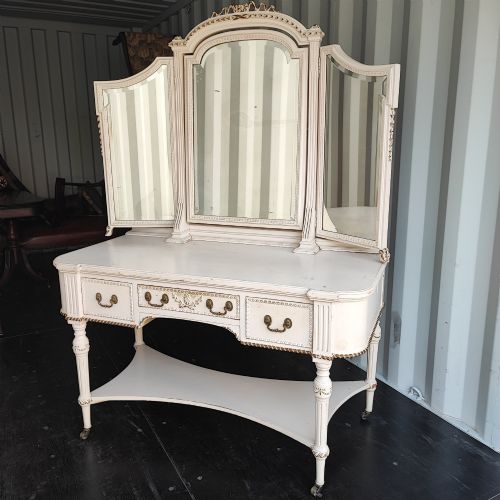
- A French dressing table featuring compartments and folding mirrors for cosmetics.
- Marquetry
- Decorative veneer patterns assembled from various woods to form pictorial or geometric designs.
- Cabriole leg
- A furniture leg that curves outward at the knee and tapers inward at the ankle.
French Chateau Table: Frequently Asked Questions
What defines a chateau dining table?
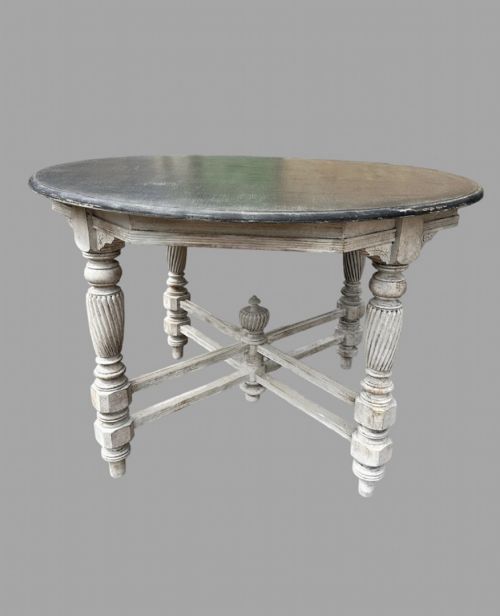
These large dining surfaces typically feature substantial timber construction, often scaled for grand provincial rooms and estate dining halls.
They frequently display nineteenth-century interpretations of earlier French styles, utilising heavy planks and robust structural framing.
How do I use a marble console table?
Console tables fit flat against walls in entrance halls, living rooms, or dining spaces where floor space is limited.
The stone top provides a durable surface for lamps, mirrors, and decorative objects without overwhelming the surrounding interior.
How are Louis XV and XVI styles told apart?
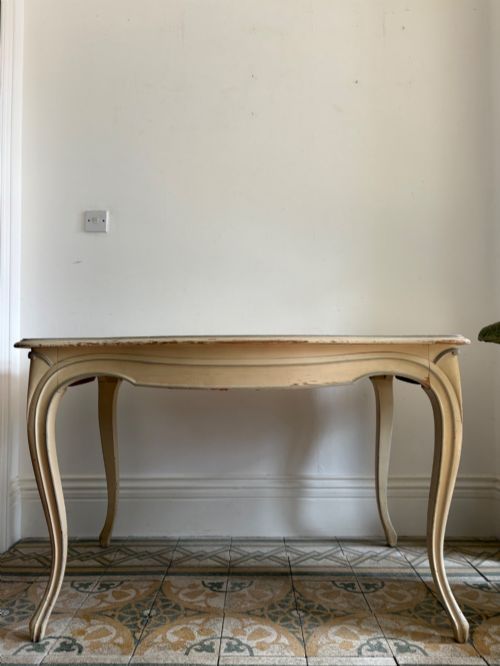
Louis XV revival pieces emphasise asymmetrical curves, flowing natural motifs, and prominent cabriole legs.
Louis XVI style shifts toward restrained classical symmetry, straight tapering legs, and geometric or architectural detailing.
Are painted finishes period correct?
Hand-painted and cream finishes appear frequently on nineteenth-century French and Edwardian bedroom and salon furniture.
Original paint layers show craquelure and gentle wear that distinguish period application from later restoration.