
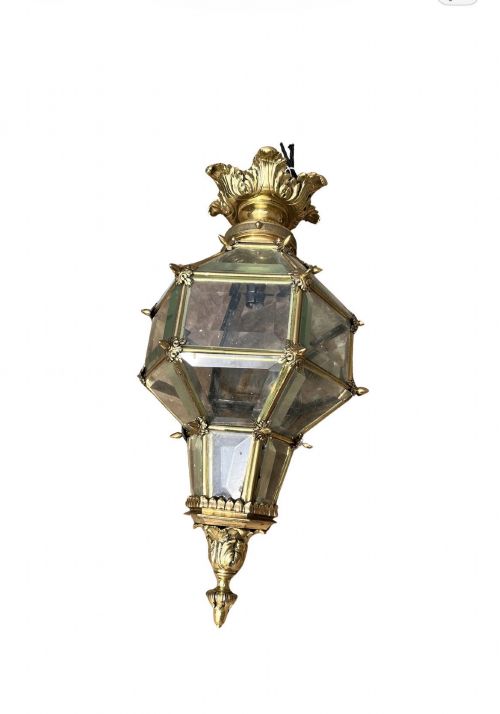
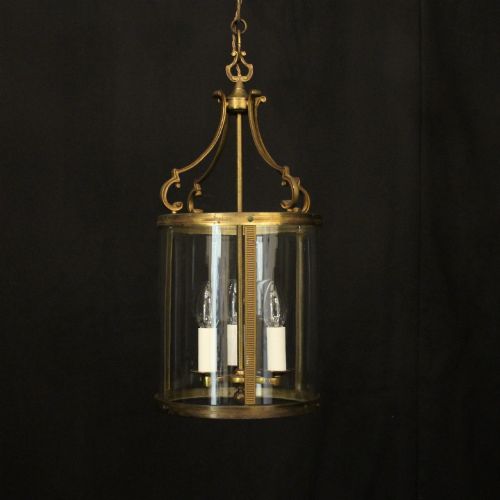
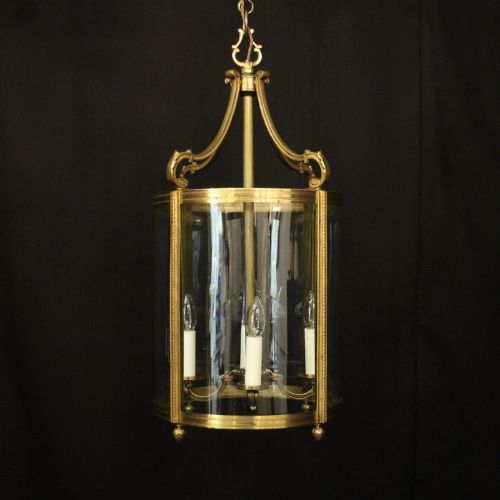


French Chateau Hanging Lantern
A French chateau hanging lantern brings grand architectural presence and warm illumination to high-ceilinged spaces.
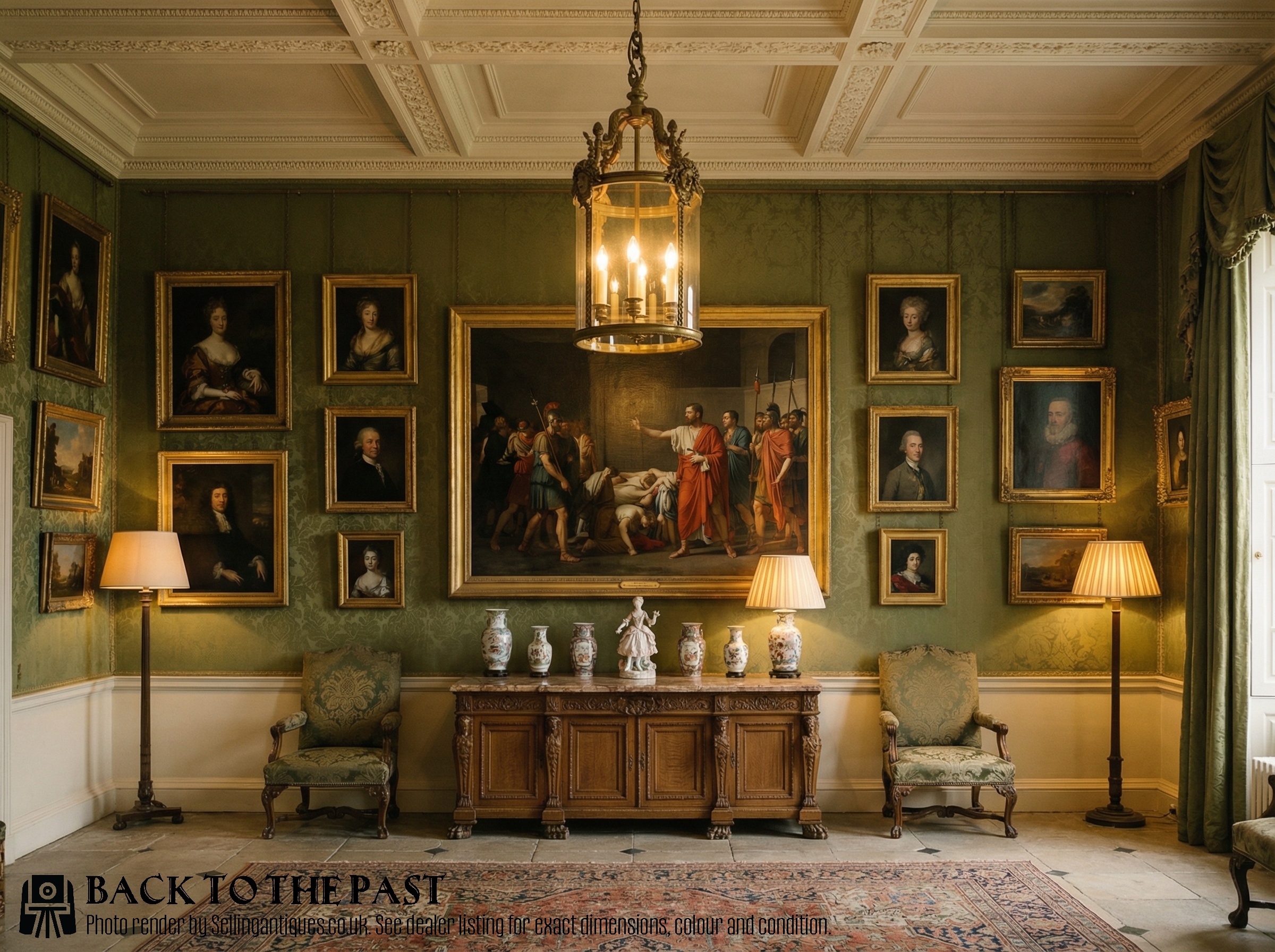
French Chateau Hanging Lantern
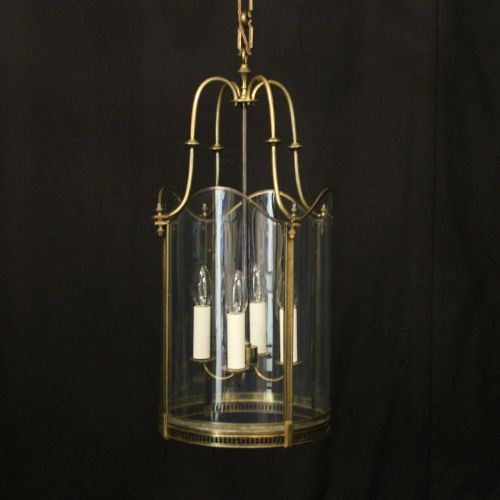
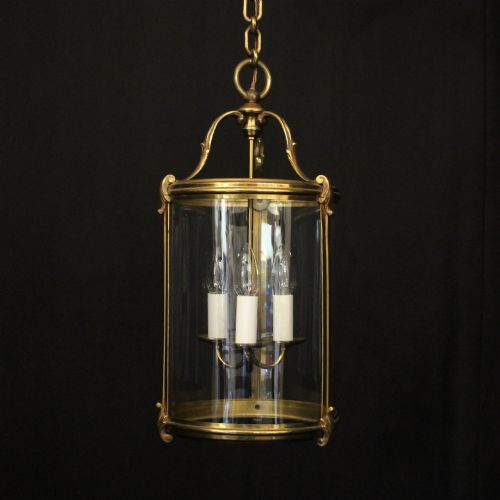
A french chateau hanging lantern is a substantial ceiling fixture designed to light grand hallways, stairwells, and entrance porches. These pieces arrive in various forms including hall lanterns, pendant lights, and ceiling lanterns.
The selection ranges across the nineteenth century, Edwardian era, and the early decades of the twentieth century. Common stylistic expressions on this page span French Rococo Revival, Louis XVI style, and Beaux-Arts designs.
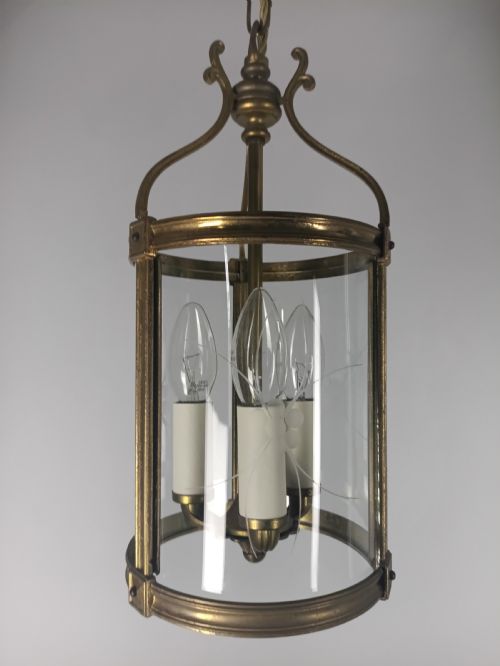
Buyers will encounter single-bulb hall lanterns alongside multi-light configurations holding two, three, or four lights. Convex glass panels and hexagonal frames feature prominently among the current examples.
How they were made
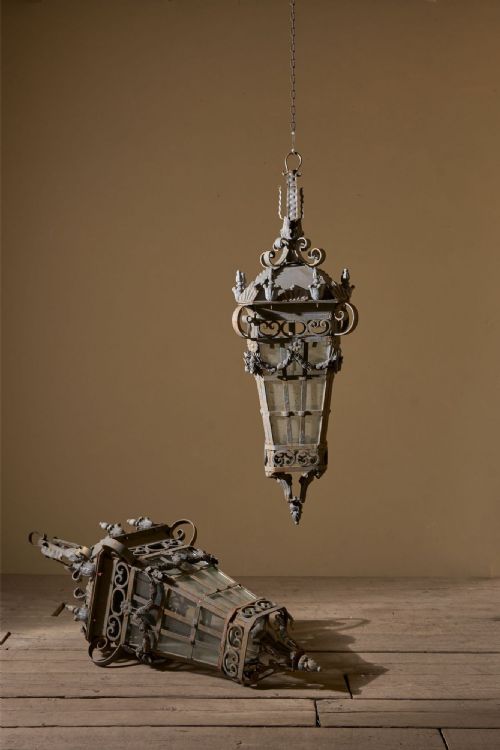
Metalwork forms the skeletal structure of these lanterns, utilising cast bronze, brass, gilt brass, and gilt bronze. Artisans also employed wrought iron, steel, zinc, and painted toleware to construct the frames and decorative mounts.
Glazing techniques involve fitted clear glass panes, some of which are etched or bowed into convex shapes. Lead came secures the glass in specific porch variations, while gilt finishes and polychrome details enhance the metal surfaces.
Materials span brass, bronze, gilt metals, wrought iron, steel, zinc, and glass across periods from the nineteenth century to nineteen-thirty.
What varies in quality
The refinement of the cast metal ornamentation largely distinguishes standard production from superior examples. Heavy gilt bronze mounts and intricate chasing demonstrate a higher tier of craftsmanship than simpler pressed brass.
The integration of shaped convex glass and detailed structural framing indicates greater ambition in design. Pairs and oversized formats represent substantial architectural undertakings compared to standard single-light pendants.
The French Chateau Hanging Lantern Glossary
- Convex glass
- Curved glass panels that project outward to diffuse light across a wider angle. This technique adds depth and softness to the illumination.
- Gilt bronze
- Bronze metal coated with a thin layer of gold or gold-coloured alloy. It provides a rich, enduring lustre that resists tarnishing.
- Toleware
- Painted or lacquered sheet metal items popular for decorative lighting fixtures. The technique allows for colourful polychrome surface treatments.
- Hall lantern
- A vertical hanging light fixture proportioned specifically for corridors and vestibules. These pieces direct downward illumination while casting decorative shadows.
- Louis XVI style
- A neoclassical design vocabulary characterised by straight lines, symmetry, and classical motifs. It influences the formal geometry of many nineteenth-century lanterns.
French Chateau Hanging Lantern: Frequently Asked Questions
Where should I hang a french chateau hanging lantern?
These fixtures suit high ceilings in entrance halls, stairwells, and large reception rooms where they can hang freely as a focal point.
Ensure adequate clearance beneath the lowest point of the lantern for foot traffic.
How do I date an antique lantern?
Dating relies on examining the construction methods, metal casting quality, and specific stylistic revival details present in the frame.
Twentieth-century examples often incorporate different electrical fittings compared to nineteenth-century originals.
Can these lanterns be used outdoors?
Certain variations like leaded porch lanterns were built for exterior shelter, but most indoor hall lanterns require protection from weather.
Check the wiring and IP rating with an electrician before installing any antique lighting outside.
How do I clean gilt bronze and brass?
Dust gently with a soft, dry cloth to remove surface particles without disturbing historical patination or delicate gilding.
Avoid abrasive polishes that can strip away thin gold leaf layers on antique metal surfaces.