




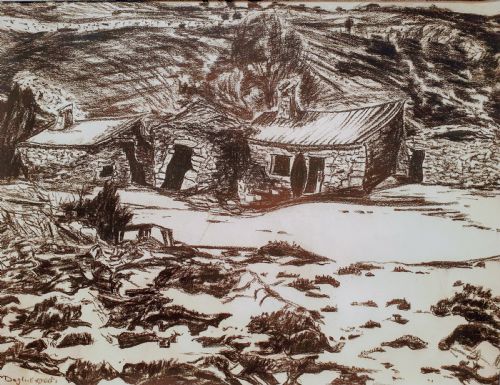

French Charcoal Drawing
A french charcoal drawing brings the direct touch of the hand and the deep grain of historic paper straight to your wall.
French Charcoal Drawing
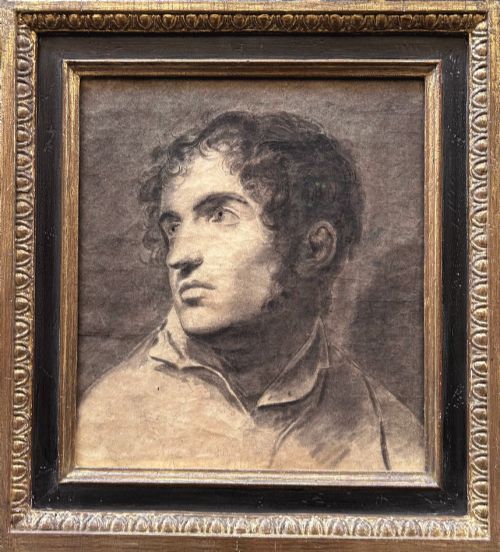
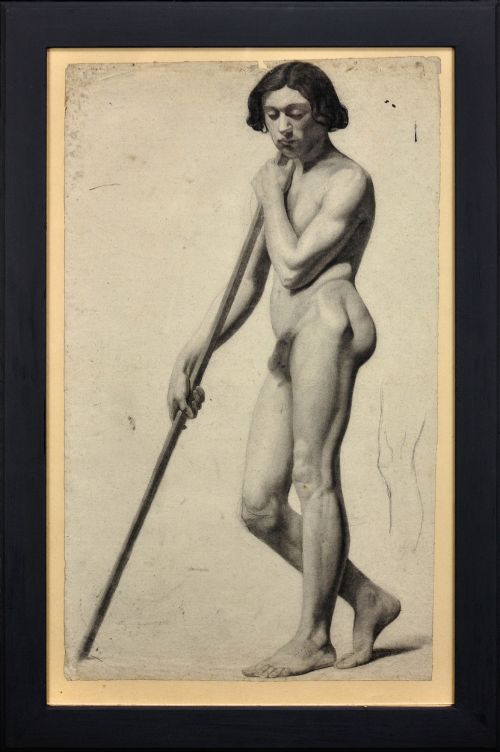
A french charcoal drawing captures subjects ranging from academic life studies of the male nude to atmospheric landscapes of Provence and intimate portraits. These works emerge from the nineteenth century onward, spanning periods such as the Victorian era, the 1920s avant-garde, and mid-century modernism.
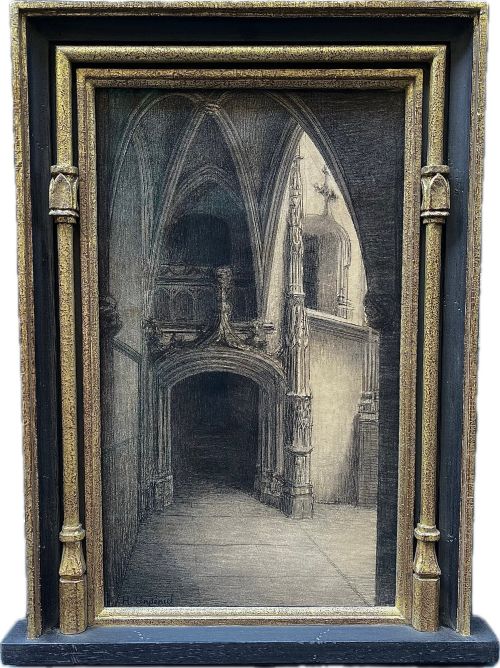
You are most likely to encounter framed academic studies, portraits, and rural scenes executed on paper or toned paper. The objects appear both unsigned by the french school and bearing signatures from named artists of the period.
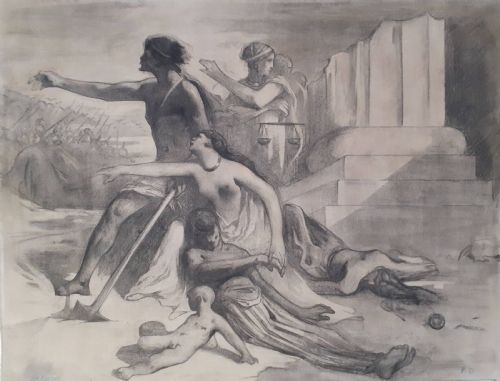
The forms vary from small portrait sketches to large scale drawings depicting bustling city streets, allegorical war scenes, and quiet domestic moments. Each piece relies on the monochromatic depth of carbon and graphite to build form and shadow.
Materials and execution
Artists drew with charcoal, graphite, chalk, and sometimes pastel directly onto paper, toned paper, or card. Many works employ heightened techniques where white chalk or highlights lift the figures from darker grounds.
Supports often include period wooden frames, sometimes accented with giltwood and protected by glass. The underlying paper shows the natural ageing of the nineteenth and twentieth centuries, holding the powdery carbon medium securely within the grain.
Several drawings preserve the hurried hand of artists recording petanque players, resting farmworkers, and daydreaming women in Parisian streets.
Distinctions in quality
Quality rests upon the sureness of the draughtsmanship, particularly evident in academic life studies and portraits where anatomical precision and expressive handling reveal the hand of a trained academic painter. Strong works demonstrate confident control over shadow and midtone gradations across the paper.
The survival of the delicate medium matters significantly, as well-preserved pieces retain the rich density of the charcoal without excessive smudging or loss of subtle highlights. Provenance and attribution to documented artists further elevate individual sheets.
Henri Charles Angéniol·Henry Arthur Roberts·Pierre-Paul Prud'hon·Demetrios Galanis·Theobald Chartran·Henri Joseph Harpignies·Cecil CP Lawson·Jean Betourne
The French Charcoal Drawing Glossary
- Academic realisme
- A style of painting and drawing produced under the influence of European academies of art, prioritising strict adherence to classical standards.
- Deux crayon
- A drawing technique utilising two distinct coloured crayons or chalks, usually black and red or white, on toned paper.
- Giltwood
- Wood that has been treated with gold leaf or a gold-coloured finish, frequently found on antique frames.
- Toned paper
- Paper manufactured or stained with a neutral tint such as grey, blue, or brown, allowing artists to work up both highlights and shadows.
- Heightened
- A method of adding opaque white or light-coloured pigment to a drawing to accentuate highlights and create a sense of three-dimensional relief.
French Charcoal Drawing: Frequently Asked Questions
What is a french charcoal drawing?
A french charcoal drawing is an original work on paper created using carbon-based drawing materials by artists working in France or within the french school tradition. These pieces range from rapid preparatory sketches to finished exhibition pieces.
The selection includes nineteenth-century academic studies, avant-garde cubist compositions from the 1920s, and atmospheric twentieth-century landscapes. Each work relies on the expressive potential of black media on historic paper stocks.
How should I frame and display mine?
Protect your drawing behind glass with conservation-grade mounting to prevent the charcoal from rubbing against the glazing. Keep the artwork away from direct sunlight to preserve the tone of the paper.
Hang the piece on an interior wall with stable humidity and temperature conditions. Original frames should be retained where possible to maintain the historical context of the piece.
How do I distinguish between periods?
Nineteenth-century works often feature rigorous academic realism, detailed hatching, and classical subjects like nude life studies. Twentieth-century pieces frequently embrace freer, avant-garde strokes, simplified forms, or modernist landscapes.
The quality of the paper stock and the style of any accompanying signature or inscription offer further clues to the decade of creation. Archive dates and framing styles also help anchor the timeline.
Are these works original or printed?
These listings consist entirely of original hand-drawn artwork rather than mechanical reproductions or prints. Close inspection reveals the physical build-up of charcoal dust and graphite on the paper fibres.
Under magnification, the individual strokes and pressure variations of the artist's hand become clearly visible. The unique texture distinguishes each sheet from mass-produced imagery.