





Barbizon School Artwork
Barbizon school artwork captures the quiet shift towards en plein air landscape painting that transformed nineteenth-century European art.
Barbizon School Artwork
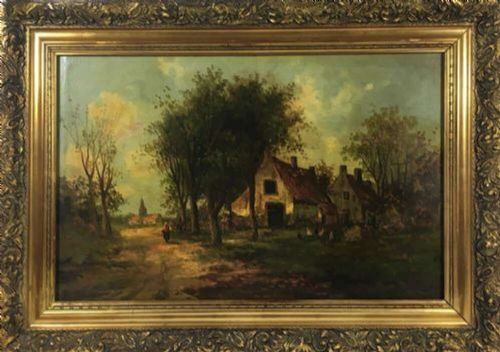
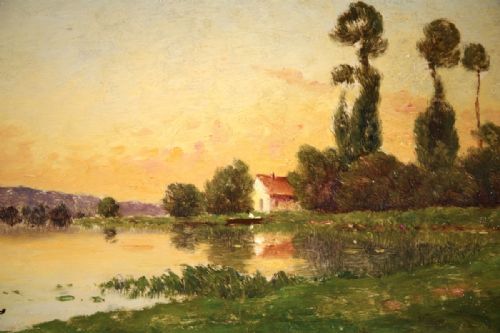
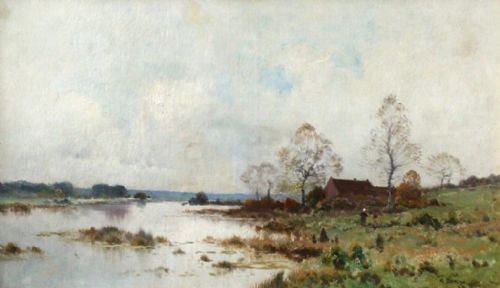
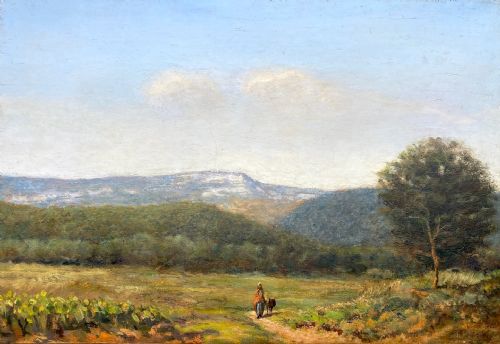
Barbizon school artwork centres on rural French landscapes, focusing on pastoral scenes, rivers, forests, and farmyards rendered with atmospheric intimacy. When exploring barbizon school artwork, buyers frequently encounter nineteenth-century oil paintings on canvas and watercolours depicting trees, cattle, and rural paths.
The material record spans the nineteenth century, including Victorian-era pieces, works dated around eighteen-seventy and nineteen-twenty, and framing in giltwood or gilded wood. Pieces range from French landscape compositions to works showing direct Barbizon influence or association with the circle of known practitioners.
Judging quality and hand
Quality rests upon the sureness of the brushwork, the depth of the atmospheric perspective, and the fidelity of the pastoral light. Works bearing clear signatures or precise attribution to recognised figures command greater attention than unsigned or indistinctly signed pieces.
The handling of natural elements, from woodland foliage to cattle by a stream, distinguishes accomplished depictions from routine studio productions.
Cattle graze perpetually by streams and rivers, undisturbed by the passage of centuries.
Henri Jaques Delpy·Henri Joseph Harpinies·Alphonse Robert·Pierre Emmanuel Eugene Damoye
The Barbizon School Artwork Glossary
- Barbizon School
- A nineteenth-century French art movement dedicated to naturalistic landscape painting, working directly from nature in the forests and fields around Fontainebleau.
- Oil on Canvas
- Pigment mixed with drying oil applied to a stretched woven fabric support, the standard medium for major nineteenth-century paintings.
- Giltwood
- Wood carved and coated with gold leaf or gold paint, frequently used for traditional picture frames of the period.
- Pastoral
- Relating to the countryside, agriculture, and rural life, depicting fields, farmyards, and grazing cattle in tranquil settings.
- Watercolour
- A painting method in which the paints are made of pigments suspended in a water-based solution, typically applied to paper.
Barbizon School Artwork: Frequently Asked Questions
What is barbizon school artwork?
Barbizon school artwork comprises nineteenth-century paintings and watercolours focused on French rural landscapes, forests, and pastoral scenes created outside the traditional academic studio.
These pieces reflect a turn towards direct observation of nature, capturing rivers, farmyards, and woodland paths with subdued, atmospheric palettes.
How were these paintings displayed?
These works were traditionally hung in domestic interiors within decorative giltwood or gilded wood frames designed to enhance the depth of the landscape.
Today, they suit traditional and contemporary living spaces alike, bringing a sense of nineteenth-century tranquility to walls.
How do I identify the period?
Period indicators include nineteenth-century canvas supports, Victorian framing styles, and specific artist dates spanning the eighteen-hundreds into the early twentieth century.
Signatures, inscriptions, and indistinct markings often provide further clues regarding the date and regional French or British influence.
What subjects are most common?
Common subjects include woodland paths, riverbanks, cattle grazing by water, and farmyard scenes set in locations such as Provence and Bonny sur Loire.
Artists favoured quiet rural moments, emphasising trees, skies, and pastoral light over grand historical narratives.