
French Carved Wall Console
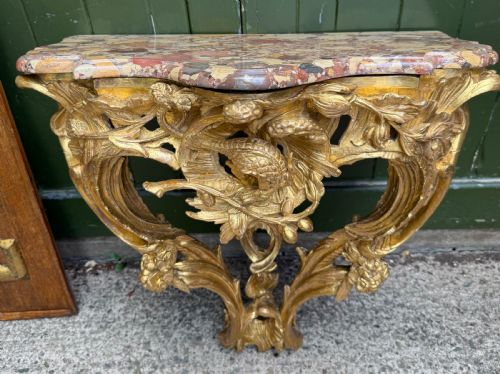
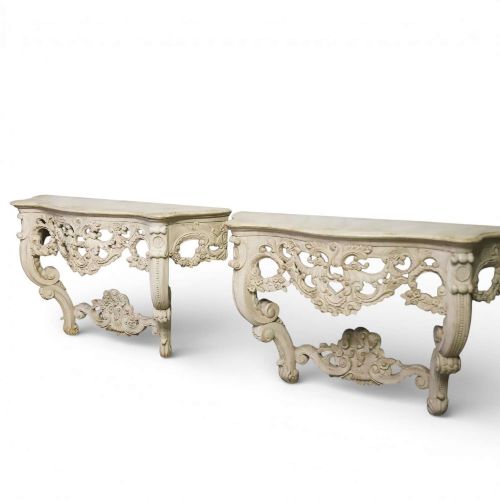
These french carved wall console tables bring dramatic architectural presence and fine period detail to an interior.
French Carved Wall Console
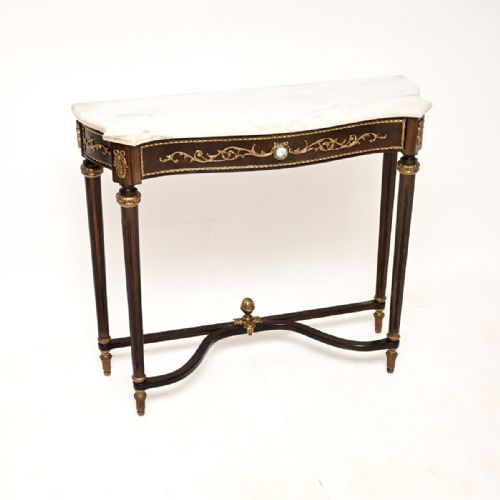
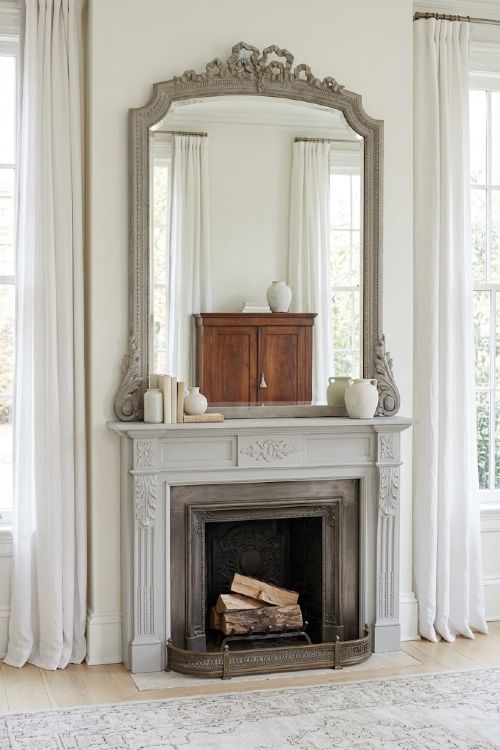
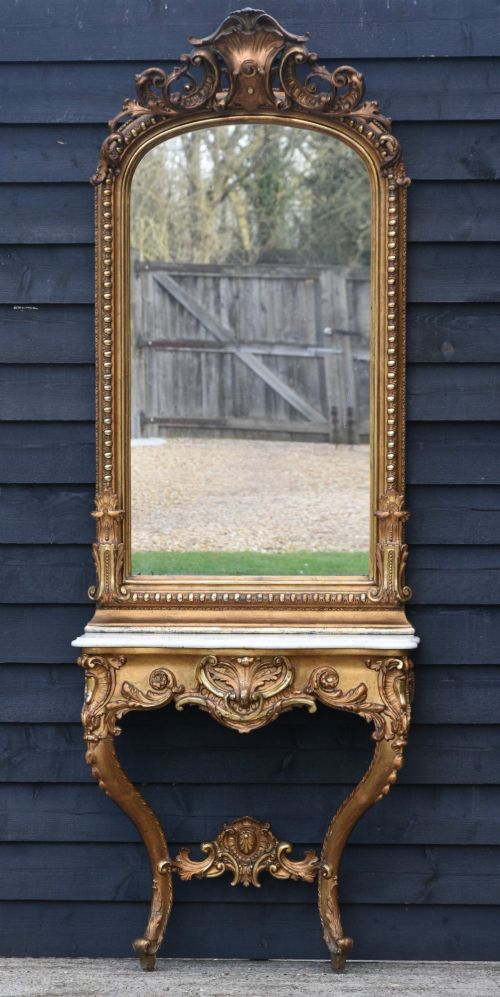
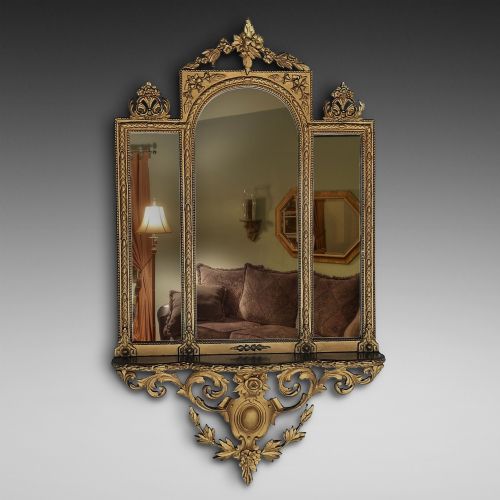
A french carved wall console is a decorative table designed to be fixed directly to a wall, often accompanied by a matching pier glass or overmantel mirror. You will encounter these pieces primarily in nineteenth-century interpretations of earlier historical aesthetics, alongside examples originating directly in the eighteenth century.
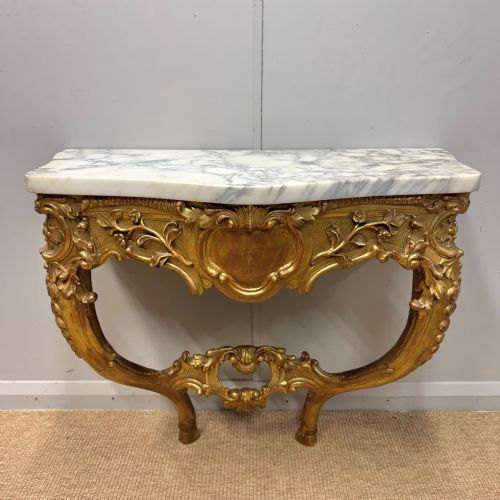
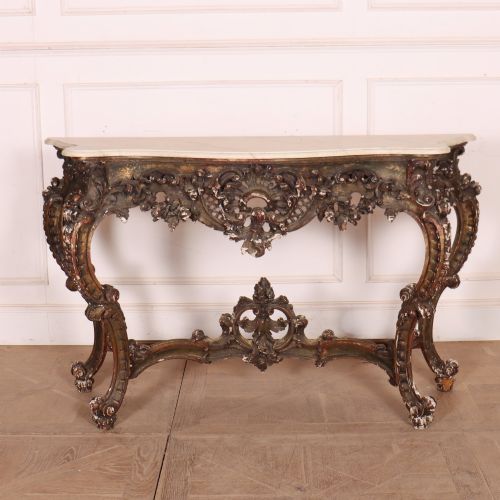
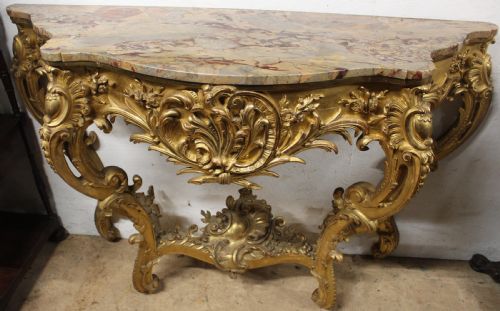
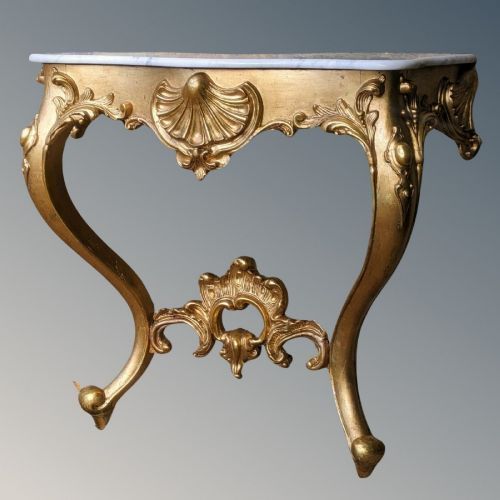
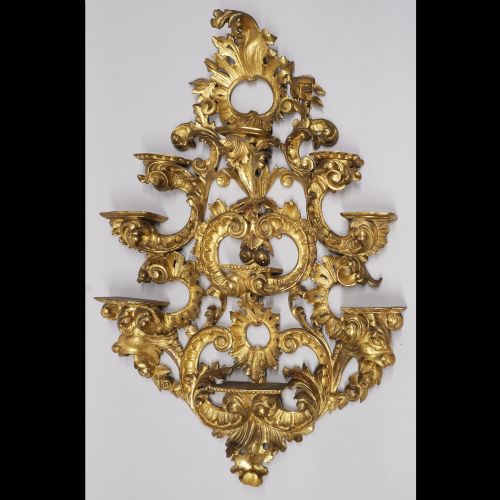
The dominant forms on this page include serpentine front console tables and smaller wall brackets, executed in distinct regional revivals. Makers drew heavily upon Louis XV rococo fluidity and Louis XVI neoclassical symmetry.
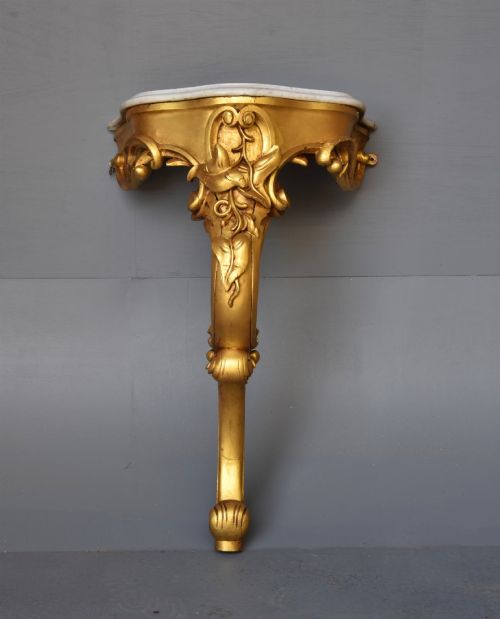
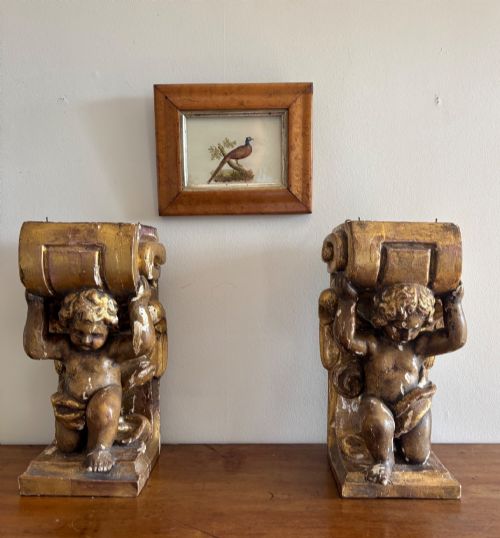
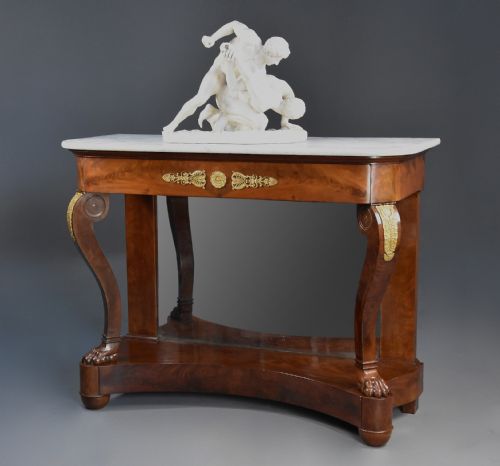
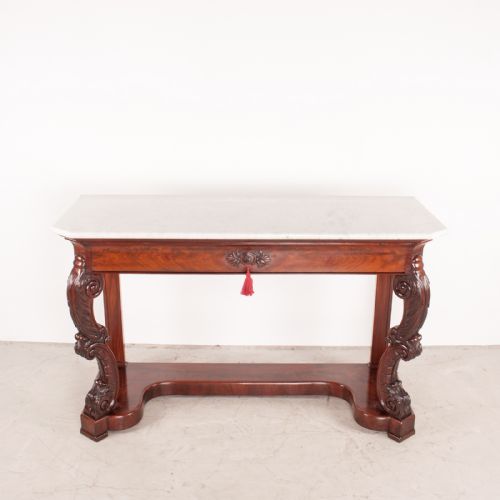
Many survivors pair carved wooden frames with fitted stone surfaces, while others survive as wall-mounted shelf brackets designed to display decorative objects. They range from compact wall fixings to substantial paired side tables intended for grand reception rooms.
Materials and construction methods
Makers utilised solid timbers such as walnut, mahogany and oak for the structural carcass and wall-mounting plates. Wood was shaped by hand-carving before receiving decorative surfaces including gold leaf, gesso, paint or clear polish.
Giltwood and gesso finishes required meticulous application of leaf over prepared grounds to catch the light in domestic interiors. Tops were frequently finished with heavy figured marble slabs, including breche d'alep varieties, cut to follow the serpentine or straight contours of the frame.
One console was caught wearing an antique white finish, proving even French aristocracy occasionally embraced a spot of shabby chic.
Assessing quality in carved consoles
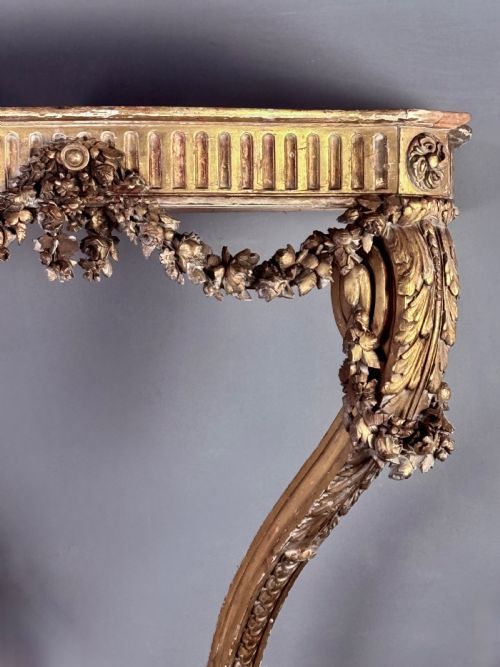
Quality rests primarily in the crispness and depth of the hand-carving upon the wooden frame. Superior examples display undercut foliage and scrolls executed with fluidity, whereas lesser versions rely on heavier, shallower moulding.
The integration between the stone top and the wooden base dictates the integrity of the piece. A tightly fitted, substantial marble slab shaped precisely to a serpentine timber rail indicates careful workshop execution.
Felix-Alfred Ternisien·Jean Joseph Chapuis
The French Carved Wall Console Glossary
- Console table
- A table designed to be mounted against a wall, frequently supported by front legs while relying on wall fixings for stability. They were traditionally placed beneath mirrors in formal reception rooms.
- Giltwood
- Timber that has been coated with thin sheets of gold leaf over a prepared base. This finish protected the wood while reflecting candlelight.
- Breche d'alep
- A specific type of multi-coloured quarried marble featuring a brecciated pattern of fragments cemented together. It is frequently seen on eighteenth and nineteenth-century furniture tops.
- Serpentine
- A furniture contour that curves inward at the centre and outward at the ends. This undulating outline is characteristic of rococo design.
- Pier mirror
- A tall wall mirror designed to be hung on the pier wall between windows, often placed directly above a console table. Together they created a unified decorative scheme.
French Carved Wall Console: Frequently Asked Questions
How were console tables fixed to the wall?
These tables typically rely on a combination of wall brackets, fixing plates, and downward support from front legs. The rear rail is secured directly into wall studs or masonry to ensure stability, particularly when carrying heavy marble tops.
Because many consoles were designed as permanent architectural fixtures rather than freestanding furniture, proper wall anchoring remains essential for their structural safety.
What is the difference between a console table and a wall bracket?
A console table extends to the floor via front legs while anchoring to the wall at the rear. A wall bracket is a much smaller, cantilevered shelf fixed entirely to the wall without any floor support.
Both serve similar decorative functions for displaying objects, but wall brackets are suited to compact spaces where a full table base would obstruct movement.
How do I identify Louis XV style from Louis XVI style?
Louis XV style pieces are defined by asymmetrical curves, organic rococo shell motifs, and flowing serpentine lines. Louis XVI style introduces neoclassical restraint, featuring straight tapered legs, fluting, and symmetrical architectural geometry.
Examining the carved ornament on the apron provides the clearest indicator of which stylistic vocabulary the maker followed.
Can these tables support heavy objects?
The structural capacity depends on the combination of the wooden frame, the weight of the marble top, and the security of the wall fixings. Most historical consoles were built to hold porcelain, clocks, or candelabra rather than heavy daily loads.
Ensuring that the wall fixings engage with solid support is more critical than the tabletop itself when placing items on display.