
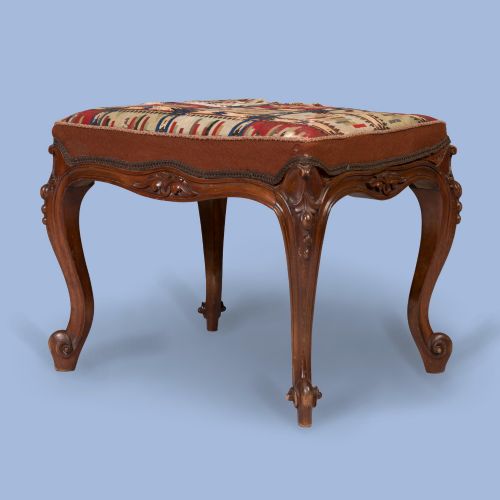


French Carved Ottoman
These french carved ottoman examples bring sculptural timber and soft seating together, offering a functional piece of history that grounds a room.
French Carved Ottoman
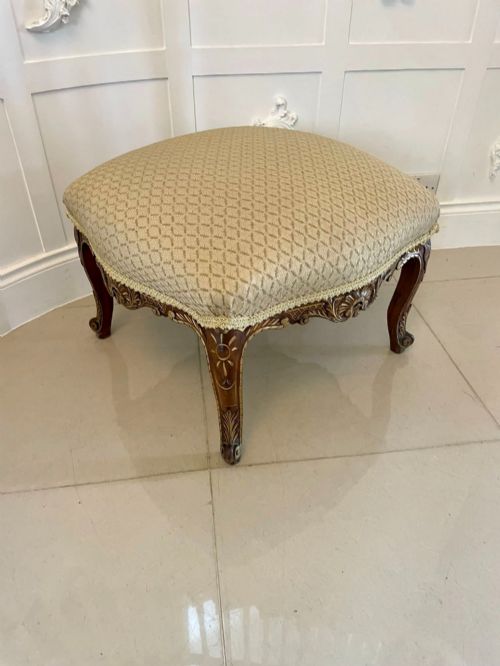
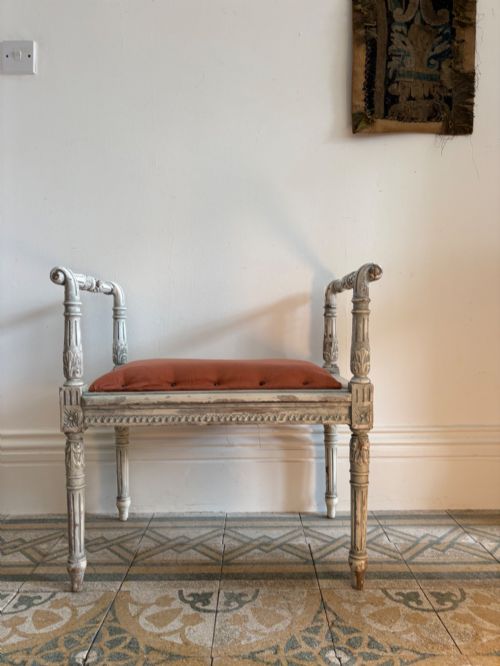
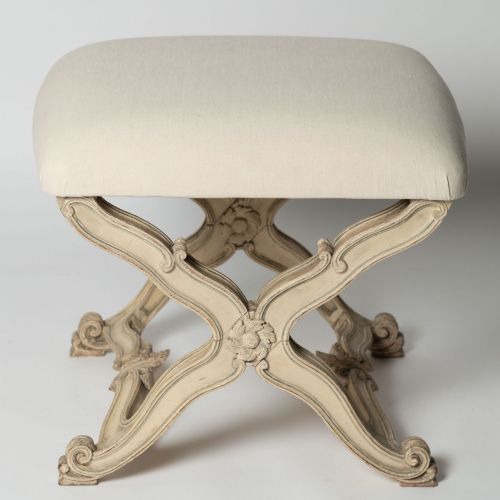
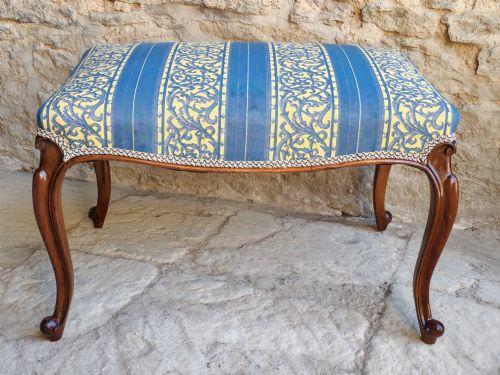
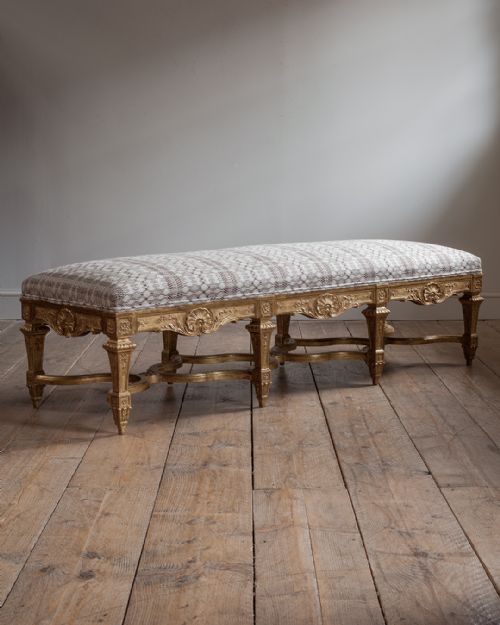
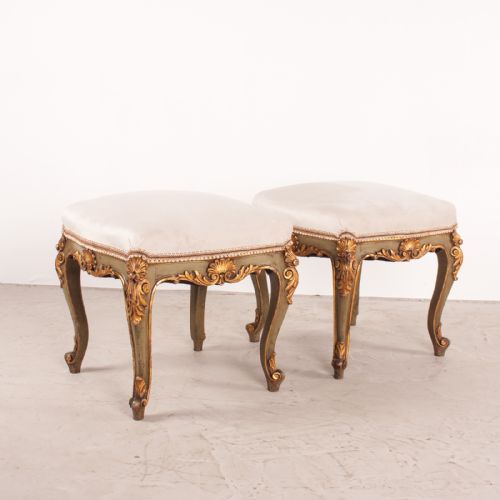
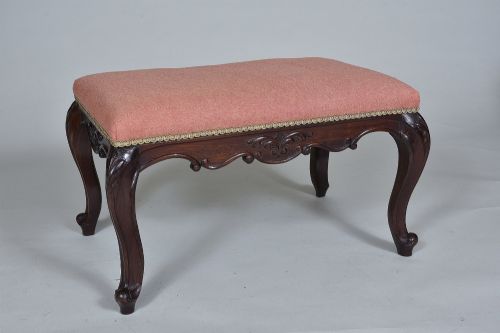
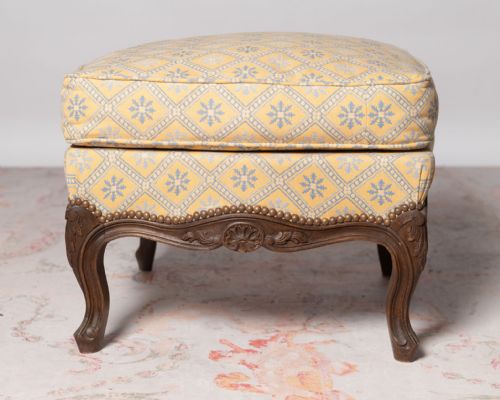
When searching for a french carved ottoman, you encounter low seating designed for comfort and elegance, appearing mainly as footstools, window seats, and compact benches from the nineteenth century. These forms draw on classical revival aesthetics, including Louis XIV, Louis XV, and Rococo styles defined by flowing lines and ornamental woodwork.
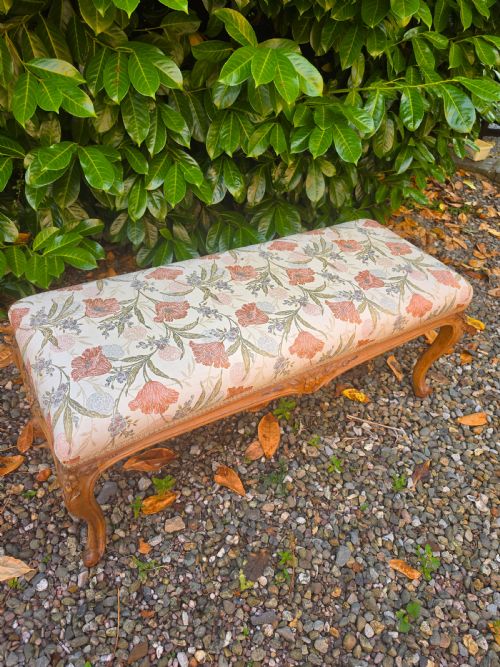
The pieces on this page span the nineteenth century and the early twentieth century, showing a strong presence of walnut, giltwood, and painted finishes. Most examples function as movable seating or foot rests, often appearing in pairs or alongside matching armchairs within salon settings.
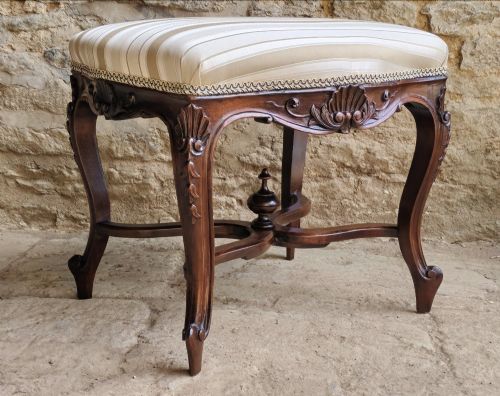
Originating from continental workshops and British workshops influenced by continental design, these items range from simple painted window seats to heavily gilded centre stools. The selection leans heavily toward walnut and giltwood frames supported by cabriole legs.
Materials and construction
Makers shaped these frames from dense hardwoods like walnut, mahogany, and beech, alongside softer timbers designated for painted or gilded treatments. Giltwood surfaces received layers of gesso and gold leaf, while walnut and mahogany frames were polished to display natural grain figures.
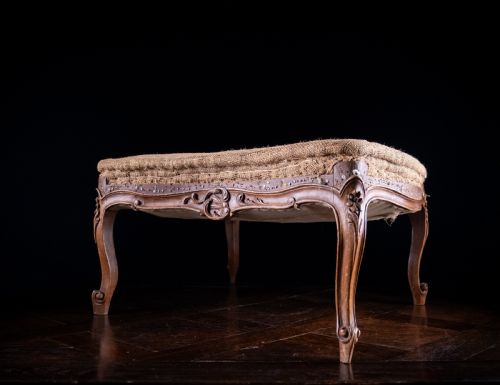
Carving was executed by hand directly into the timber, producing shell motifs, acanthus leaves, and scrollwork along the rails and cabriole legs. Joinery relied on traditional pinned mortise and tenon joints to withstand the weight placed upon low seating.
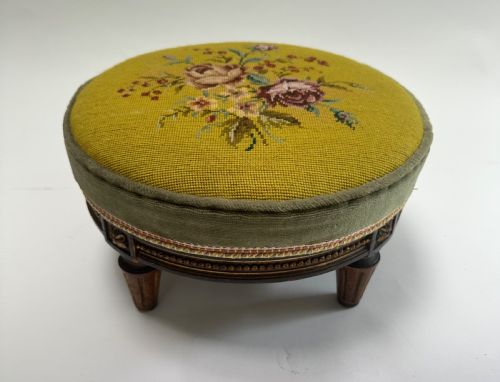
Upholstery completed the construction, utilising textile coverings such as silk, velvet, tapestry, and needlework secured over stuffing materials. Some examples survive with buttoned upholstery or original fabric intact, while others await reupholstering.
The listings on this page span the 1830s through the 1930s, showing walnut, mahogany, and giltwood as the primary framing materials.
Assessing quality
The standard of a french carved ottoman rests primarily upon the crispness and depth of the timber carving. Superior examples exhibit sharp, undercut details executed by skilled hands, whereas lesser pieces display soft, shallow moulding that lacks definition.
Frame integrity distinguishes finer pieces from ordinary ones, particularly the weight and selection of the timber used in the underframe and legs. Heavier, well-seasoned walnut or solid giltwood provides structural stability that lighter or patched replacement timbers lack.
The treatment of the finish also dictates value, with original gilding, period paint surfaces, and untouched upholstery holding greater integrity than modern refinishing attempts. Stamped maker signatures on the wood frame elevate historical interest.
LOIDRAULT FRERES PARIS
The French Carved Ottoman Glossary
- Cabriole leg
- A furniture leg that curves outward at the knee and tapers inward toward the foot, mimicking animal limbs. This form is common on eighteenth-century revivals.
- Giltwood
- Timber coated with a thin layer of gold leaf over a prepared gesso ground. It provides a bright, reflective surface on formal seating.
- Gout stool
- An adjustable footstool designed to elevate and support the foot of a person suffering from gout. These often feature a rocking mechanism.
- Window seat
- A long, bench-like stool sized to fit beneath a window recess. They frequently include upholstered ends or arms.
- Centre stool
- A large, freestanding stool designed to sit in the middle of a room rather than against a wall. These pieces feature finished carving on all sides.
French Carved Ottoman: Frequently Asked Questions
How were these stools originally used?
These low seats served multiple purposes in period drawing rooms and bedrooms, functioning as footrests for armchairs or as casual perches near windows and fireplaces.
Larger centre stools provided flexible seating during gatherings, easily moved across carpets to accommodate guests where rigid chairs would crowd the space.
How do I care for antique giltwood?
Giltwood requires careful handling because the thin gold leaf and underlying gesso are sensitive to moisture and abrasion. Dusting should be done gently with a dry, soft brush rather than a cloth that might snag.
Keep these pieces away from direct sunlight and damp environments to prevent the gesso from cracking or lifting away from the timber base.
How can I distinguish revival styles from earlier pieces?
Revival pieces, such as those from the nineteenth century imitating earlier French reigns, often use machine-assisted joinery alongside hand carving, and timber selection tends to be more uniform. Examining the secondary woods on the underside of the frame helps clarify the true age of the piece.
Tool marks left by hand chisels differ from later mechanical shaping, providing clues to whether a stool dates to the original period or a later nineteenth-century revival.
Can I use original antique upholstery daily?
Original fabric and stuffing provide historic value but may lack the structural strength needed for heavy everyday sitting. Antique textiles often weaken over decades of light and tension, risking tears if subjected to active use.
If the textile is fragile, place the stool in a low-traffic area or consult a specialist conservator regarding supportive under-linings.