



Gilded Wood Footstool
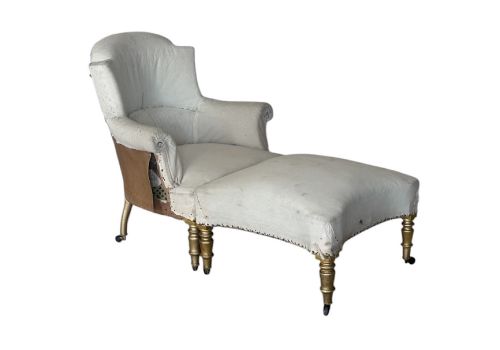
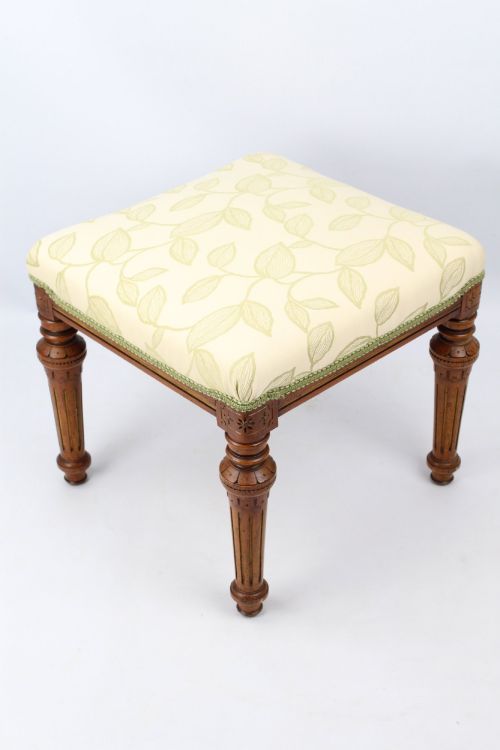
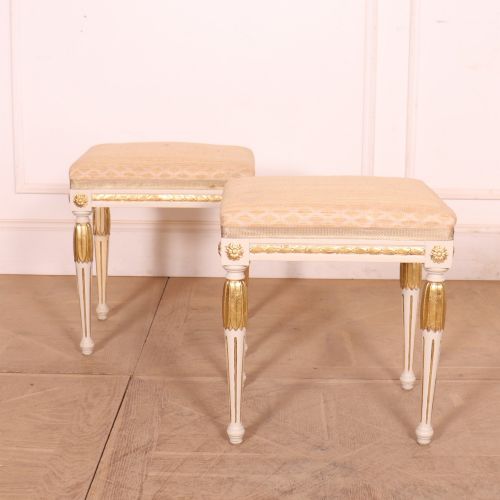
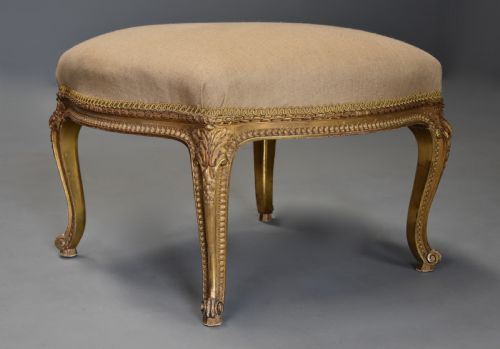
These gilded wood footstool examples bring gilded surfaces and carved frames into a room, offering low seating with distinct period character.
Gilded Wood Footstool
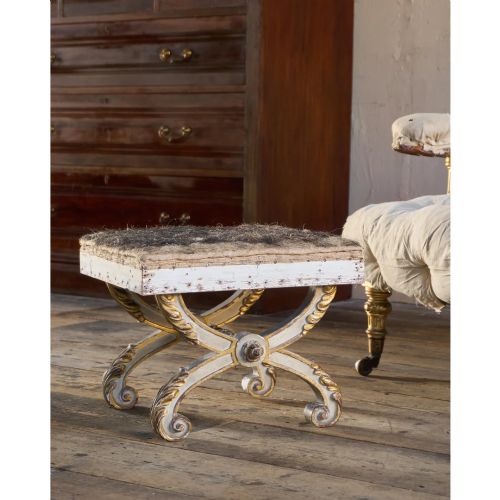
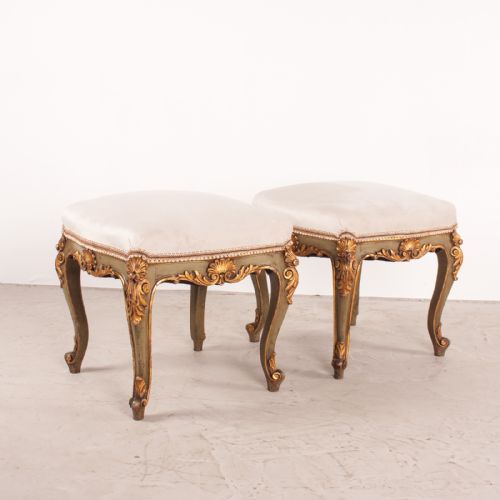
A gilded wood footstool provides low seating or leg support, appearing in various revival and continental designs across the nineteenth century. Buyers searching for a gilded wood footstool encounter forms ranging from simple low stools to X-frame curule shapes and matched pairs.
The selection includes nineteenth-century pieces alongside items dated around nineteen hundred, reflecting French, Victorian, Swedish, and Continental aesthetics. These items function as decorative accents in sitting rooms and dressing areas, combining carved wooden structures with textile upholstery.
How they were made
Maker construction relies on carved wood foundations finished with gold leaf, paint, or giltwood surfaces. Workshops shaped these wooden frames by hand before applying decorative surface treatments.
Upholstery involves traditional textiles including fabric, linen, calico, and brass detailing. These materials combine to create padded seating surfaces supported by rigid wooden bases.
Listings feature items from the nineteenth century up to nineteen twenty, utilising giltwood, fabric, wood, gold leaf, paint, linen, calico, and brass.
What varies in quality
The standard of carving distinguishes simpler pieces from elaborate creations, with hand-carved details showing greater depth and precision. The application of gold leaf and paint finish varies in uniformity and preservation across different workshops.
Structural complexity ranges from basic low forms to sophisticated X-frame curule designs and matched pairs. The choice of upholstery materials, from plain calico to decorative fabric with brass elements, influences the overall character of the piece.
Miles & Edwards·Loidrault Freres Paris
The Gilded Wood Footstool Glossary
- Giltwood
- Wood that has been decorated with gold leaf or a gold-coloured metallic finish. This surface treatment gives the wooden frame a bright, reflective appearance.
- Curule stool
- An ancient Roman stool design featuring X-shaped legs that cross each other. This classical form reappeared in nineteenth-century seating.
- Louis XVI style
- A neoclassical design style characterised by straight lines, symmetry, and classical ornamentation. Pieces in this style often feature carved wooden frames and restrained decorative motifs.
- Calico
- A plain-woven textile typically used as an inner upholstery layer or a simple covering. It provides a neutral foundation for decorative fabrics.
Gilded Wood Footstool: Frequently Asked Questions
What periods do these footstools come from?
The available pieces originate primarily from the nineteenth century, with specific examples dated across the eighteen eighties, eighteen nineties, and nineteen hundreds.
These dates encompass various revival movements and continental workshop traditions.
How were gilded footstools used originally?
They served as low seating or footrests in formal drawing rooms and private dressing spaces.
Their decorative gilt surfaces allowed them to complement larger armchairs and seating arrangements.
What materials make up these frames?
Frames consist of wood finished with gold leaf, paint, or giltwood treatments.
Upholstery elements incorporate fabric, linen, calico, and brass fixtures.
Are pairs available in this selection?
Several listings feature matched pairs of carved giltwood stools from continental workshops.
These paired items share identical forms, finishes, and upholstery styles.