

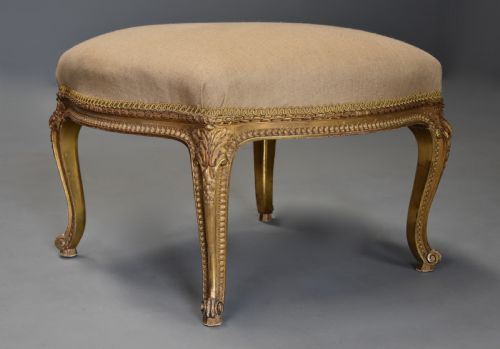


French Gilded Footstool
A French gilded footstool brings a touch of giltwood and upholstery to a room, offering both decorative presence and traditional comfort.
French Gilded Footstool
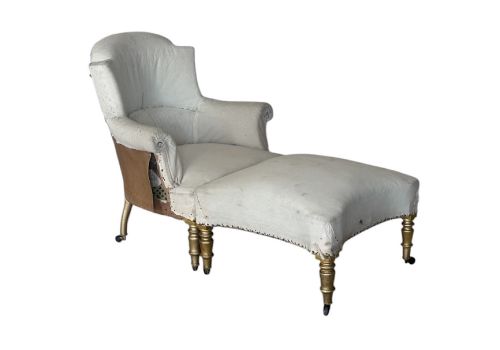
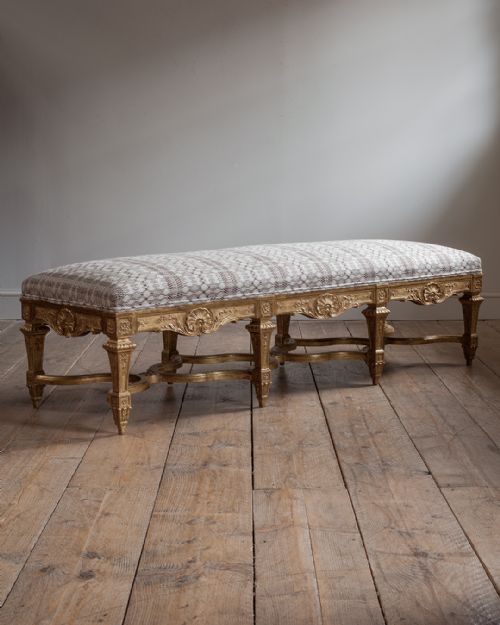
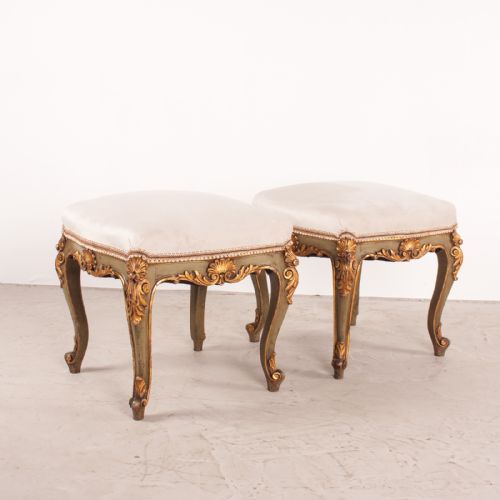
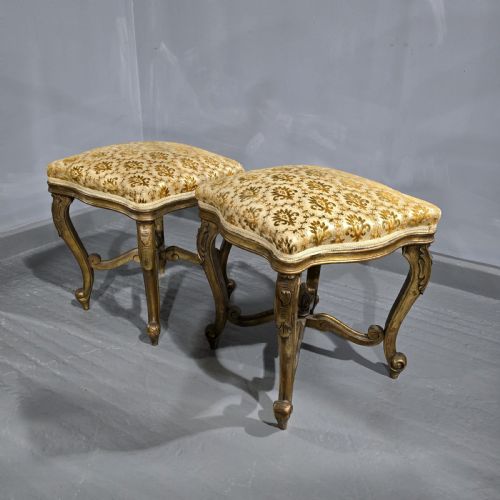
A french gilded footstool sits among a variety of seating forms, including footstools, ottomans, benches, and larger companion pieces like armchairs and chaise longues. The selection spans the nineteenth century, featuring pieces from the Regency period through to 1920, with many examples originating from the eighteen-seventies, eighties, and nineties.
Buyers will encounter pairs as well as single pieces, often displaying Revival influences such as Louis XIV, Louis XV, Louis XVI, Rococo, Baroque, and Neoclassical styles. Forms vary from simple upholstered tops on carved frames to rocking gout stools and curule shapes, reflecting the diverse output of nineteenth-century French workshops.
Materials and construction
The foundation of a french gilded footstool relies on carved wood, timber, and walnut, shaped into frames before receiving layers of gesso to prepare the surface for gilding. Giltwood surfaces provide the characteristic metallic sheen, sometimes complemented by painted finishes.
Upholstery completes the piece, utilising fabric, velvet, and other textiles secured to the frame. Brass accents occasionally appear in the hardware or structural detailing of the stool.
Listings feature pieces from the nineteenth century, including the Regency period, eighteen-sixties, and up to nineteen-twenty, utilising giltwood, walnut, fabric, and velvet.
What varies in quality
The refinement of the hand carving on the wooden frame distinguishes standard production from finer work, particularly where intricate Rococo or Neoclassical motifs are applied. Crisp detail in the gesso and the even application of the gilt finish indicate the skill applied during manufacture.
Makers' marks stamped into the timber elevate a piece, pointing to specific Parisian workshops. The quality and survival of the original textile upholstery, whether velvet or woven fabric, also influence the character of the footstool.
LOIDRAULT FRERES PARIS·A.M.E. Fournier
The French Gilded Footstool Glossary
- Giltwood
- Wood that has been coated with gold leaf or a gold-coloured metallic finish. This surface treatment defines the appearance of these footstools.
- Gesso
- A plaster-like mixture applied to wood frames to create a smooth surface for gilding. It allows carvers to achieve sharp decorative details.
- Curule stool
- An ancient Roman shape of seating featuring X-shaped legs that cross. This classical form appears in nineteenth-century revival pieces.
- Duchess brisee
- A couch or armchair accompanied by a stool or divided into parts to form a chaise longue. It relates to the larger seating combinations found in the period.
French Gilded Footstool: Frequently Asked Questions
What periods do these footstools come from?
The pieces span the nineteenth century, with dates reaching from the Regency era into the early twentieth century around nineteen-twenty. Nineteenth-century French and Victorian periods are particularly well represented.
Specific decades include the eighteen-sixties, seventies, eighties, and nineties, showing various revival movements of those times.
How were these stools used originally?
They served as footstools and ottomans to support the feet while sitting on larger armchairs or sofas. Some forms functioned as independent seats or benches in drawing rooms.
Specialised variants like rocking gout stools provided physical comfort for specific ailments in period interiors.
What styles influence the carved designs?
Designs draw heavily on French court aesthetics, displaying Louis XIV, Louis XV, and Louis XVI revival characteristics. Rococo, Baroque, and Neoclassical motifs also appear frequently.
Continental interpretations blend these classical French elements with local Victorian and Regency design preferences of the nineteenth century.
What materials make up the frames?
Frames are constructed from timber, walnut, and other woods, shaped by hand carving. Gesso is applied over the wood to prepare it for the gilt finish.
Upholstery materials include traditional textiles and velvet, occasionally supported by brass elements within the structure.