


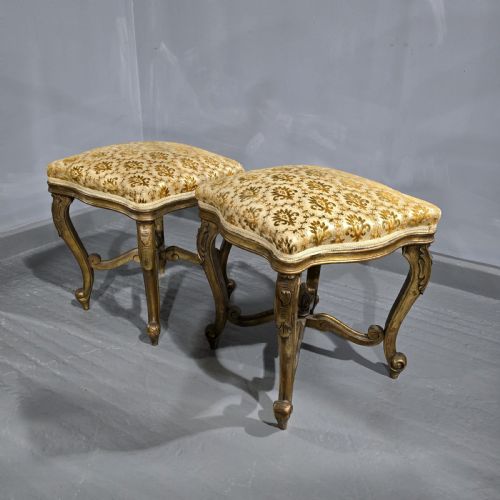


French Rococo Footstool
A french rococo footstool brings sculpted curves and gilt warmth to a room, offering low seating or a place to rest tired feet.
French Rococo Footstool
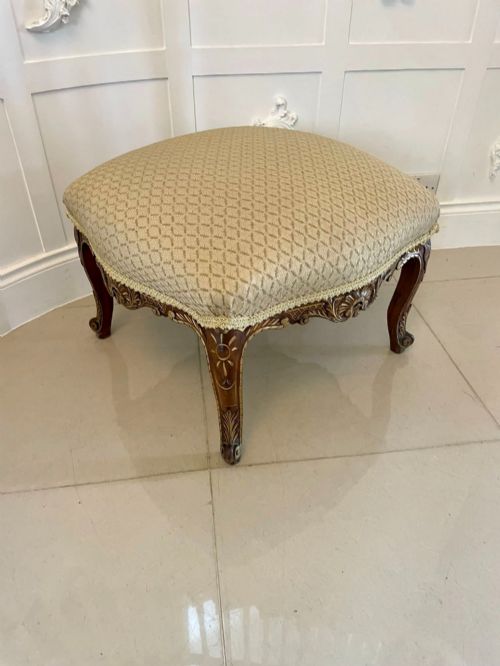
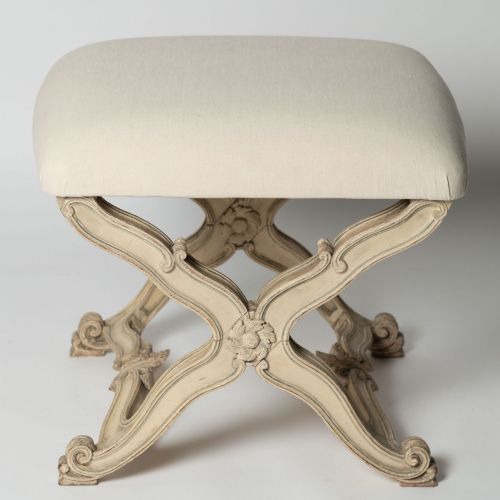
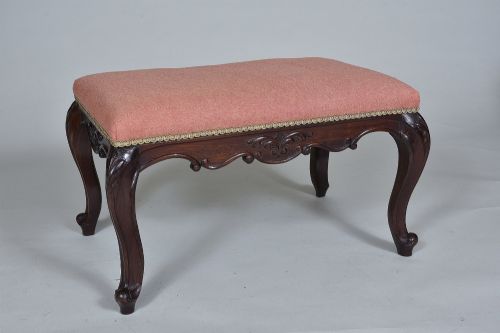
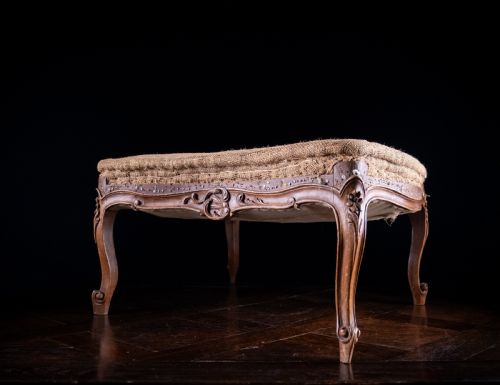
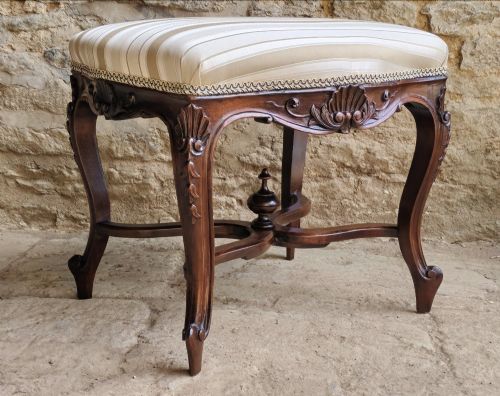
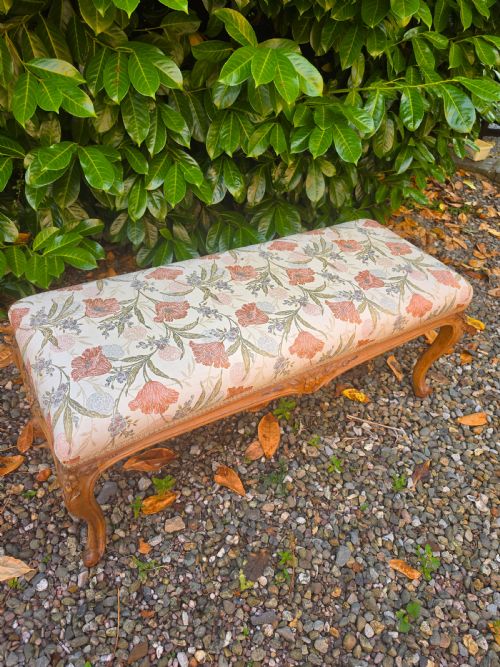
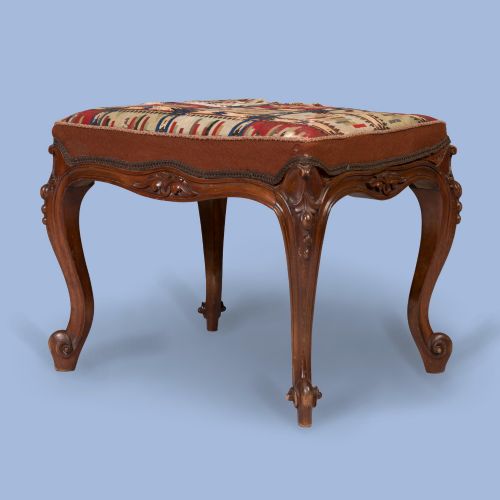
When you search for a french rococo footstool, you encounter low seating designed with flowing lines and decorative flourish. The pieces seen here span the nineteenth century into the early decades of the twentieth century, embracing revival styles that echo earlier French court aesthetics.
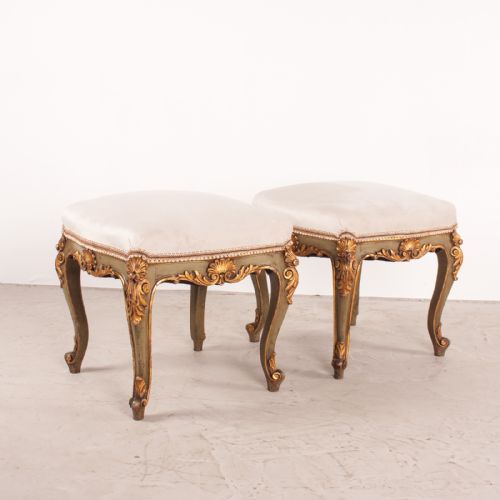
The aesthetic borrows heavily from Louis XV designs, featuring asymmetric scrolls, floral carvings, and painted or gilded surfaces. Such pieces served grand drawing rooms historically and now add texture and character to modern interiors.
Materials and construction methods
Cabinetmakers shaped these frames from solid hardwoods like walnut, mahogany, beech, and rosewood, employing hand-carving techniques to achieve deep relief work and sculptural contours. Joinery was robustly constructed to support weight on slender, curved legs.
Surface decoration involved meticulous gilding, parcel gilding, or painting on wood, creating bright reflective finishes or subtle distressed tones. Upholstery was traditionally built up using fabrics, textiles, and velvet over supportive internal padding.
Some nineteenth-century examples included a gentle rocking mechanism to soothe tired feet during long evening reads.
Distinctions in craftsmanship and finish
The standard of a french rococo footstool rests on the crispness and depth of the hand-carved woodwork along the rails and legs. Sharper, more fluid botanical motifs and well-defined scrolls distinguish superior artistic execution from softer, mass-produced moulding.
The application of the gilding or paint finish further separates pieces, with layered burnished gold leaf offering a richer warmth than flat metallic paints. Additionally, the selection of the timber and the robustness of the cabriole leg joints dictate long-term durability.
The French Rococo Footstool Glossary
- Cabriole leg
- A furniture leg that bends outward in a convex curve at the top and inward in a concave curve below, ending in a pad or scroll foot. This shape mimics animal legs and is a defining feature of Rococo design.
- Giltwood
- Timber that has been coated with a thin layer of gold leaf or gold dust. It provides a brilliant, luminous surface on decorative frames.
- Louis XV style
- A design movement inspired by the French decorative arts of the mid-eighteenth century, characterised by asymmetrical ornamentation, curves, and natural motifs. It forms the basis of the Rococo revival seen in later pieces.
- Parcel gilt
- A decorative technique where only specific parts of an object, such as carved details, are highlighted with gold leaf while the rest of the surface is painted or stained wood.
- Rococo revival
- A nineteenth-century artistic movement that recreated the elaborate, scroll-heavy aesthetic of the eighteenth-century French court. It prioritized ornate carving and decorative exuberance over strict classical symmetry.
French Rococo Footstool: Frequently Asked Questions
How were footstools used originally?
Historically, low stools and gout stools provided comfort in formal salons and parlours by keeping feet elevated away from cold draughty floors. They also served as auxiliary seating when rooms filled with guests during gatherings.
Over time, their decorative potential matched their utility, placing them near firesides or beneath dressing tables where their carved frames could be admired.
How do I date a nineteenth-century stool?
Dating relies on examining the timber species, the hand-tool marks left by the maker, and the style of the carving. Revival pieces often borrow eighteenth-century motifs but display nineteenth-century joinery methods and wood preparation.
Comparing the wear patterns on the feet and the composition of the gilding or paint layers further clarifies the exact period of manufacture.
Are these stools sturdy enough for daily use?
Most pieces possess solid hardwood frames constructed with traditional joinery, making them quite robust for resting feet or light sitting. However, slender cabriole legs require care to prevent excessive lateral strain.
Upholstery may need periodic reinforcement depending on the intended use, though many survive in stable, usable condition.
What is the difference between Rococo and Baroque styles?
Baroque design tends to be heavy, symmetrical, and monumental, projecting formal grandeur and power. Rococo furniture introduces lighter, more playful, and asymmetrical forms with C-scrolls and naturalistic floral details.
Footstools from the Rococo revival lean toward these lighter, more fluid curves rather than strict geometric symmetry.