


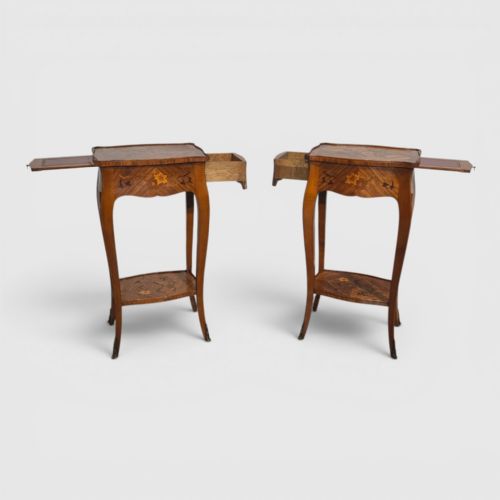

French Cabriole Nightstands
French cabriole nightstands bring curved elegance and practical bedside storage, shaped by the graceful lines of eighteenth-century design.
French Cabriole Nightstands
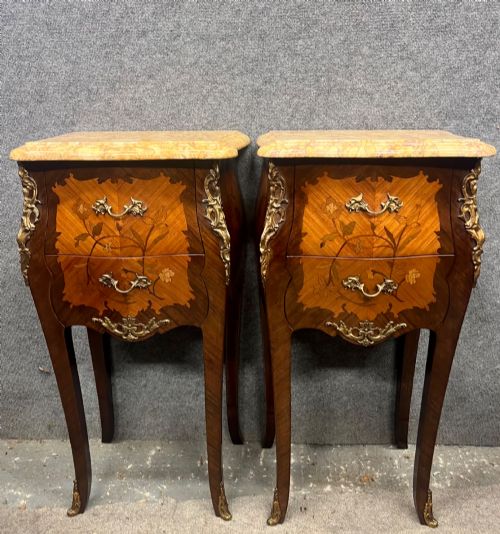
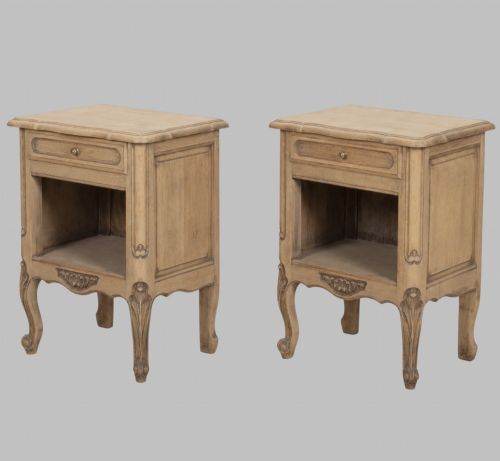
French cabriole nightstands encompass bedside tables, cabinets, and small chests designed with characteristic sweeping legs that curve outward and inward. These pieces draw primarily from Louis XV styles and later revivals spanning the nineteenth and twentieth centuries.
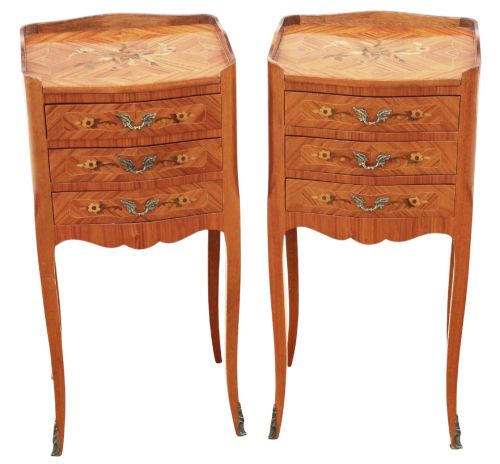
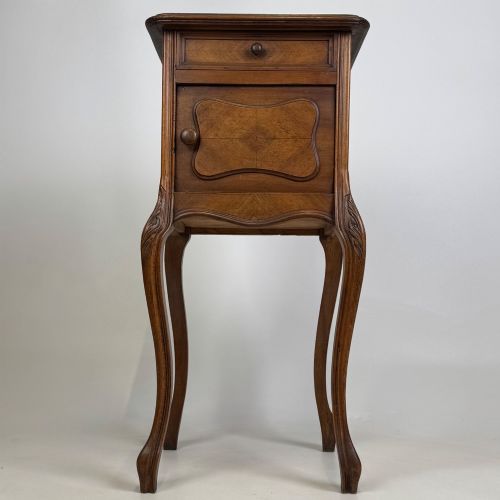
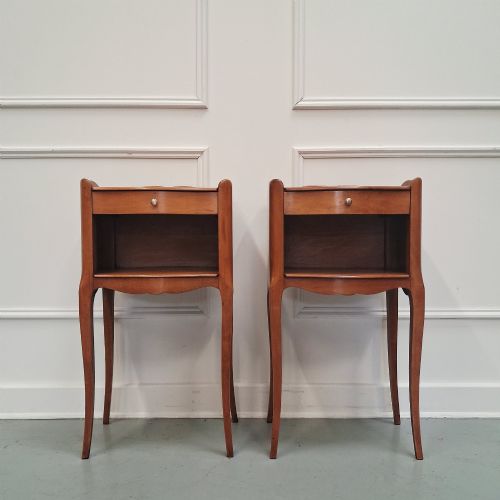
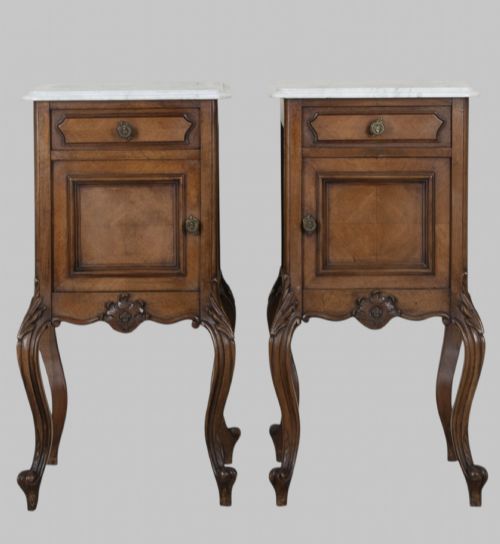
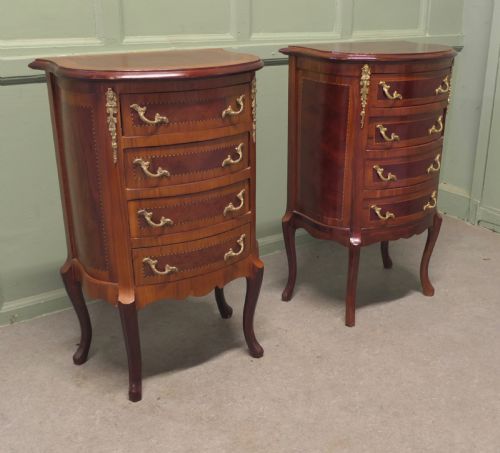
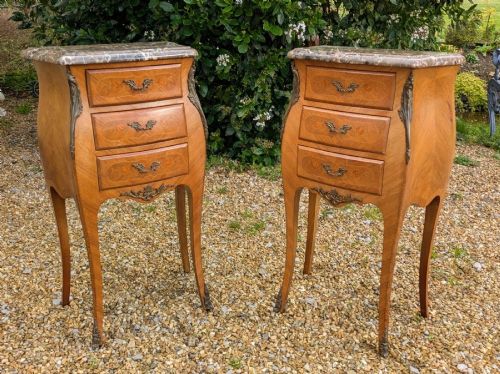
The version most commonly encountered on this page is the pair of bedside cabinets originating from the early twentieth century or the late nineteenth century. Such items often combine enclosed storage cupboards or drawers with compact proportions suited to smaller spaces.
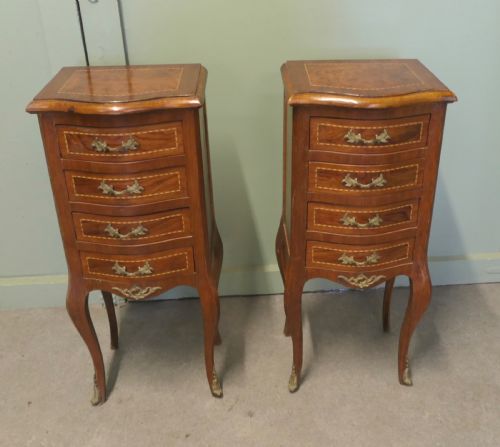
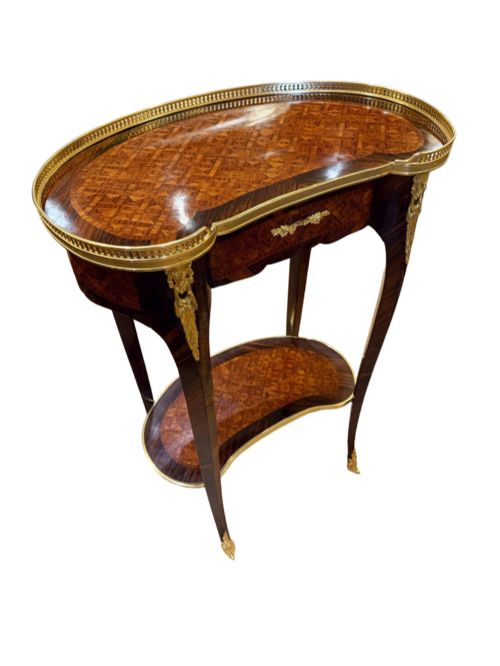
Makers adapted classical proportions into practical forms including kidney-shaped tables, serpentine fronts, and marble-topped chests. Materials range from humble oak and cherry wood to finely figured walnut, kingwood, and rosewood veneers.
How they were made
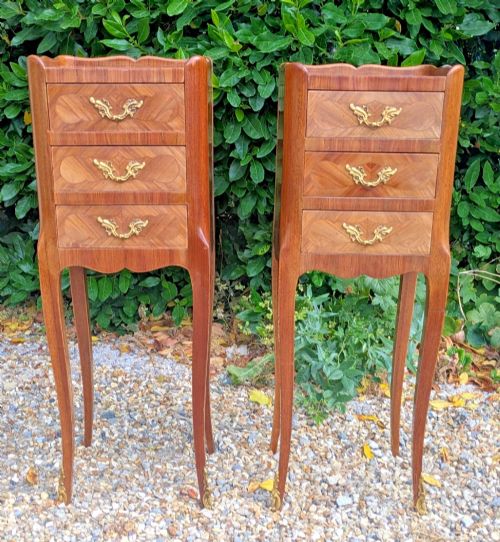
Cabinet makers built these pieces using solid carcasses of oak or walnut, applied with decorative veneers such as kingwood, rosewood, and marquetry patterns. Surfaces often received contrasting wood inlays or parquetry geometric arrangements.
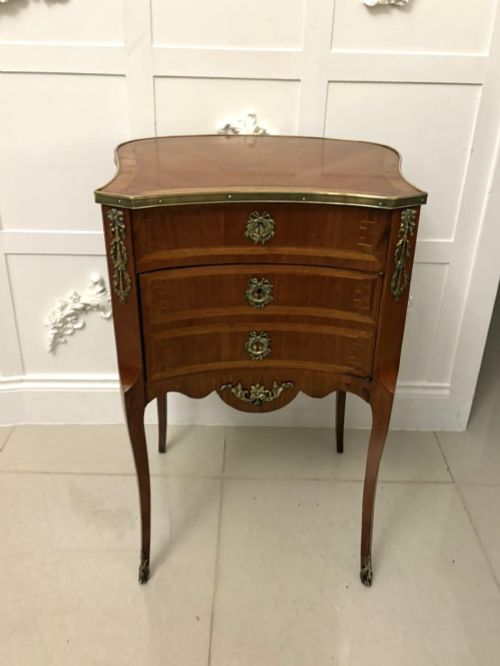
Mounts and accents in cast or gilt brass and ormolu decorate the corners, handles, and apron mounts. Marble slabs, fitted securely to the top surfaces, provide durable and decorative finishes on many bedside cabinets.
The iconic cabriole leg is shaped directly from the wood of the frame or integrated seamlessly into the corner posts. French polishing finishes the exposed wooden surfaces to highlight the natural grain and colour.
Listings span the late nineteenth century through the Edwardian era and into 1930s revival pieces, utilising walnut, oak, kingwood, and rosewood.
What varies in quality
The fineness of the marquetry and the precision of the veneer matching distinguish superior examples from simpler production pieces. Elaborate floral or geometric inlays executed in multiple contrasting timbers require considerable skill.
The quality of the cast ormolu mounts and brass hardware marks a clear division in the upper tiers of manufacture. Crisp chasing and heavy gilding separate bespoke cabinetwork from standard commercial output.
Structural integrity depends on the retention of original marble tops, well-fitted drawers, and stable joints along the curved leg profiles. Altered surfaces or replaced timber components diminish the integrity of the piece.
François Linke
The French Cabriole Nightstands Glossary
- Cabriole leg
- A furniture leg that curves outward at the knee and tapers inward toward the ankle, imitating an animal's limb. This form originated in ancient China and became a defining feature of French Rococo design.
- Marquetry
- Decorative veneer work forming pictures or patterns by assembling small pieces of different coloured wood. Craftsmen apply these thin wood slices to the underlying carcass.
- Ormolu
- Gilded bronze mounts applied to furniture edges, feet, and drawer pulls for decorative effect. The technique involves treating metal with mercury and gold amalgam.
- Parquetry
- Geometric patterns formed by small pieces of wood fitted together on a surface. It differs from marquetry through its strict adherence to repeating geometric grids.
- Serpentine front
- A furniture front curved with a convex centre flanked by concave ends, creating an undulating wave shape. This contour requires precise woodworking skills.
French Cabriole Nightstands: Frequently Asked Questions
How do I spot Louis XV style?
Louis XV style is identified by asymmetrical curves, naturalistic floral motifs, and the absence of straight lines. The cabriole leg is a primary hallmark of this aesthetic.
Revival pieces from later centuries often incorporate these same flowing contours alongside marquetry inlay and ornate brass mounts.
Are marble tops original?
Marble tops on these cabinets were frequently fitted during manufacture to provide a durable, water-resistant surface for bedside use. Many examples feature inset slabs of white or coloured marble.
Matching the stone type and edge profile to the period of the wooden base helps determine originality.
How do I care for wood veneer?
Veneered surfaces require protection from direct sunlight and excessive moisture to prevent warping or lifting of the delicate wood layers. Regular dusting with a soft, dry cloth preserves the French polish.
Avoid placing damp items directly onto polished wood or marble surfaces without protective coasters.