





French Gallery Top Table
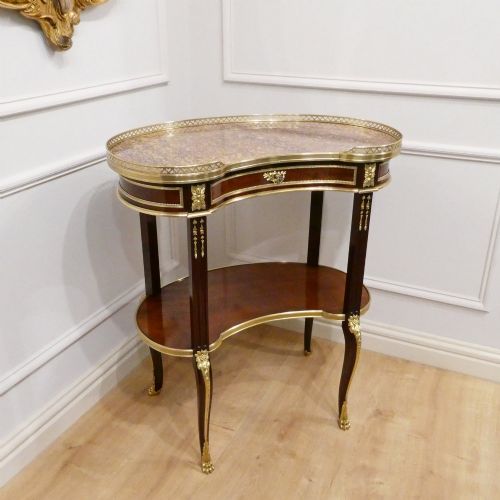
A french gallery top table brings classic continental refinement to a room, defined by its characteristic raised metal rim and inset stone surface.
French Gallery Top Table
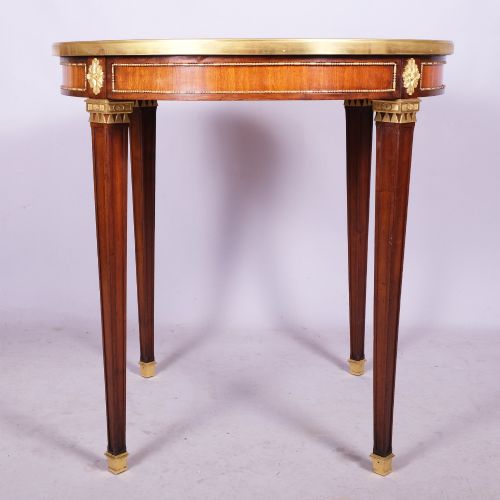
A french gallery top table typically manifests as a compact wine table, bouillotte table or occasional piece designed for domestic utility and display. The form bridges functional surface space with decorative metalwork edges intended to secure small items.
Examples span the nineteenth century into the early twentieth century, drawing heavily on Louis XVI and neoclassical revivals. Makers of the period utilised rich timbers and distinctive proportions to create pieces intended for salons and intimate chambers.
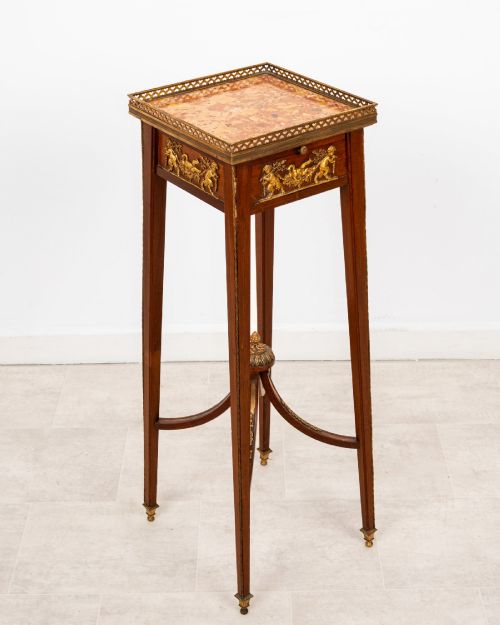
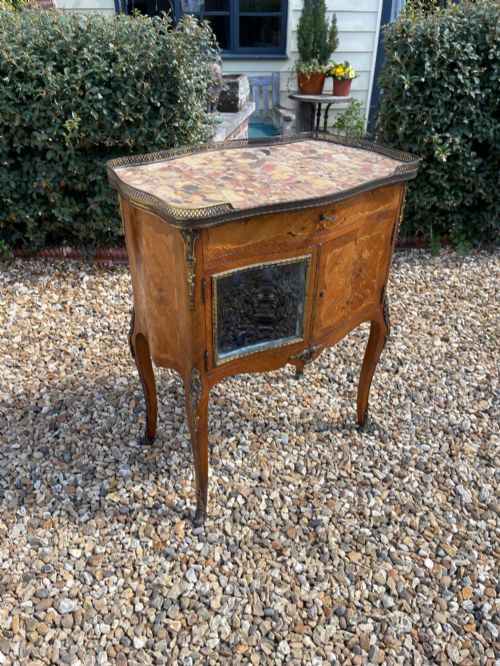
Buyers encounter variations ranging from simple mahogany side stands to ornate walnut and kingwood pieces mounted in ormolu. The defining characteristic across these forms remains the raised brass rim encircling the stone or timber top.
Materials and Construction
Cabinetmakers combined dense hardwoods such as mahogany, walnut and kingwood with decorative veneers and parquetry patterns. Structural stability depended on tight joinery, often augmented by brass mounts and cast ormolu details at stress points and corners.
The distinctive gallery edge utilised pierced or solid brass fitted meticulously to the perimeter of the tabletop. Inset surfaces predominantly featured white or coloured marble, occasionally onyx, bedded securely within the timber framework.
Tapering legs and slender supports frequently terminated in brass sabots or collars, balancing lightness of form with structural integrity. Surface finishes relied on traditional polish highlighting the natural grain and colour of the primary timber.
Listings feature woods such as mahogany, walnut and kingwood paired with brass galleries and marble tops across nineteenth-century periods.
Design and Execution
Quality rests in the crispness of the brass casting and the snug integration of the gallery into the wooden top. Superior pieces display hand-chiselled detailing on ormolu mounts rather than mass-produced uniformity.
Timber selection dictates the distinction of individual examples, with figured kingwood, burl walnut and finely matched mahogany veneers elevating baseline construction. The weight and veining of the inset marble top further signal the original tier of manufacture.
Proportion and restraint in revival ornamentation separate master workshops from provincial copies. Refined tables maintain harmonious lines where brass, stone and timber complement each other without visual clutter.
Maison Millet·François Linke
The French Gallery Top Table Glossary
- Gallery
- A raised miniature balustrade or rail running along the edge of a tabletop to prevent items from sliding off. It is typically cast in brass or pierced metal.
- Bouillotte table
- A small neoclassical circular card or occasional table featuring a raised gallery and often a marble top above candle slides. The design originates from an eighteenth-century card game.
- Ormolu
- Gilded bronze applied as a decorative mount to furniture. High-quality examples feature chased detail executed by hand after casting.
- Guéridon
- A small French occasional table supported by a central column or several legs. The form evolved from seventeenth-century candle stands into general display furniture.
- Parquetry
- Geometric wood inlay forming patterned surfaces on tabletops and cabinet doors. Craftsmen used contrasting timbers to create optical depth.
French Gallery Top Table: Frequently Asked Questions
What is a french gallery top table used for?
These pieces function primarily as occasional tables, bedside stands or small wine tables within domestic interiors. Their raised rims made them suitable for holding drinks, writing materials or small decorative objects without risk of sliding.
Historically, they sat beside seating or beds to provide accessible surface area in grand salons and private chambers. Today, buyers use them in similar capacities to add continental character and functional display space to living rooms.
How do I identify a nineteenth-century piece?
Examination of the timber, joinery and casting methods reveals the period of manufacture. Nineteenth-century examples often employ solid mahogany or walnut carcases with hand-cut dovetails and traditional hand-applied polish.
The quality of the brass gallery and any associated ormolu mounts offers further evidence, as earlier pieces display sharper chisel work and heavier metal gauges than later reproductions.
Are the marble tops original to the tables?
Most marble inserts found on these tables are original to their construction, cut specifically to fit the recessed wooden frame. The edges of the stone usually show appropriate historical wear matching the age of the base timber.
Varieties such as white marble or coloured breche stone align with specific revival periods popular during the nineteenth century. Replacement marble typically lacks the subtle weathering and exact perimeter fit of an authentic period top.
How should I care for timber and marble?
Maintenance requires gentle cleaning with soft cloths and avoidance of harsh chemical polishes that can degrade historic finishes. Timber benefits from occasional wax application suited to antique furniture.
Marble surfaces need protection from acidic liquids and moisture, which can etch the polished stone. Wiping spills promptly preserves the natural finish of both the stone and the surrounding brass gallery.