


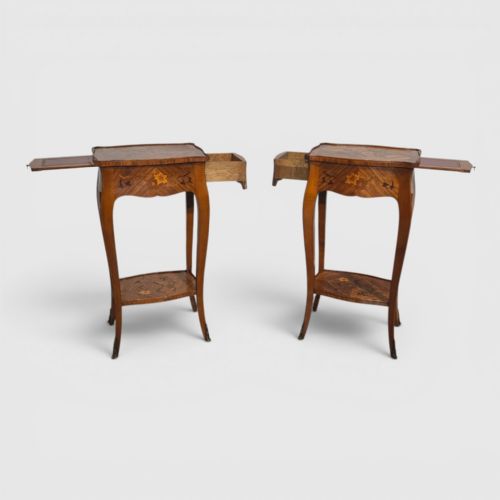

French Cabriole Leg Nightstands
These French cabriole leg nightstands combine elegant curvature with practical bedside storage, offering period charm for traditional bedrooms.
French Cabriole Leg Nightstands
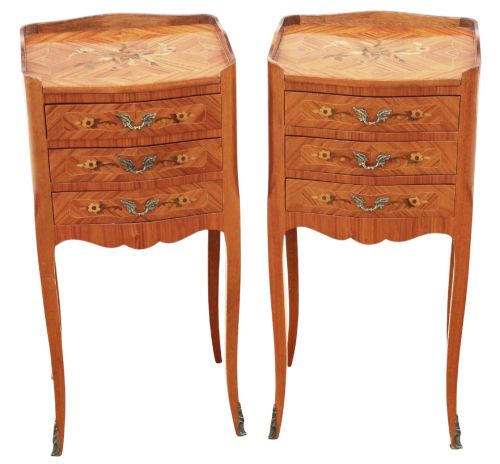
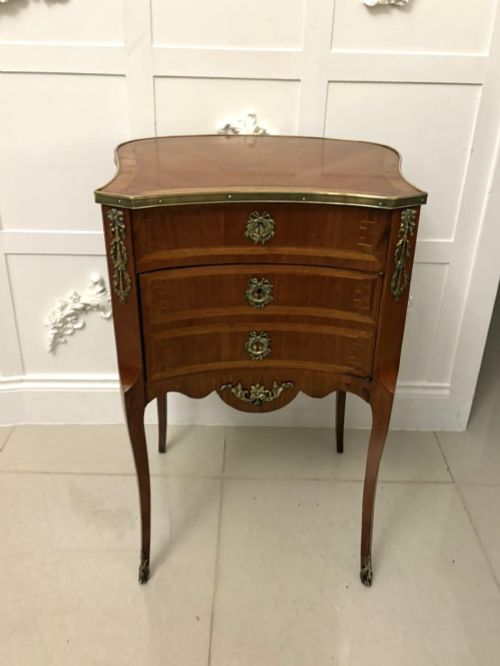
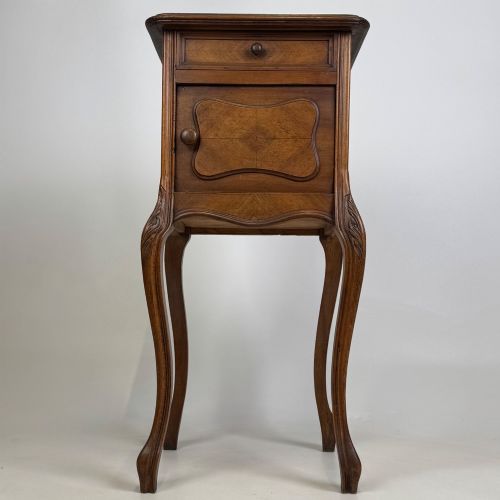
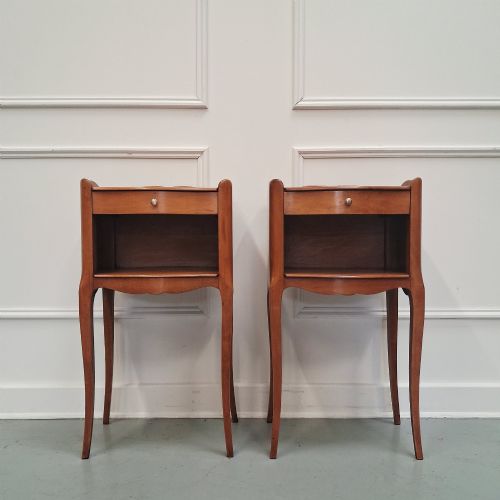
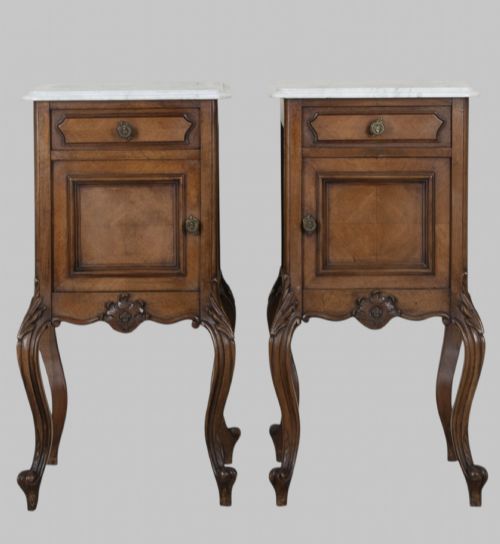
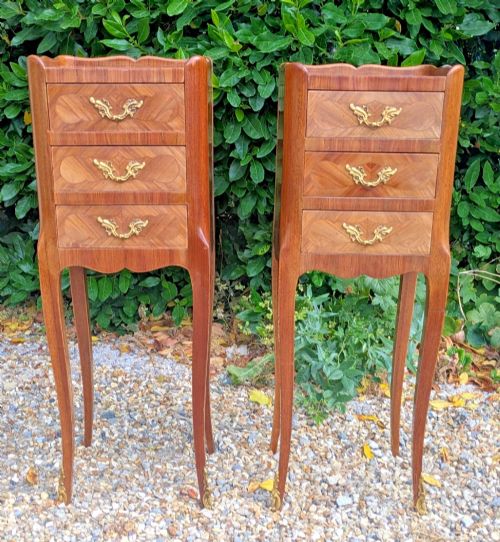
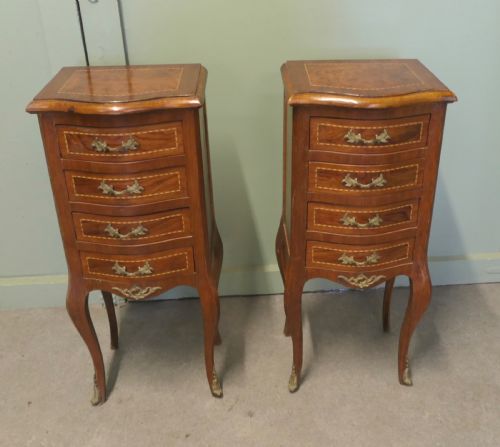
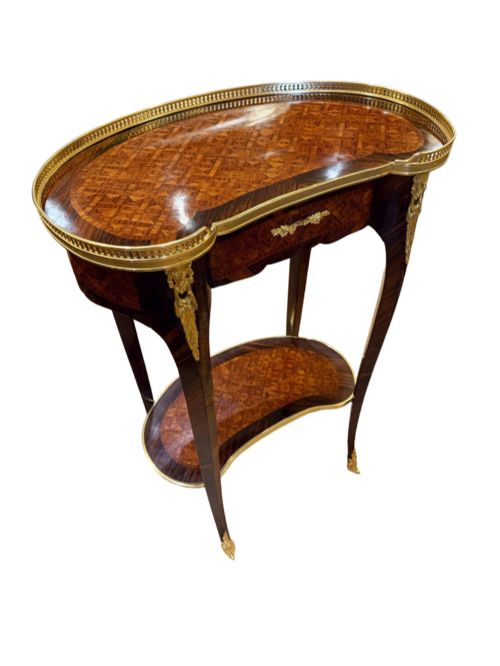
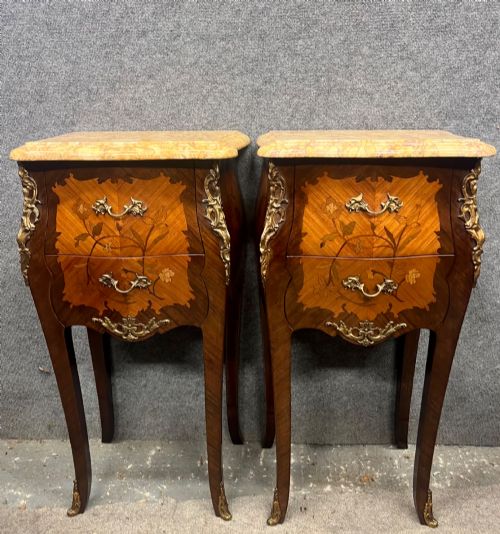
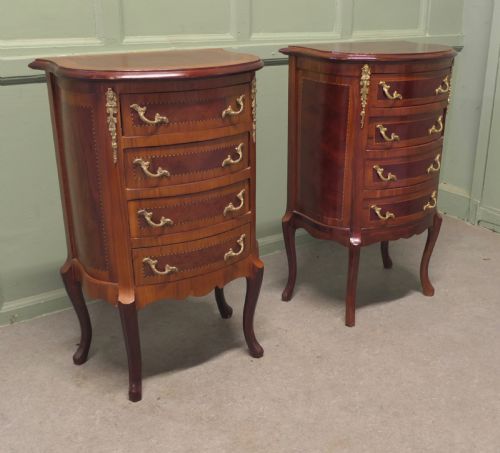
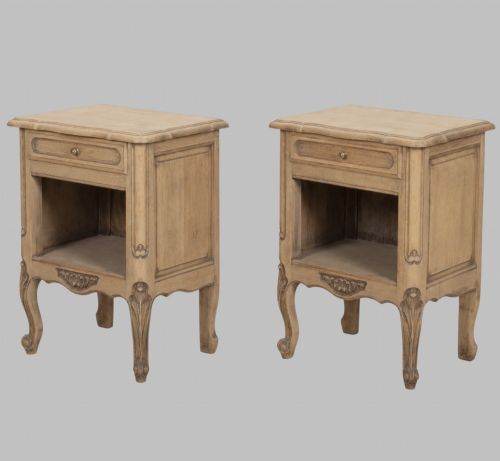
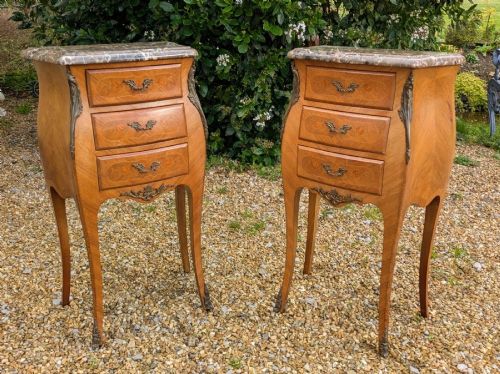
French cabriole leg nightstands encompass bedside cabinets, side lockers, and lamp tables shaped by continental cabinetmakers across the nineteenth and twentieth centuries. These pieces appear in forms such as kidney-shaped occasional tables, serpentine chests of drawers, and compact bedside tables.
The prevailing examples on this page date from the Edwardian era through the nineteen-thirties, manifesting distinct revival aesthetics. Makers drew heavily upon Louis XV and provincial French idioms to construct these domestic accompaniments.
How They Were Made
Cabinetmakers utilised timber carcasses built from walnut, oak, mahogany, rosewood, kingwood, and cherry wood. These wooden structures frequently received decorative surface treatments including marquetry and parquetry inlay.
Many iterations incorporate inset marble tops and cast brass or ormolu mounts affixed to the corners and legs. The characteristic double-curved leg originates from solid timber shaped to taper towards subtle scroll feet.
Listings feature walnut, oak, and kingwood alongside marble and ormolu mounts, spanning the nineteenth and twentieth centuries.
What Varies in Quality
Quality rests upon the precision of the timber matching within the marquetry panels and the crispness of the cast ormolu mounts. Superior examples demonstrate fluid joinery where the curved legs integrate seamlessly into the structural apron.
The selection of materials marks the division between standard provincial utility pieces and high-status revival furniture. Finer specimens employ dense exotic veneers and heavy polished marble slabs fitted precisely to the wooden carcass.
François Linke
The French Cabriole Leg Nightstands Glossary
- Cabriole leg
- A furniture leg that bends outward in a convex curve and tapers inward in a concave arc to a foot. This characteristic form imitates the leaps of animal limbs and defines eighteenth-century revival seating and case furniture.
- Marquetry
- Decorative patterns formed by fitting together thin slices of various coloured woods onto a structural surface. Craftsmen utilise this technique to render floral motifs and geometric designs across table tops and cabinet doors.
- Ormolu
- Gilded bronze ornamentation applied to the exterior corners, handles, and feet of fine wooden furniture. The technique involves coating cast bronze in a mercury-gold amalgam and heating the metal.
- Parquetry
- Geometric wood inlay arranged in repetitive grid patterns such as cubes or chequers. This method differs from pictorial marquetry by relying on systematic angles and straight lines.
- Serpentine
- A furniture front or edge shaped with a central convex curve flanked by two concave curves. This undulating profile requires skilled timber shaping and edge-banding.
French Cabriole Leg Nightstands: Frequently Asked Questions
What periods do these nightstands represent?
The pieces span the nineteenth century through to nineteen-thirty, encompassing Edwardian production alongside earlier Victorian examples. Many adopt historic design vocabularies rather than originating in the actual royal reigns.
Revival movements during the late Victorian and interwar periods produced the majority of these bedside cabinets and lamp tables, imitating earlier monarchical aesthetics.
How should I care for marble tops?
Marble surfaces require gentle cleaning with warm water and mild soap to protect the polished stone from acidic staining. Avoid harsh chemical cleaners that can dull the natural sheen.
Coasters beneath glasses and protective pads under heavy decorative items help preserve the stone from scratches and moisture rings over years of daily domestic use.
Are these tables usually found in pairs?
Many listings present matching pairs of bedside cabinets designed to flank a double bed symmetrically. Single tables also appear frequently as standalone lamp stands or occasional furniture.
Collectors seeking twin pieces often inspect eighteenth-century revival variants produced during the early twentieth century by European cabinetmakers.
What woods were used in construction?
Walnut, oak, kingwood, rosewood, and mahogany form the primary structural timbers for these French bedside tables. Beech and cherry wood also appear in provincial pieces.
Cabinetmakers applied exotic veneers such as kingwood and rosewood over secondary timbers to create decorative geometric or floral marquetry panels.