


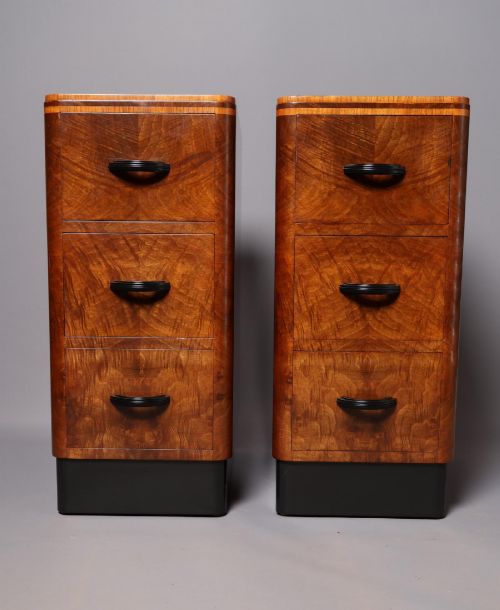


Pair Walnut End Tables
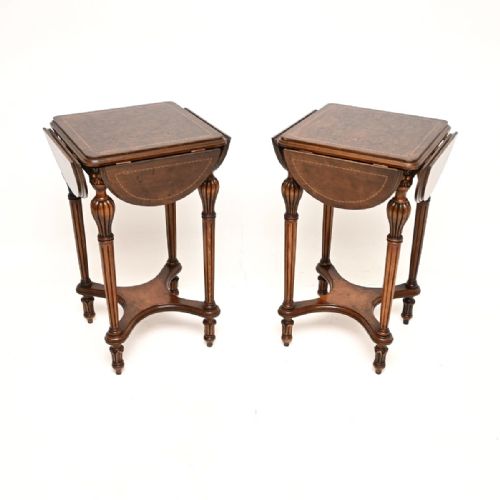
These pair walnut end tables bring matched timber and compact proportion to a room, offering a functional surface either side of a bed or sofa.
Pair Walnut End Tables
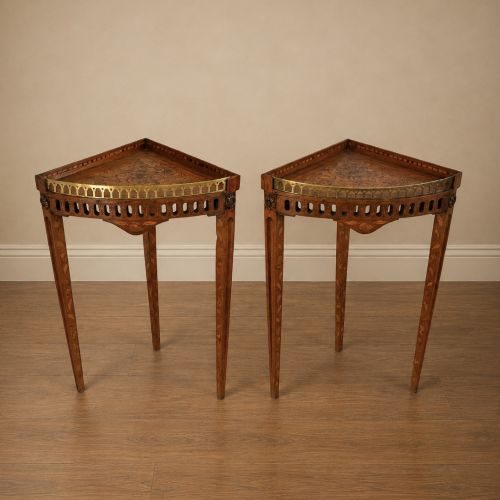
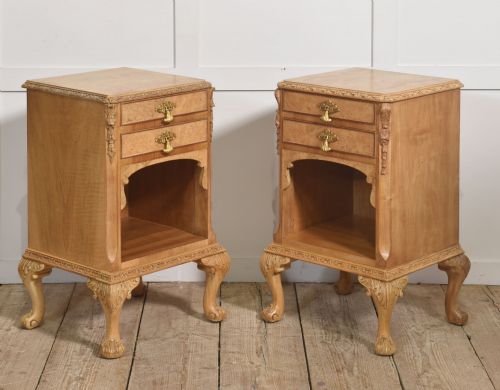
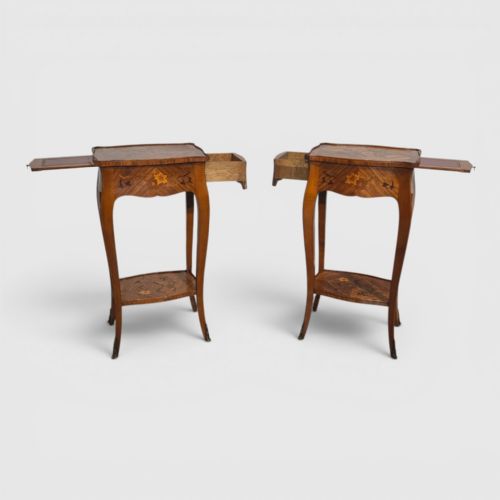
Pair walnut end tables appear in several distinct forms across this selection, most commonly as bedside cabinets, lamp tables, or low side tables. A buyer searching for pair walnut end tables will encounter pieces ranging from neat French bedside cupboards to geometric Art Deco side tables and earlier eighteenth-century examples.
The materials span plain walnut, rich burr walnut, and satin walnut, frequently enhanced by contrasting marquetry inlay or brass fittings. Styles stretch from French provincial and Louis XV revivals to modernist designs by noted makers.
Origin and period heavily influence the character of each pair, with nineteenth and early twentieth-century interpretations dominating the available choices. These tables serve practical daily functions while anchoring a room with symmetrical timber grain.
Materials and construction
Makers utilised solid walnut and figured wood veneers applied over stable secondary timbers to create rich patterned surfaces on the tops and sides. Marquetry inlay, incorporating satinwood and other contrasting timbers, often decorates the tabletops and drawer fronts of French and Georgian revival pieces.
Mounts in cast brass or ormolu provide structural accent and protective edging, particularly on French nineteenth-century and neoclassical designs. Brass galleries and tiered modernist structures demonstrate the varied metalwork integrated into these timber frames.
Pair Walnut End Tables Retail Price Guide 2026
Typical asking prices for pair walnut end tables among the pieces listed under this phrase on Sellingantiques today, from the lower quarter to the upper quarter. They describe what is for sale here now, not the wider market.
Materials paired with the timber include cast brass, ormolu, marble, and contrasting wood veneers.
Assessing quality and craftsmanship
The value and distinction of pair walnut end tables rest primarily on the selection of the timber veneer and the precision of its grain matching across both pieces. Superior examples display continuous burr walnut patterns or intricate, well-preserved marquetry that aligns harmoniously from one table to its counterpart.
Fine construction is further revealed in the crispness of bronze or brass mounts, the neatness of dovetail joinery within drawers, and the stability of the overall frame. Lesser pieces rely on simpler plain timber without the careful grain selection or detailed hardware found at the top of the range.
Gilbert Rohde·Maurice Adams·Charles Topino·Hille
The Pair Walnut End Tables Glossary
- Burr walnut
- A figured timber obtained from the wart-like growths on walnut trees, prized for its swirling, highly decorative grain patterns. It is frequently utilised as a veneer on high-end cabinet furniture.
- Marquetry
- The art of applying small pieces of veneer to a structure to form decorative patterns or pictures. Craftsmen cut contrasting woods such as satinwood and kingwood into the walnut ground.
- Ormolu
- Gilded bronze ornamentation applied to furniture, popular in French eighteenth-century design and later nineteenth-century revivals. It provides a bright metallic contrast against dark timber.
- Brass gallery
- A small pierced metal railing fitted around the top edge of a table or cabinet. This feature prevents items from sliding off the surface.
- Veneer
- A thin slice of superior wood applied to a stable secondary timber base. This technique allows makers to display striking grain figures without risking the warping associated with solid exotic boards.
Pair Walnut End Tables: Frequently Asked Questions
What rooms suit pair walnut end tables?
These matched tables sit naturally beside a bed or flank a sofa in a living room, providing balanced display surfaces.
Their compact footprints also make them suitable for narrow hallways or as corner lamp tables.
How do I care for walnut veneer?
Walnut benefits from occasional polishing with traditional beeswax and protection from direct sunlight to prevent fading.
Avoiding excessive moisture on the timber surface preserves the integrity of the underlying veneer and polish.
Are these tables from the same period?
The selection includes pieces spanning from the eighteenth century through to the Art Deco period of the nineteen-thirties.
Each listing specifies the era, ranging from Georgian designs to modernist interpretations.
What is the difference between side and bedside tables?
Side tables typically feature open frames, shelves, or small drawers intended for general living spaces.
Bedside cabinets usually incorporate enclosed cupboards or specific storage designed to keep personal items out of sight.