




French Bronzed Spelter Figure
A french bronzed spelter figure brings the decorative energy of nineteenth and twentieth-century French workshops into a room.
French Bronzed Spelter Figure
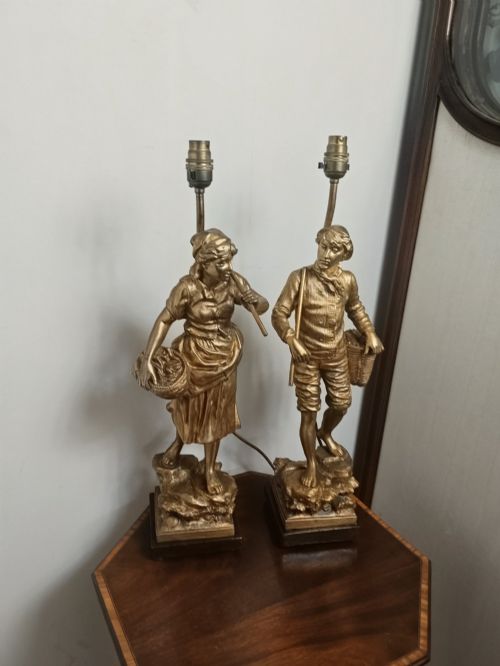
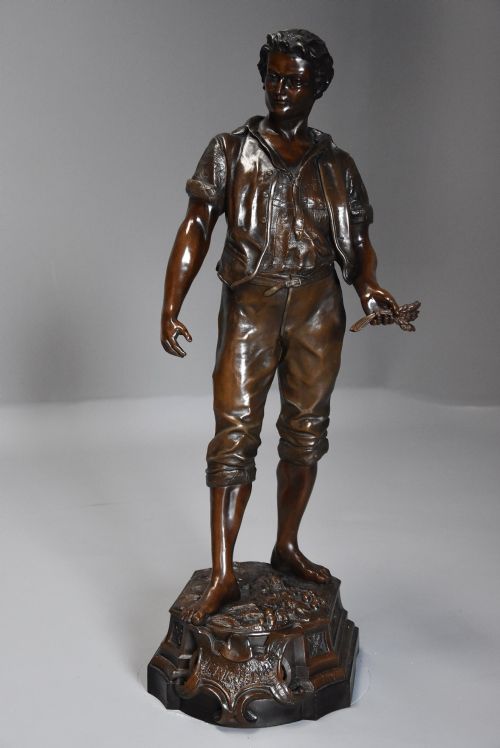
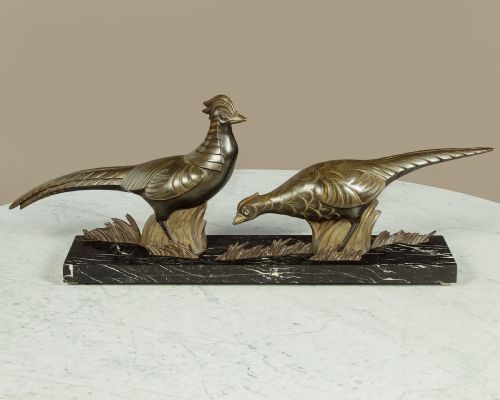
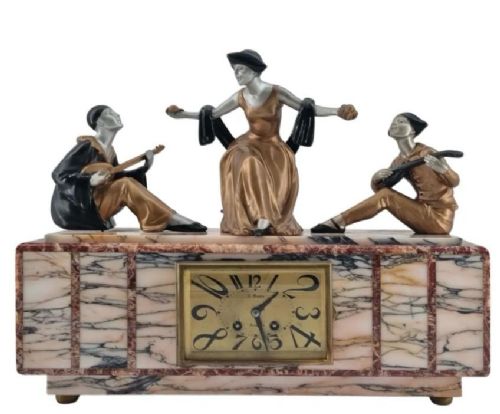
A french bronzed spelter figure typically takes the form of a human subject, animal group, or allegorical character set upon a base of marble, onyx, or wood. The selections found here span from nineteenth-century realism and Victorian historicism through to the sleek geometry of the Art Deco period.
Buyers most frequently encounter standing models of labourers, cavaliers, dancers, and athletes, alongside functional objects such as table lamps, mantel clocks, and bookends. These pieces capture popular tastes from the eighteen-eighties to nineteen-thirties without relying on precious metals.
The origins remain firmly French, reflecting the output of commercial foundries that translated academic sculpture and contemporary modernist design into accessible household ornaments. Each item demonstrates how domestic spaces in past decades integrated sculptural art into everyday interiors.
Materials and construction
Makers cast these objects using spelter, a zinc-based alloy that offered a fluid medium for capturing intricate details in hair, drapery, and facial expressions. Because spelter is softer than bronze, founders relied on metal reinforcement rods within slender limbs and extremities to prevent structural sagging.
To achieve the desired appearance, workshops applied chemical patination or metallic dark finishes directly to the cast surfaces, simulating the rich tones of aged bronze. Many figures were subsequently mounted onto heavy bases of carved marble or onyx to provide physical stability.
Several Victorian soldiers stand ready on mantelpieces, guarding clocks that stopped ticking decades ago.
Assessing the craftsmanship
The integration between the figure and its base reveals much about the original manufacture, as superior pieces utilise heavy stone mounts fitted securely with threaded fasteners rather than adhesives. Signatures or foundry stamps embedded in the metal indicate a higher grade of commercial production.
Auguste Moreau·L and F Moreau·F Milliot·P Sega·Chiparus·Geo Maxim·C Masson
The French Bronzed Spelter Figure Glossary
- Spelter
- A zinc alloy commonly utilised as a cost-effective alternative to bronze for nineteenth and twentieth-century sculptural castings. It accepts patination readily but requires careful handling due to its relative softness.
- Patination
- The surface treatment or chemical coloration applied to metal to simulate age and depth. This finish highlights the sculptural contours created during the casting process.
- Garniture
- A set of matching decorative ornaments, typically comprising a mantel clock flanked by matching candelabra or vases. These sets formed symmetrical centrepieces on nineteenth-century mantelpieces.
- Figural
- Descriptive of any artwork or object that incorporates human or animal forms as its primary decorative element. These pieces often tell a narrative story or represent an allegorical concept.
French Bronzed Spelter Figure: Frequently Asked Questions
What is spelter metal?
Spelter is a zinc-based alloy that served as a popular medium for European sculpture and decorative objects during the nineteenth and twentieth centuries. It allowed founders to produce affordable figures with intricate surface detail.
Because the metal is softer than bronze, pieces made from spelter often require gentle care to avoid surface dents and structural bends in extended limbs.
How do I clean my figure?
Dusting with a dry, soft cloth is the safest method for maintaining the surface of a patinated metal sculpture. Moisture and chemical polishes can damage the applied finish.
Avoiding abrasive materials ensures that the dark bronzed coating remains intact on the zinc substrate beneath.
Are these pieces solid bronze?
Most items listed under this category are cast from zinc alloy rather than solid bronze, though period manufacturers often applied a dark bronze-toned patina to mimic the heavier metal. This made sculptural art accessible to middle-class households.
A magnet or a discreet check of the base weight typically helps distinguish the lighter alloy from true bronze or cast iron.
Why are they mounted on stone?
Marble and onyx bases were added during manufacture to anchor tall or top-heavy figures and provide a stable foundation for display on tables and mantelpieces. These heavy stones also enhanced the overall visual weight of the piece.
During the Art Deco era, contrasting geometric stone plinths became an integral part of the modern design aesthetic.