




French Bronze Mantle Clock
These heavy, sculptural timepieces combine cast metal with classical figures, offering a weighty presence that anchors a room.
French Bronze Mantle Clock
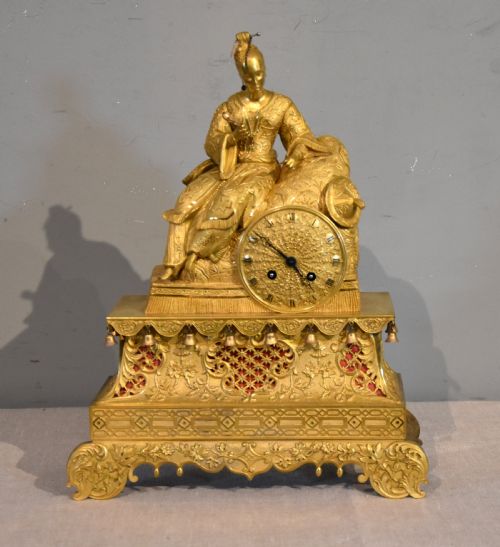
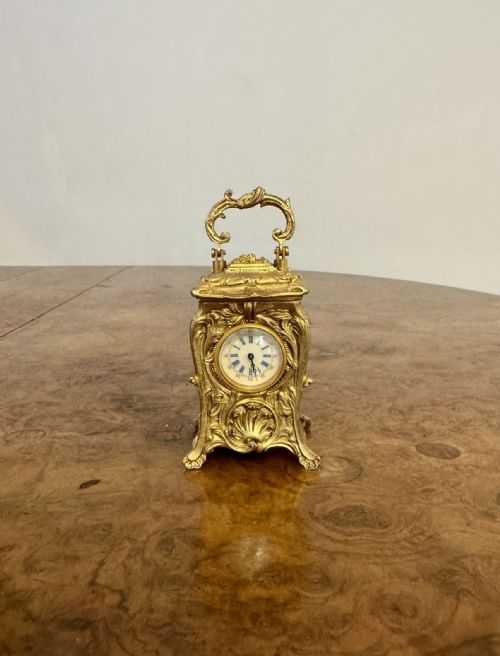
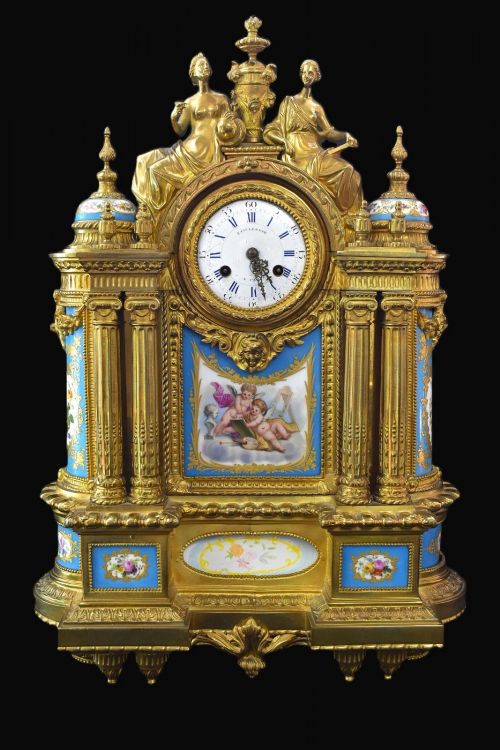
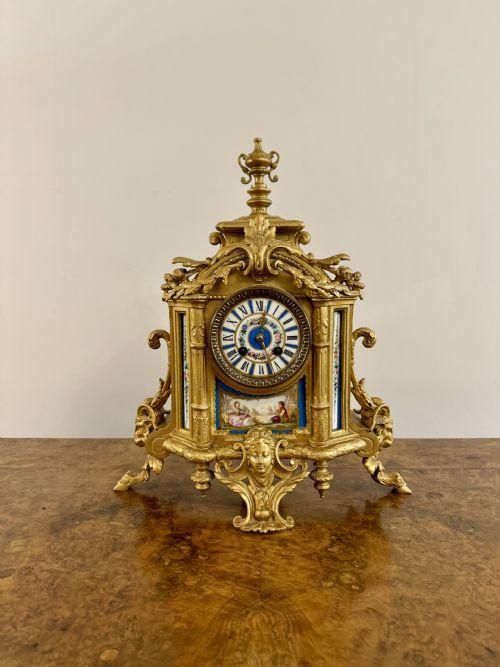
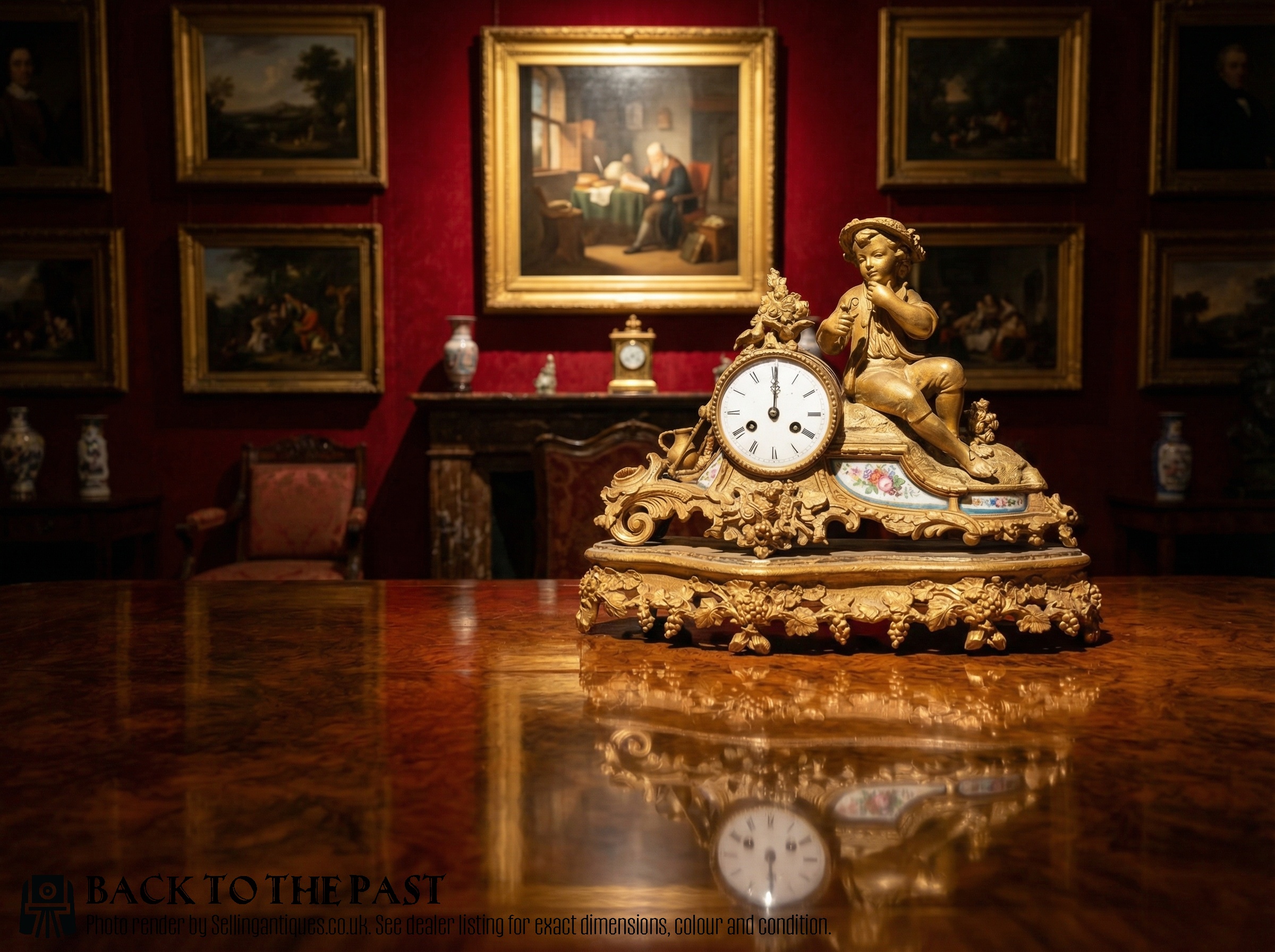
A french bronze mantle clock sits at the intersection of horology and sculpture, taking forms that range from classical mythological figures to architectural porticos. You will frequently encounter nineteenth-century examples produced during the Victorian era, spanning revivals of the Rococo, Louis XVI, and Empire styles.
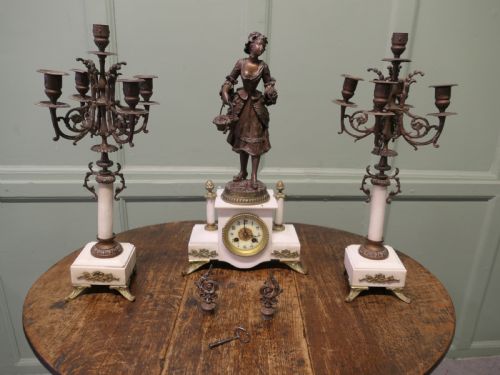
The objects listed here include standalone mantel clocks alongside three-piece garniture sets featuring matching candelabras or urns. Many examples incorporate subsidiary materials such as white marble, Sevres porcelain, or glass panels housing the mechanical movement.
Makers and retailers recorded in the archive range from individual Parisian clockmakers to established houses like Japy Freres, Vincenti, and Breguet. The dial may be signed by the retailer or maker, offering a direct link to the Parisian workshops of the period.
Materials and construction methods
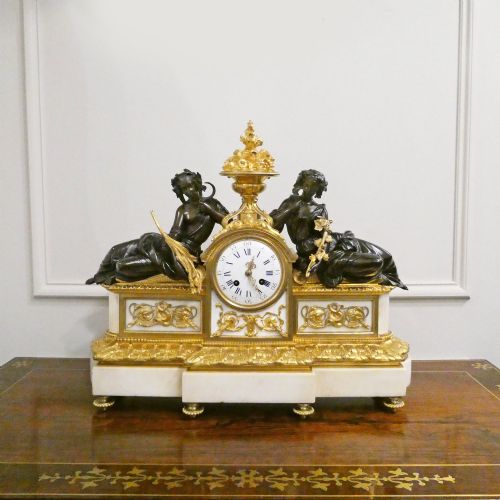
Foundries cast the primary components in bronze and brass, utilising lost-wax or sand-casting methods to achieve intricate relief work. Artisans then applied fire-gilding or ormolu techniques to impart a durable golden finish to the bronze elements.
Movements were predominantly eight-day mechanical systems, often driven by springs or weights, which required precision cutting of brass gears and steel pinions. Dials were frequently constructed from convex glass protecting white enamel chapters with painted numerals.
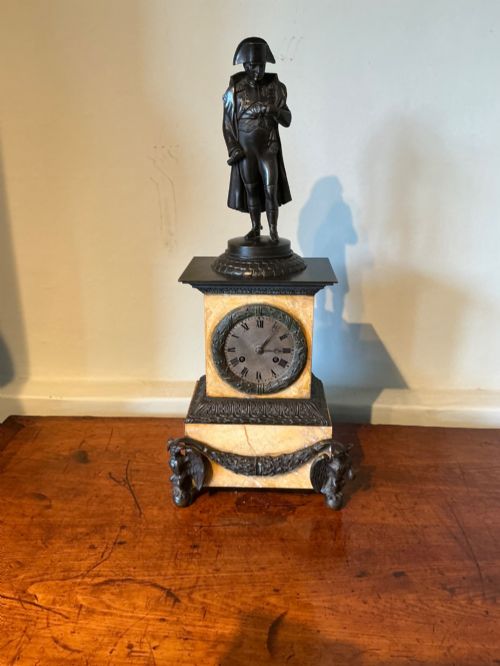
Architectural cases combined dense materials like marble and cut crystal with metal mounts pinned or screwed directly to the stone structure. Cabinetmakers also applied Boulle marquetry of tortoiseshell and brass to wooden carcasses for high-status interiors.
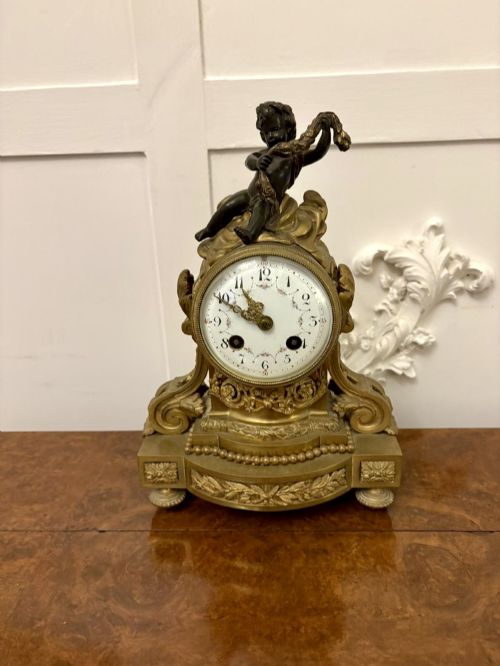
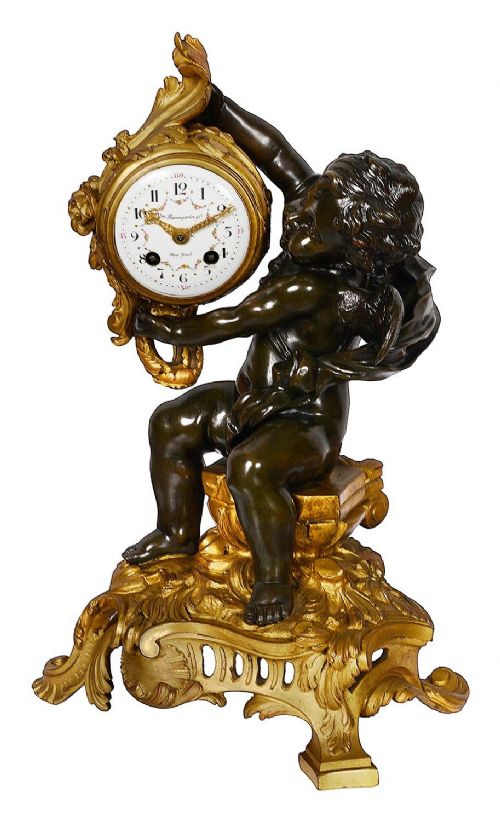
Several clocks feature armed medieval knights on horseback or mischievous cherubs keeping watch over the hours.
Distinguishing quality across the range
The integration of the movement with the sculptural theme dictates overall cohesion, where bespoke figures designed specifically to house a clock face outclass generic castings adapted to fit a movement. Heavy marble bases and thick ormolu mounts further signal higher manufacturing investment.
Signed movements and dials by recorded Parisian makers provide verifiable provenance that elevates a piece above unsigned factory output. Complete garniture sets with matching numbers across the clock and sidepieces also represent a higher tier of survival.
Vincenti·Etienne Lenoir·Philippes Paris·Japy Freres·Breguet
The French Bronze Mantle Clock Glossary
- Ormolu
- A technique of applying finely ground high-carat gold-mercury amalgam to bronze, creating a rich golden surface that does not tarnish easily. It defines the decorative highlights on many nineteenth-century cases.
- Garniture
- A set of matching ornamental objects consisting of a central clock flanked by two matching vases or candelabras. These sets were designed to balance the symmetry of a fireplace mantel.
- Portico clock
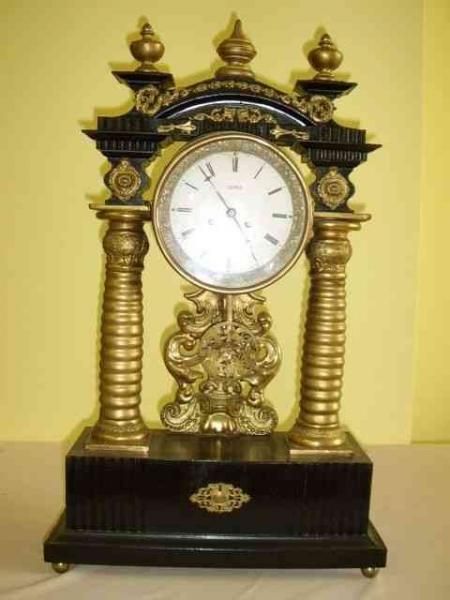
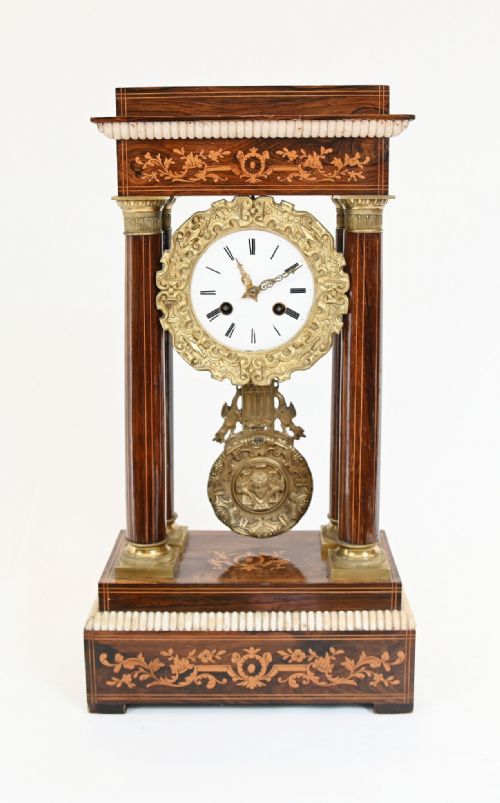
- An architectural clock style featuring a flat top supported by four columns, often framing a suspended pendulum. This neoclassical form gained popularity during the late eighteenth and early nineteenth centuries.
- Champleve
- An enamelling technique where troughs or cells are hollowed out of the metal surface and filled with coloured glass paste before firing. It appears as vibrant decorative borders on many late Victorian models.
- Silk suspension
- An early method of hanging the pendulum from a fine adjustable silk thread inside the movement. It provides a delicate and quiet beat but requires careful handling during transport.
French Bronze Mantle Clock: Frequently Asked Questions
How do I wind an antique clock?
Use the correct winding key provided with the movement, turning it gently until you feel firm resistance. Do not force the spring past its stop, as older metals are prone to snapping under excessive tension.
Ensure you turn the key in the proper direction for the specific train, whether for the timekeeping side or the striking mechanism. If the clock has a pendulum, steady it before setting the hands to the correct time.
Where should I place my clock?
Select a stable, level surface away from direct sunlight, central heating radiators, and damp exterior walls. Marble and bronze combinations require a sturdy shelf to support their considerable weight safely.
Keep the clock away from areas prone to heavy vibrations, such as slamming doors, which can throw the pendulum out of beat. A level surface ensures the escapement mechanism ticks evenly without stopping.
How do I identify the period?
Examine the stylistic cues of the bronze casting and the materials used in the case construction. Neoclassical portico clocks typically date to the late eighteenth or early nineteenth century, while ornate gilt metal combined with porcelain often points to the Victorian era.
Look for signatures or stamps on the rear brass backplate of the movement. Makers frequently stamped their factory medals and serial numbers directly onto the metal plates.
What maintenance do these clocks need?
Mechanical movements require professional cleaning and lubrication every few years to prevent old oils from gumming up the brass gears. Dust the exterior bronze and marble gently with a soft, dry cloth without using abrasive metal cleaners.
Avoid using commercial polishes on ormolu surfaces, as harsh chemicals can strip the thin layer of gold leaf. Consult a qualified horologist if the clock begins to lose time or fails to strike correctly.