

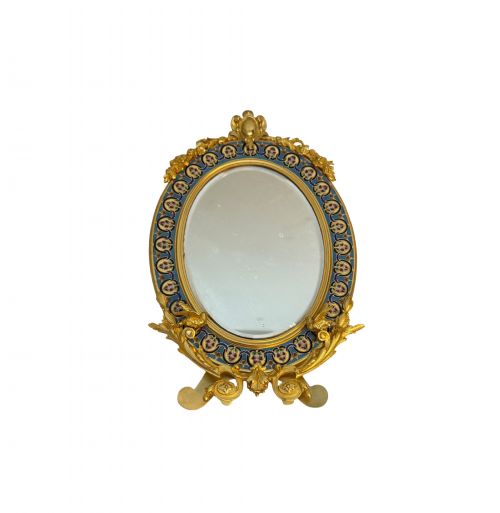


French Brass Standing Mirror
A French brass standing mirror brings the refined polish of continental dressing rooms into any interior, offering both practical reflection and decorative presence.
French Brass Standing Mirror
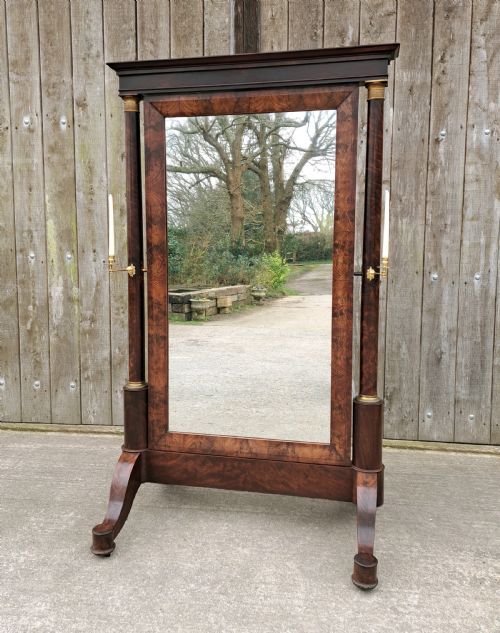
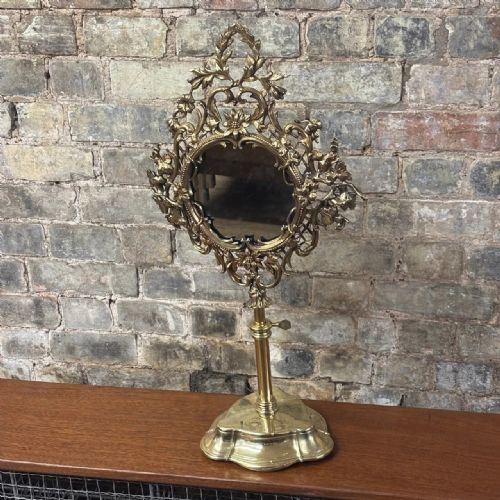
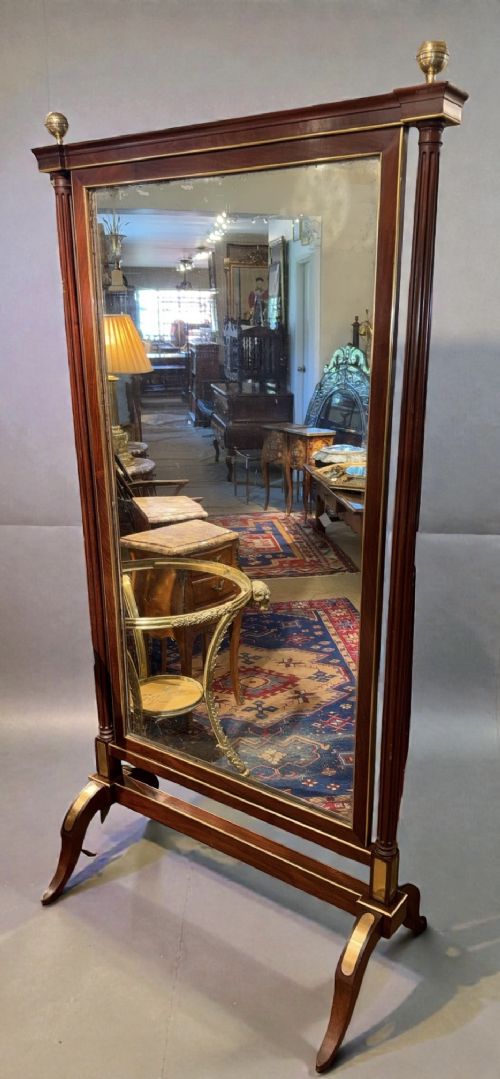
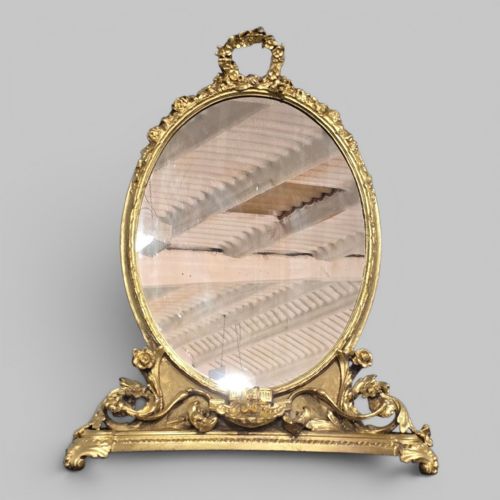
A French brass standing mirror encompasses table mirrors, vanity pieces, and full-length cheval mirrors designed to stand independently on surfaces or floors. These objects emerge in varied forms ranging from compact tabletop dressing mirrors to tall pivoting cheval frames intended for bedrooms and dressing rooms.
The selection on this page spans several distinct eras and aesthetic movements, featuring items from the eighteenth, nineteenth, and early twentieth centuries. Pieces often display Revival styles including Louis XV, Louis XVI, and French Empire, alongside champlevé ornamentation and Limoges enamel details.
Beyond standard dressing mirrors, related furnishings such as mirrored portmanteaus, hall stands, and coat racks occasionally appear within this grouping. These diverse objects share a common foundation of brass, bronze, or gilt metal construction paired with original or bevelled mirror glass.
Materials and construction methods
The primary structural elements rely upon cast brass, gilt bronze, and flame mahogany, often shaped to suit ornate Rococo or Empire proportions. Metalwork components are frequently cast, chased, and gilded, creating detailed frames that support heavy bevelled glass plates.
Articulated joints, adjustable pedestals, and fitted candle holders demonstrate precise metalworking techniques employed by period makers. Secondary materials such as champlevé enamel work and Limoges inserts are integrated directly into the metal armature for decorative emphasis.
French Brass Standing Mirror Retail Price Guide 2026
Typical asking prices for french brass standing mirror among the pieces listed under this phrase on Sellingantiques today, from the lower quarter to the upper quarter. They describe what is for sale here now, not the wider market.
Materials documented across the inventory include solid brass, gilt bronze, flame mahogany, and champlevé enamel.
Distinguishing quality in period mirrors
The refinement of the casting and chasing work dictates much of the distinction between standard production and exceptional examples. Crisp detail in the floral motifs, scrolls, and figural mounts indicates superior craftsmanship.
The weight and gauge of the brass or gilt bronze frame, alongside the retention of original bevelled mirror plates, mark the relative sophistication of a piece. Robust swivel mechanisms and integrated fixtures like articulated candle holders also reflect higher standards of original manufacture.
F. Bienvue
The French Brass Standing Mirror Glossary
- Cheval mirror
- A freestanding full-length mirror suspended on a frame with pivoting pivots. This design allows the glass to tilt to various angles.
- Champlevé
- An enamelling technique where depressions are carved into a metal surface and filled with vitreous enamel before firing. It frequently appears on nineteenth-century decorative frames.
- Gilt bronze
- Bronze that has been coated with a thin layer of gold or gold-coloured alloy. This material offers a durable and lustrous surface finish.
- Ormolu
- Finely ground high-carat gold applied to a bronze base using a mercury amalgamation process. It provides a rich golden appearance on antique metalwork.
- Bevelled glass
- Glass with an edge that has been cut and polished to an angle thinner than the rest of the plate. This creates a framed decorative effect around the perimeter of the reflection.
French Brass Standing Mirror: Frequently Asked Questions
How do I date a French brass standing mirror?
Dating relies on examining the casting techniques, the style of the Revival period, and the characteristics of the mirror glass itself. Machine-cut bevels or later screw heads often point towards early twentieth-century production, while heavier hand-chased bronze points to earlier nineteenth-century work.
Context is also provided by accompanying materials, such as flame mahogany framing or champlevé enamel work characteristic of the eighteen-eighties. Comparing the specific decorative vocabulary against known historical periods helps narrow down the decade of manufacture.
What is the difference between a cheval mirror and a vanity mirror?
A cheval mirror is a tall, freestanding glass designed to stand directly on the floor, allowing a person to view their entire outfit. These often feature vertical pivoting frames supported by sturdy side pillars and feet.
In contrast, a vanity or table mirror is proportioned to sit upon a dressing table, chest of drawers, or sideboard. These smaller pieces focus on upper-body reflection and frequently incorporate adjustable tabletop stands.
How were these mirrors used historically?
These mirrors served practical grooming functions in domestic bedchambers, dressing rooms, and grand hallways. Table versions provided close-up reflection for applying cosmetics and adjusting headwear.
Freestanding cheval mirrors allowed individuals to inspect full-length attire before social engagements. Examples combined with coat racks or portmanteaus also functioned in entryways for final checks upon entering or leaving the home.
How should I clean an antique brass frame?
Cleaning antique brass requires a gentle approach to preserve the accumulated patina and any original gilding. Dusting with a soft, dry cloth is usually sufficient for routine maintenance.
Harsh chemical polishes should be avoided because they can strip away thin gilt layers or modern protective waxes. If cleaning is necessary, consult a specialist to ensure the finish remains undisturbed.