



French Brass Mounted Vitrine
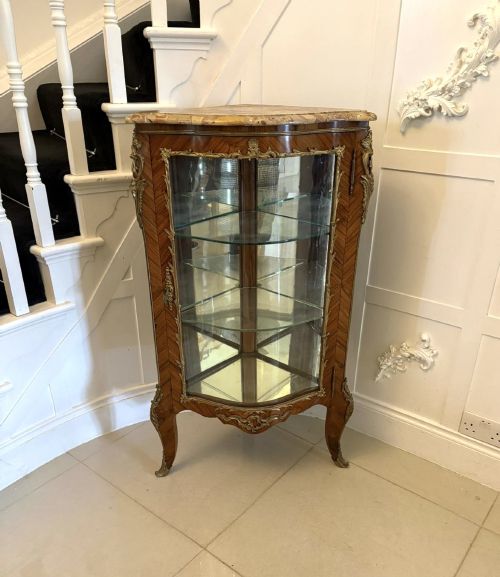
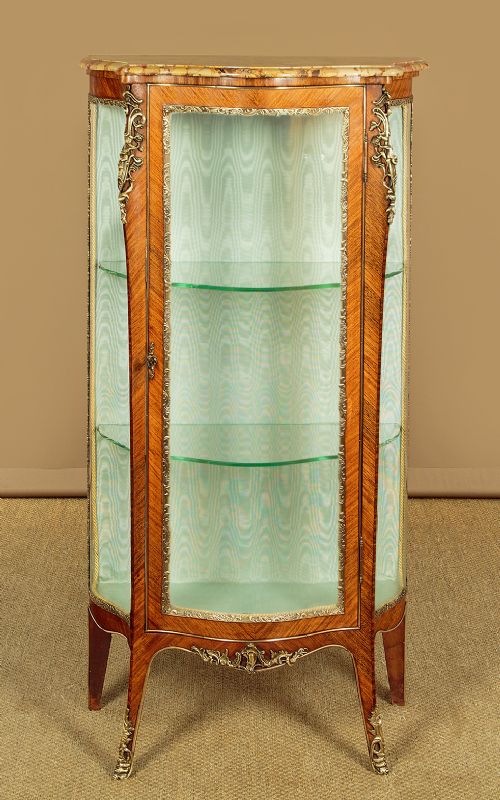
A french brass mounted vitrine displays precious objects behind glass, framed in timber and highlighted with metal mounts.
French Brass Mounted Vitrine
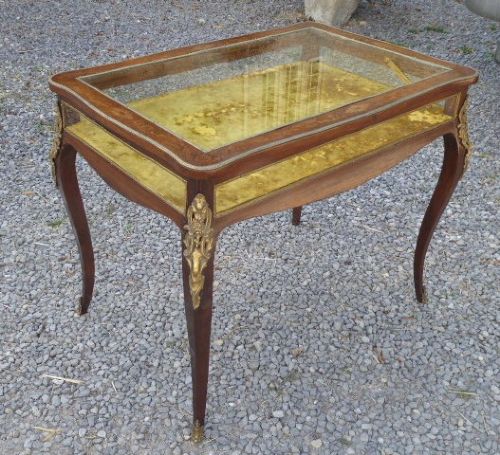
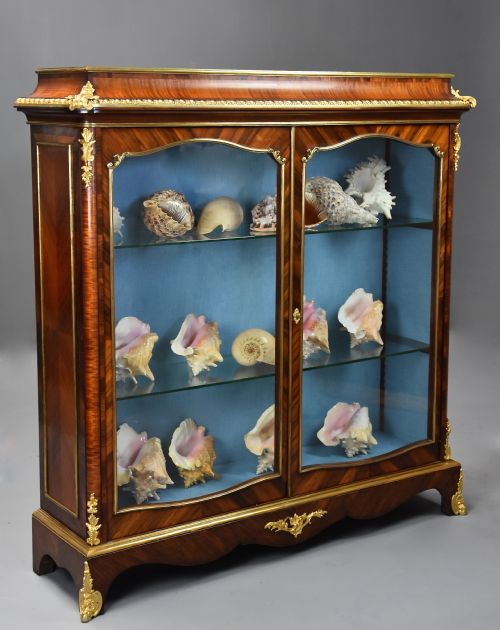
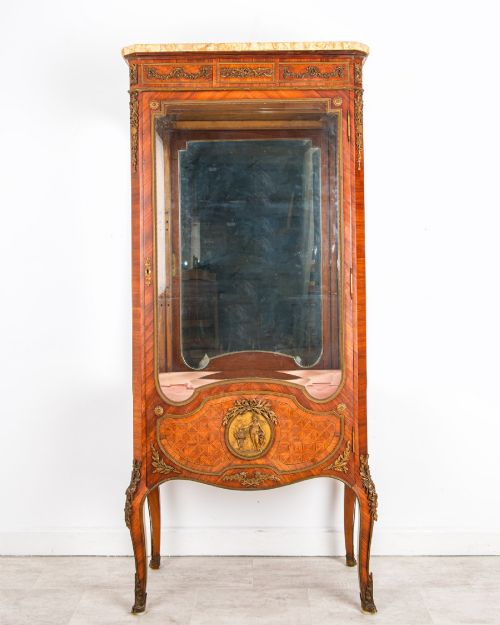
A french brass mounted vitrine is an elegant display cabinet designed to showcase porcelain, silver and small treasures behind glazed doors or glass panels. These pieces span the nineteenth century and the twentieth century, reflecting revivals of historical design such as Louis XV and Louis XVI styles.
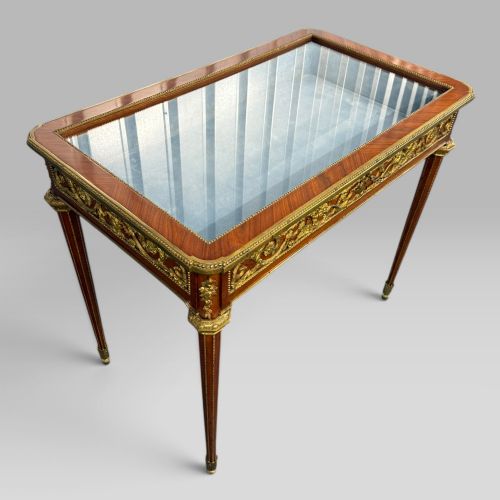
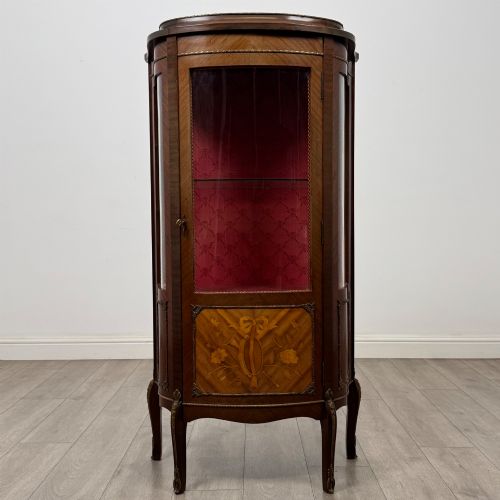
The selections on this page appear in various forms, including freestanding cabinets, corner units, pier cabinets and low bijouterie tables with glass tops. Mahogany, kingwood and rosewood form the primary carcasses, whilst glazed panels provide all-round visibility for the contents.
How They Were Made
Cabinet makers construct these pieces using hardwoods like mahogany, walnut and rosewood, often applying decorative veneers of kingwood in parquetry or marquetry patterns. Brass and ormolu mounts are cast, chased and fixed to the corners, borders and feet to accentuate the structural lines.
Glass panels are fitted into wooden doors or hinged table frames, occasionally complemented by fabric or velvet linings on internal shelves and display surfaces. Boulle inlay incorporating brass and tortoiseshell appears on ebonised carcasses for richer decorative effect.
Some nineteenth-century cabinets hide treasures behind glass while relying on tortoiseshell inlay that catches the light like a beetle's wing.
What Varies In Quality
The refinement of the ormolu or brass mounts dictates much of the visual success, ranging from sharply chased gilt bronze to simpler pressed metal strips. Cabinet work also differs significantly, seen in the precision of the marquetry patterns and the stability of the timber carcases.
Finer examples integrate painted panels or specialised Vernis Martin decoration alongside superior timber selection and heavier brass inlay. Interior detailing, such as fitted velvet backings and carefully rebated glass, separates standard production from exceptional pieces.
François Linke·Paul Sormani
The French Brass Mounted Vitrine Glossary
- Ormolu
- Gilded bronze mounts applied to furniture for decoration. This technique adds metallic contrast to the timber surfaces.
- Vitrine
- A glass-fronted display cabinet used for showing ceramics and small objects. These pieces protect delicate items from dust.
- Bijouterie table
- A glass-topped table designed for displaying jewellery and trinkets. They often feature hinged lids and velvet-lined interiors.
- Marquetry
- Decorative patterns formed by fitting contrasting veneer pieces into a wooden ground. It creates intricate geometric or floral designs on cabinet doors.
- Boulle
- An inlay technique using brass and tortoiseshell developed in France. It creates elaborate metallic patterns against a dark background.
French Brass Mounted Vitrine: Frequently Asked Questions
What goes inside a vitrine?
These cabinets suit the display of porcelain figures, glassware, small silver objects and curated collections. The glass panels keep dust away while allowing an unobstructed view from multiple angles.
Many collectors also use them to hold medals, miniatures and historical curiosities. Internal velvet linings provide a soft background that helps individual pieces stand out.
How do I clean the glass and brass?
Dust the timber and mounts gently with a dry, soft cloth to prevent surface scratching. Avoid harsh chemical polishes that can damage ormolu or discolour the surrounding wood.
Use a mild glass cleaner applied directly to a cloth rather than the glass itself, preventing liquid from seeping into wooden frames or fabric linings.
Where should I place a cabinet?
Position these pieces away from direct sunlight to protect internal fabrics, delicate veneers and organic inlay materials from fading. Stable room temperatures prevent the timber carcases from warping.
Place them in rooms with good natural light so the glass panels and metal mounts catch the illumination without enduring extreme thermal shifts near radiators.
Are bijouterie tables secure?
Bijouterie tables feature hinged glass lids that allow easy access to the display well beneath. While suitable for everyday viewing, they rest on slender legs and require careful placement in busy rooms.
Most versions include basic locks or latches to secure the contents, though their primary function remains decorative display rather than heavy security.