
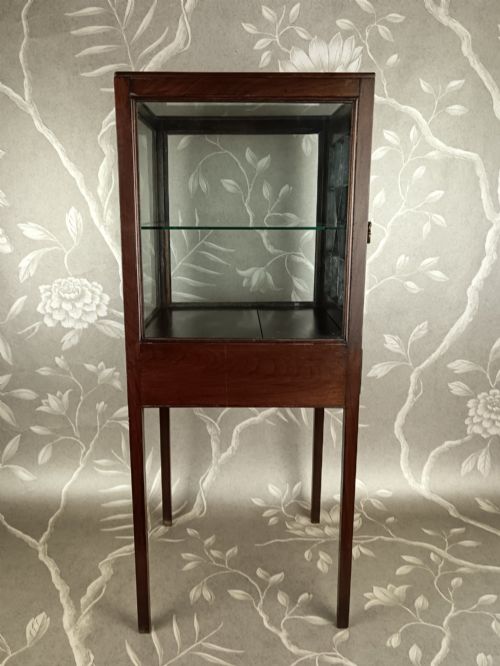
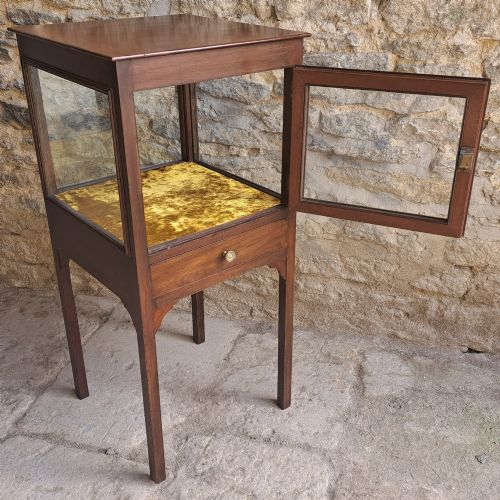


Glass Showcase Table
A glass showcase table brings small treasures into plain view, offering a dedicated stage for precious objects.
Glass Showcase Table
When you search for a glass showcase table, you encounter a refined group of display furniture designed to exhibit precious items at eye level or close inspection. These pieces range from substantial Edwardian mahogany bijouterie tables to intimate French rosewood and ormolu showcases, combining glazed compartments with sturdy wooden frames.
The selections span distinct periods, drawing heavily on Edwardian craftsmanship, Victorian burr walnut, and 18th-century Georgian influences. Alongside domestic bijouterie cabinets, the listings encompass large shop display counters and table top cases originating from specialised workshops.
Most examples function as vitrines or low display tables, allowing collectors to view items from above while keeping them secure behind glass. The domestic forms often feature slender legs and inlaid satinwood, whereas commercial counter variants provide generous proportions for merchandise.
How they were made
Cabinet makers constructed the frames of these glass showcase tables primarily using dense hardwoods such as mahogany, rosewood, and satinwood, often enhanced with yew or burr walnut veneers. These timbers provided the structural integrity required to support heavy glazed lids and delicate internal trays.
Glazing techniques involved fitting clear glass panels into rebated wooden frames or securing them within cast brass and ormolu mounts. Interior surfaces were frequently lined with velvet, fabric, or painted decoration to cushion and highlight the objects displayed within.
Some vintage tables carry unexpected later sign-written details for Breitling watches, hinting at past lives in bustling jewellers' shops.
What varies in quality
Quality in these pieces rests upon the crispness of the timber joinery, the weight of the brass or ormolu mounts, and the purity of the glass panels. Superior examples display harmonious proportions, whether executed in a restrained Sheraton style or an ornate French revival taste.
The refinement of the interior lining and the delicacy of the inlaid decoration distinguish standard commercial counters from bespoke domestic bijouterie tables. Finer pieces demonstrate meticulous attention to detail in the hinging of glazed lids and the execution of floral painted motifs.
Quincy Showcase Works Illinois
The Glass Showcase Table Glossary
- Bijouterie table
- A low glazed table designed specifically for displaying small valuables, jewellery, and curiosities. They typically feature hinged or lifting glass tops.
- Vitrine
- A glass-fronted cabinet or case used for displaying fine objects and porcelain. The term often overlaps with larger display furniture found in period interiors.
- Ormolu
- Gilded bronze or brass mounts applied to furniture for decorative effect. French showcase pieces frequently utilise these metallic ornaments to accentuate the woodwork.
- Inlay
- A decorative technique where contrasting timbers or materials are inserted into depressions in the base wood. Edwardian and Sheraton style pieces often incorporate delicate stringing and floral motifs.
Glass Showcase Table: Frequently Asked Questions
What is a glass showcase table used for?
These tables provide a secure, dust-free enclosure for exhibiting small collections, medals, jewellery, and curiosities. The glazed top allows viewers to examine items from above without handling them.
Historically, they served both domestic drawing rooms and commercial jewellers' shops. Today, they remain practical furniture for displaying personal collections in modern interiors.
How do I clean the glass and wood?
Use a soft, dry cloth for dusting the polished mahogany, rosewood, or satinwood frames. Avoid commercial silicone polishes that can damage antique wood finishes over time.
Clean the glass panels with a mild glass cleaner applied to a cloth rather than sprayed directly, preventing moisture from seeping into wooden joints or fabric linings.
Are these tables suitable for everyday use?
Most antique showcase tables function well as coffee tables or side tables while protecting your display items. Their sturdy hardwood construction handles normal domestic environments comfortably.
Care should be taken with the hinged glass lids and delicate internal fabric linings. Placing them away from direct sunlight protects both the wood and any displayed textiles.
How do I distinguish Edwardian from Victorian examples?
Victorian display furniture often employs heavier timbers, darker finishes, and robust brass hardware such as burr walnut and rosewood. These pieces tend to project a more substantial, solid appearance.
Edwardian examples frequently lighter in feel, incorporating satinwood, delicate painted decorations, and refined inlay work inspired by Sheraton revivals.