

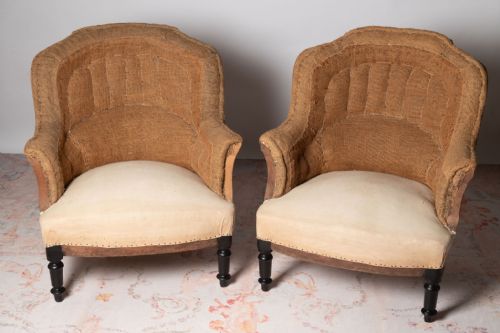


French Barrel Back Chairs
French barrel back chairs offer deep, enveloping comfort and sculptural presence, making them a sophisticated choice for any traditional or eclectic sitting room.
French Barrel Back Chairs
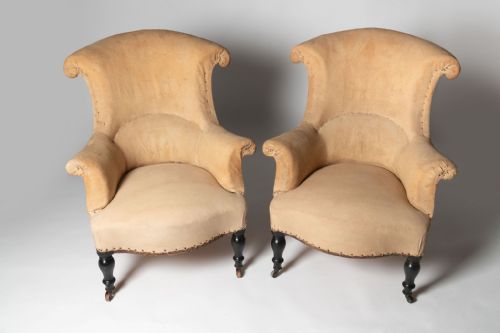
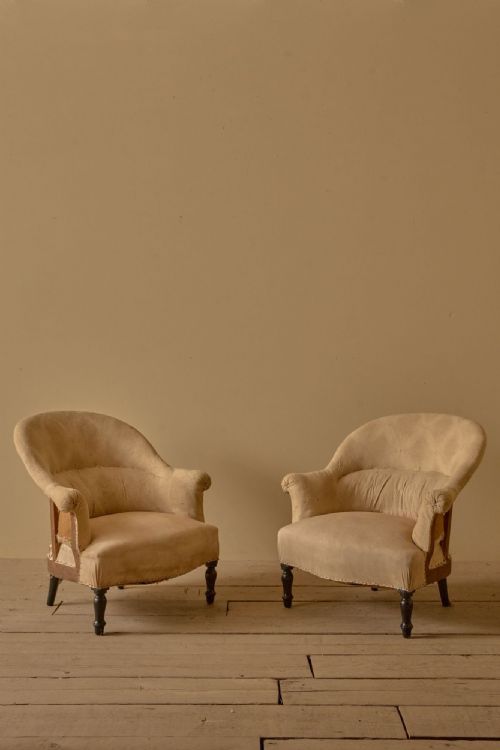
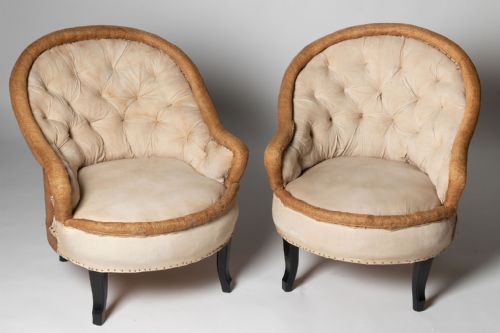
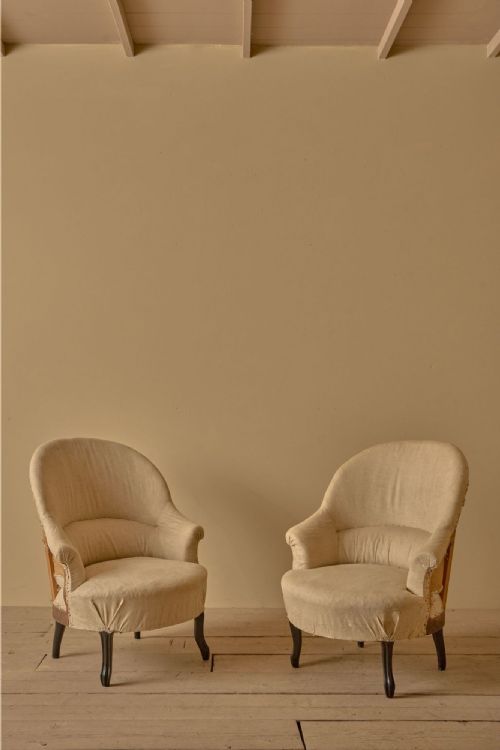
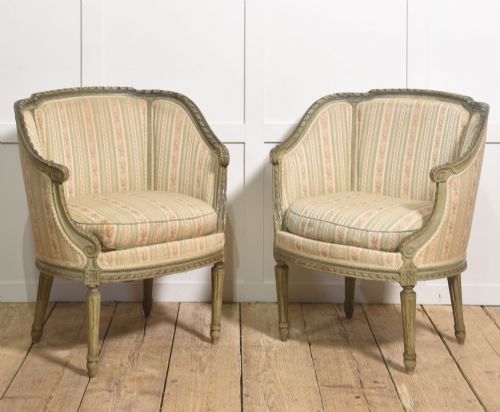
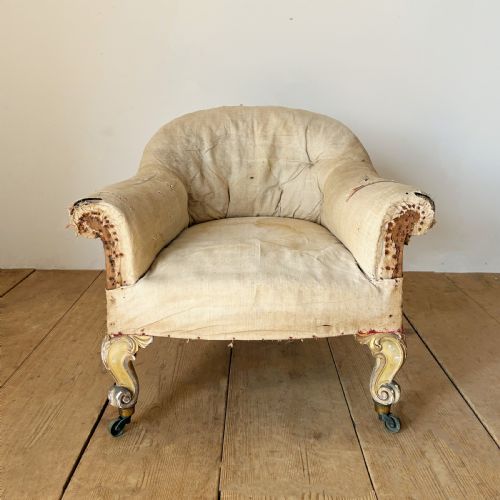
French barrel back chairs are classic upholstered seating options characterised by a curved, semicircular backrest that flows seamlessly into low arms. This rounded silhouette embraces the sitter and provides sturdy support.
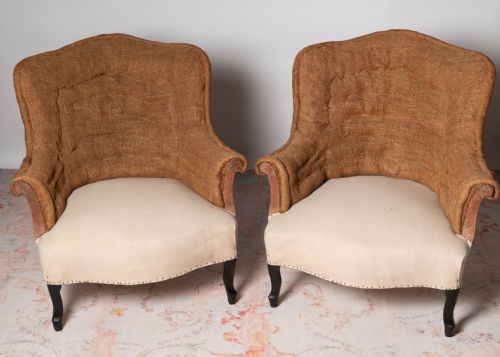
Buyers browsing this selection will frequently encounter nineteenth-century pieces, including Napoleon III tub chairs and Louis XV Revival styles. Pairs and individual armchairs appear regularly in various traditional forms.
Origins span provincial workshops to refined urban ateliers, capturing distinct historical periods from the eighteen-eighties through the early twentieth century. These armchairs integrate well into modern interiors while retaining their historic character.
Materials and construction
Frames are constructed from solid hardwoods such as beech and walnut, providing a strong structural foundation for the upholstered body. Wood framing is often shaped through steam bending or carving to achieve the distinctive curved profile.
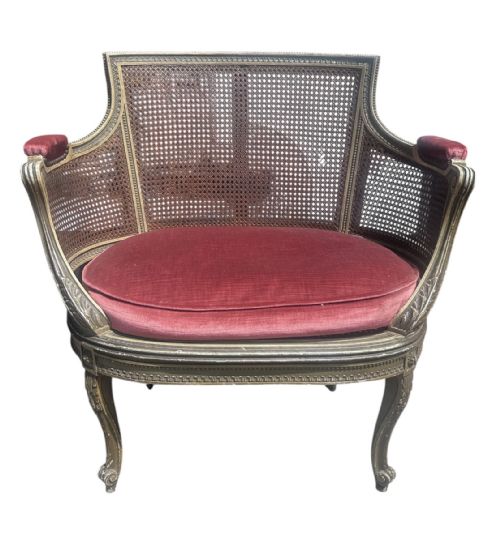
Traditional upholstery techniques utilise supportive internal webbing alongside natural fillings, covered in practical under-materials like calico and hessian. Final layers feature decorative textiles including velvet, cane panels, or painted finishes.
Metal components, such as ormolu mounts, occasionally accent the woodwork on revival pieces from the late nineteenth century. Each material contributes to the structural integrity and aesthetic weight of the armchair.
French Barrel Back Chairs Retail Price Guide 2026
Typical asking prices for french barrel back chairs among the pieces listed under this phrase on Sellingantiques today, from the lower quarter to the upper quarter. They describe what is for sale here now, not the wider market.
These barrel chairs were originally designed so people could sit comfortably by the fire without freezing their ears off.
Assessing quality in construction and finish
Quality rests primarily in the precision of the curved wooden frame and the structural tightness of the joinery. Finer pieces demonstrate careful hand-carving and balanced proportions that maintain elegance from every angle.
The refinement of the upholstery work and the choice of outer textile elevate a piece significantly. Chairs retaining original or high-grade period fabric selections display superior craftsmanship throughout.
Subtle decorative elements, such as quality ormolu mounts or well-executed painted finishes, separate standard seating from exceptional examples. The integrity of internal support systems ensures longevity.
The French Barrel Back Chairs Glossary
- Tub chair
- A fully upholstered armchair featuring a continuous curved back and low arms forming a barrel-like enclosure. This shape originated to shield sitters from draughts in colder rooms.
- Bergere
- An enclosed armchair with upholstered sides and a exposed wooden frame, typically featuring cane work or tightly stretched fabric. It provides a lighter appearance than fully stuffed tub chairs.
- Fauteuil
- An open-armed French armchair with an exposed wooden frame, generally featuring upholstered back and seat pads. The armrests often include padded elbow rests.
- Louis XV Revival
- A nineteenth-century style replicating the flowing asymmetrical curves, cabriole legs, and naturalistic floral carvings of the mid-eighteenth-century French court. It represents a major revival movement in cabinet making.
- Ormolu
- Gilded bronze mounts applied to furniture as decorative hardware, popular during revival periods. The technique involves applying a mercury and gold amalgam to shaped metal.
French Barrel Back Chairs: Frequently Asked Questions
What is a barrel back chair?
A barrel back chair is an upholstered seat with a semicircular backrest that curves around to form the armrests. The rounded form creates a snug and supportive seating experience.
Historically, this design helped keep sitters warm by blocking cold draughts in large rooms. Today, the enclosed shape makes these chairs popular as statement pieces in living spaces.
How do I identify Napoleon III chairs?
Napoleon III pieces date from the mid to late nineteenth century during the Second French Empire. They often feature generous upholstery, dark wood frames, and eclectic decorative influences.
These chairs prioritize comfort and luxury, frequently employing rich velvet coverings or elaborate trimming. Their silhouettes lean toward rounded, embracing shapes like tub chairs.
Where should I place a French armchair?
French armchairs work well as reading chairs in studies or as paired seating flanking a fireplace. Their curved backs look striking when viewed from behind in an open room layout.
Because of their decorative frames and textured upholstery, they add warmth and historical contrast to contemporary interior schemes. Proper placement allows the curved woodwork to remain visible.
What is a Louis XV style chair?
Louis XV style chairs draw inspiration from mid-eighteenth-century French design, featuring graceful cabriole legs and flowing serpentine lines. They eschew straight edges in favour of organic, fluid woodwork.
Revival versions produced in the nineteenth century capture this lighter aesthetic while using manufacturing methods of their own era. They often display subtle carved details along the crest rail and apron.