

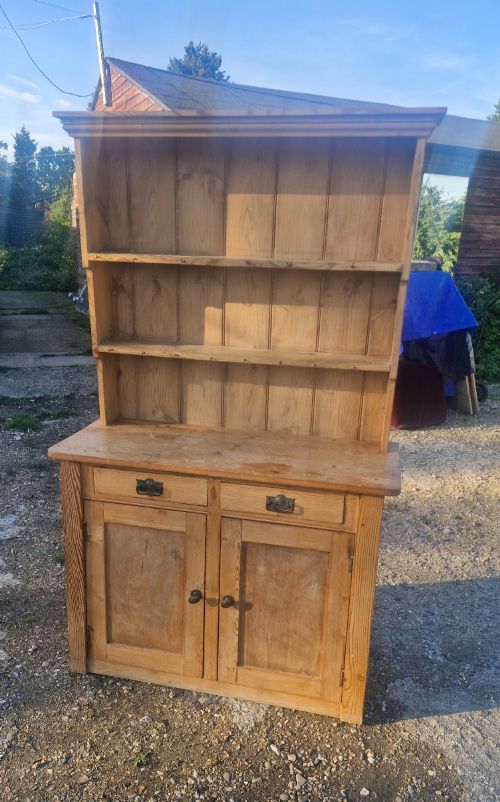

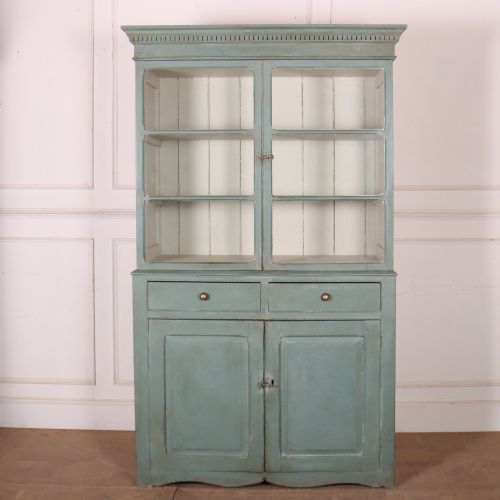
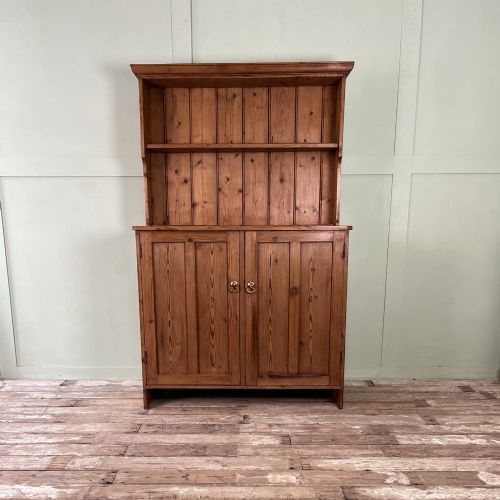
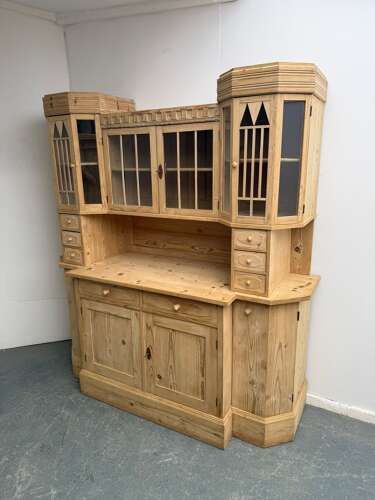
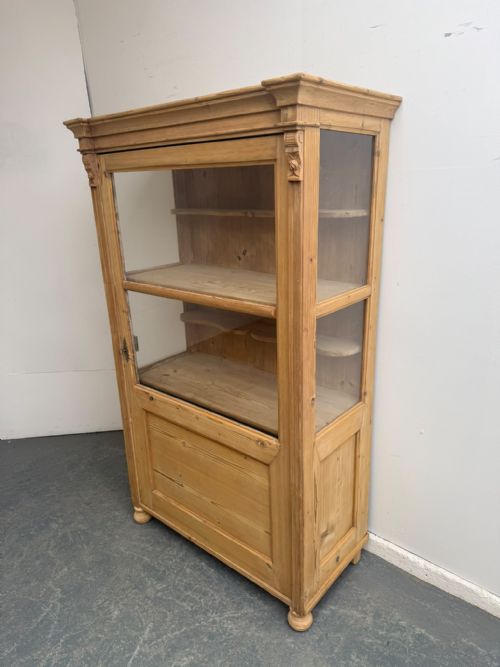
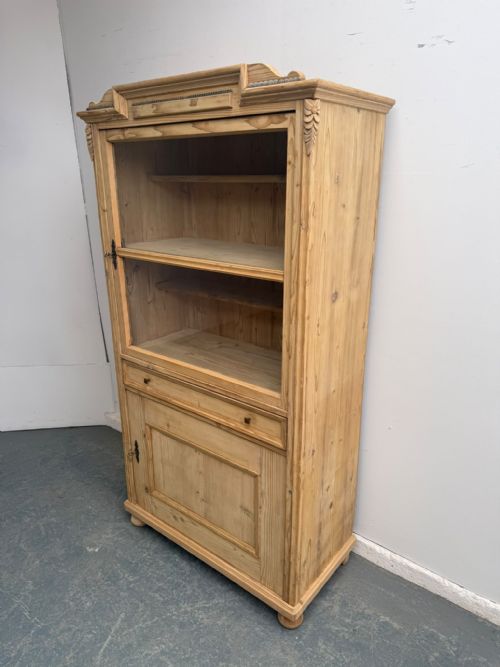


Freestanding Pine Dresser
A freestanding pine dresser brings honest domestic utility and warm, patinated timber into a modern kitchen or dining room.
Freestanding Pine Dresser
A freestanding pine dresser is a utilitarian storage item designed to stand independently against a wall without built-in architectural support. These pieces combine lower cupboards or sideboards with upper display racks, open shelves, or glazed cabinets, serving both practical pantry needs and tableware display. Most examples you encounter belong to the 19th century or early 20th century, though scarce 18th-century variants also appear.
The style ranges from plain English country and rustic farmhouse to Scottish country and Arts and Crafts interpretations. Regional variations emerge in proportions and cornice details, while formats span from large two-part dressers to smaller housekeepers cupboards, pot board dressers, and food cupboards.
Makers built these items for hard-working domestic spaces like sculleries, kitchens, and pantries rather than formal reception rooms. Consequently, their construction prioritises robust storage capacity and everyday utility over delicate ornamentation.
Materials and construction
Constructed primarily from solid pine, these pieces frequently incorporate brass or iron hardware such as hinges, handles, and escutcheons. Many examples feature glazed glass panels in the upper doors or wire mesh for food ventilation in pantry cupboards.
Surfaces vary between natural waxed timber and historic painted finishes, which range from simple utilitarian coats to later decorative treatments. Joinery relies on traditional methods suited to softwood construction, ensuring stability across large sideboards and two-piece units.
Freestanding Pine Dresser Retail Price Guide 2026
Typical asking prices for freestanding pine dresser among the pieces listed under this phrase on Sellingantiques today, from the lower quarter to the upper quarter. They describe what is for sale here now, not the wider market.
Listings span from the 18th century through the Victorian period to the 1930s, utilising materials including solid pine, glass, wire mesh, and historic paint.
Judging quality in pine furniture
Quality in a freestanding pine dresser rests on the integrity of its timber proportions and the honesty of its construction. Pieces retaining their original configuration, backboards, and hardware command greater appreciation than heavily altered or reconstructed examples.
The sophistication of the joinery and the depth of the timber's accumulated patina distinguish finer country workshops from basic utilitarian output. Balance between the upper rack and lower base also dictates the visual success of the piece.
The Freestanding Pine Dresser Glossary
- Pot board
- A low open lower shelf in a dresser traditionally used for storing heavy pots and pans. This feature is particularly characteristic of earlier country furniture.
- Breakfront
- A piece of furniture whose central section projects forward from the flanking outer sections. This arrangement adds architectural depth to larger kitchen dressers.
- Housekeepers cupboard
- A large tall storage cabinet traditionally used for linens, dry goods, and household provisions. These freestanding cupboards offer extensive internal shelving behind panelled doors.
- Scullery cupboard
- A utilitarian storage piece built to withstand damp kitchen environments and heavy daily use. They often feature simple panelled doors or wire mesh panels.
- Glazed cabinet
- A storage unit with glass-panelled doors designed to display china and glassware safely while keeping dust out. This format is common in upper display sections.
Freestanding Pine Dresser: Frequently Asked Questions
How do I clean a waxed pine surface?
Dust the surface regularly with a soft, dry cloth to prevent the accumulation of grit. Apply a traditional beeswax paste sparingly when the timber appears dry, buffing it gently with a clean cloth to maintain the soft sheen.
Avoid using modern silicone sprays or harsh chemical detergents, as these strip the historic wax and damage the underlying patina of the pine.
Can I paint an unpainted pine dresser?
Many historical pine pieces were originally painted or subsequently stripped to bare wood, so applying a breathable traditional paint finish sits well within the tradition of country furniture. Select a muted historic pigment that respects the age and character of the piece.
Keep in mind that stripping or painting alters the existing surface history, which may affect the visual balance of the timber's natural grain and wax buildup.
How do I date an antique pine dresser?
Examine the construction methods, tool marks on the timber, and the type of fixings used in the assembly. Hand-cut dovetails, handmade iron nails, and original timber backboards point towards 18th-century or early 19th-century origins.
Consider stylistic clues such as cornice mouldings, door panel configurations, and the presence of historic paint layers to narrow down the period between the Georgian era and the early 20th century.