


Small Pine Dresser
A small pine dresser offers practical storage with domestic charm, bridging kitchen utility and rustic display across 18th, 19th, and early 20th century periods.
Small Pine Dresser
A small pine dresser provides compact kitchen and dining room storage, combining open or glazed upper shelves with lower cupboards and drawers. These pieces range from narrow Welsh farmhouse examples to simple cottage dresser bases designed for smaller domestic spaces.
Buyers meet variations spanning the Georgian, Victorian, and Edwardian periods alongside 1930s country interpretations. Forms include open pot board dressers, shallow dresser bases, and partly glazed cupboards executed in English, Welsh, and Scandinavian regional traditions.
The search phrase encompasses both full dressers with plate racks and lower sideboard units sometimes finished with paint or wax. Proportion remains the defining characteristic, keeping scale modest for cottage and farmhouse interiors.
Materials and construction
Makers built these pieces primarily from solid pine, occasionally combining elm or oak for structural strength in pot boards and work surfaces. Wood was often treated with natural wax or finished with paint to protect the timber in busy kitchen environments.
Hardware typically involves brass fittings, iron hinges, and glass panels for glazed upper doors. Joinery methods reflect traditional regional cabinet making, accommodating seasonal timber movement in domestic settings.
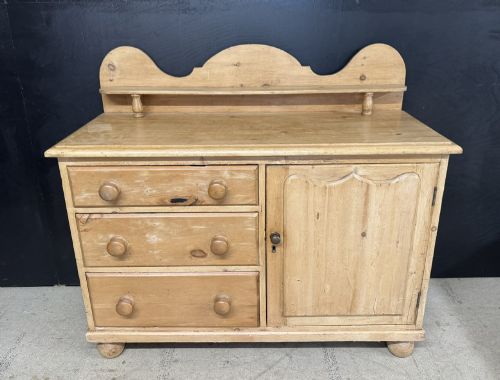
A shy Welsh dresser base keeps its secrets behind heavily arched panels.
Distinctions in quality
Quality rests upon timber selection and structural integrity, separating utilitarian workshop items from finer regional vernacular pieces. Retaining original surfaces, whether early paint, old polish, or warm wax, distinguishes better surviving examples.
Proportion and detailing drive distinction, from arched panels and glazed doors to well-balanced drawer configurations. Pieces with untouched backboards, original brass hardware, and sound pot boards command greater appreciation.
The Small Pine Dresser Glossary
- Dresser base
- A lower sideboard or cupboard without the upper plate rack. These provide solid top surfaces and enclosed lower storage.
- Pot board
- An open lower shelf fitted beneath a dresser base. This platform traditionally stored heavy pots and kitchen utensils.
- Chiffonier
- A compact low sideboard or cupboard featuring drawers and lower doors. These pieces emerged during the Regency and Victorian periods.
- Glazed door
- A cabinet door fitted with glass panes to display crockery. Partly glazed variants protect contents while maintaining visual lightness.
- Housekeepers cupboard
- A tall enclosed storage unit with multiple doors. These pieces served domestic utility in country houses and farmhouses.
Small Pine Dresser: Frequently Asked Questions
What is a small pine dresser?
A small pine dresser is a compact domestic storage unit featuring lower drawers or cupboards, often paired with upper shelving for display. These pieces range from Georgian pot board tables to Victorian kitchen cupboards.
They serve as practical furniture for modern dining rooms and kitchens where floor space is limited. Their modest proportions accommodate tableware while introducing rural character.
How do I date an old pine dresser?
Dating relies on construction methods, timber patination, and stylistic markers associated with periods from the 18th century through to the 1930s. Georgian and Victorian examples often display hand-cut joinery and regional timber characteristics.
Hardware, such as brass pulls or iron hinges, alongside traces of early paint or wax finishes, offers further clues to the age and origin of the piece.
What is the difference between a dresser base and a full dresser?
A dresser base consists only of the lower section, providing a flat surface and enclosed storage behind doors and drawers. A full dresser includes an upper superstructure with shelves or a plate rack.
Dresser bases function well in smaller rooms where high shelving is impractical, whereas full dressers maximise vertical display space for ceramics.
How should I care for a waxed pine dresser?
Care involves applying natural wax periodically to nourish the pine and maintain a protective barrier against moisture. Gentle dusting with a dry cloth keeps the surface clean without stripping the historic finish.
Avoid placing antique pine furniture in direct sunlight or near heat sources to prevent timber splitting and shrinkage.