
Freestanding Hall Tree
A freestanding hall tree organises coats, hats and umbrellas in an entrance hall while offering architectural presence.
Freestanding Hall Tree
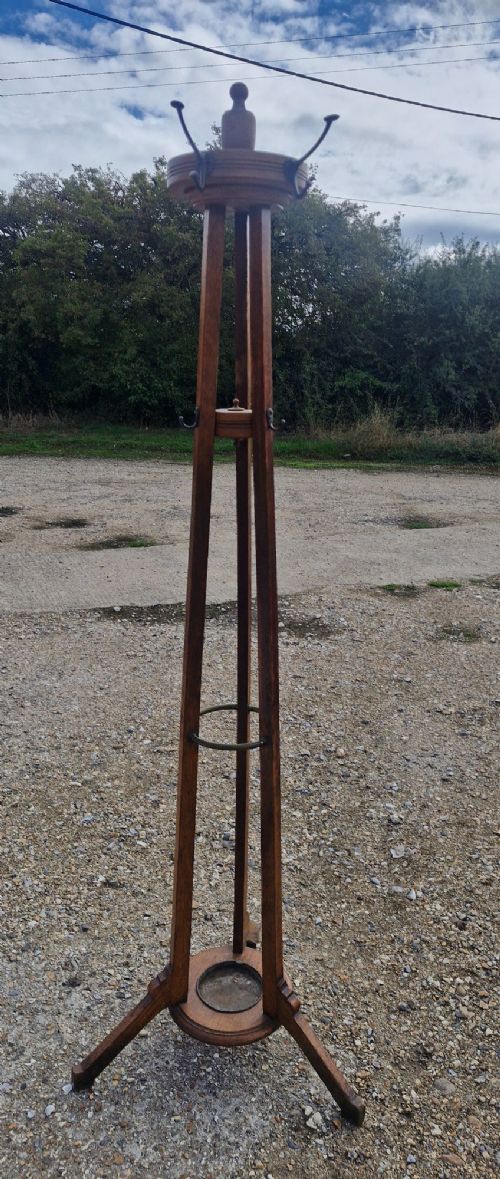
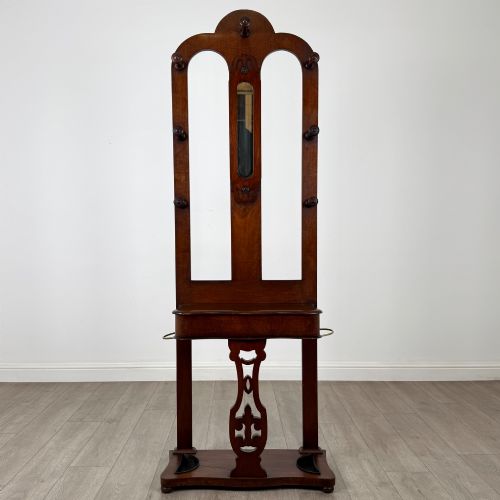
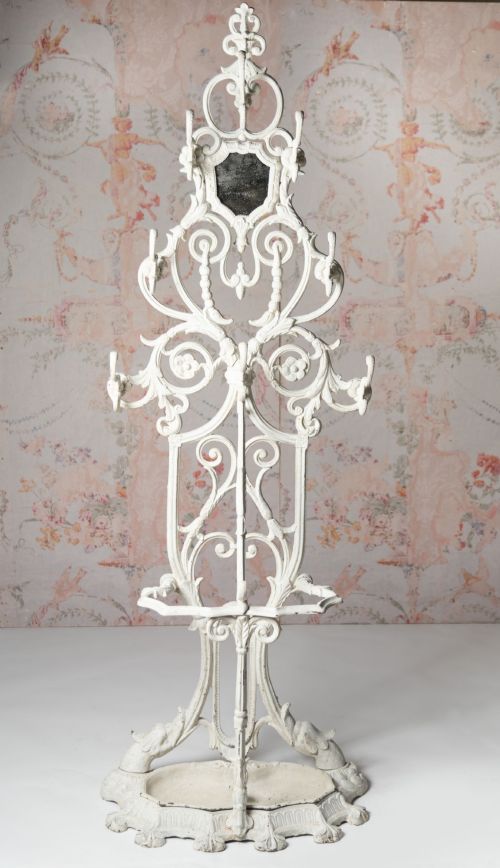
When you search for a freestanding hall tree, you encounter tall, vertical furniture designed to hold outerwear near an entrance. These pieces combine multiple hooks for coats and hats with practical additions like umbrella holders, drip trays or mirrors.
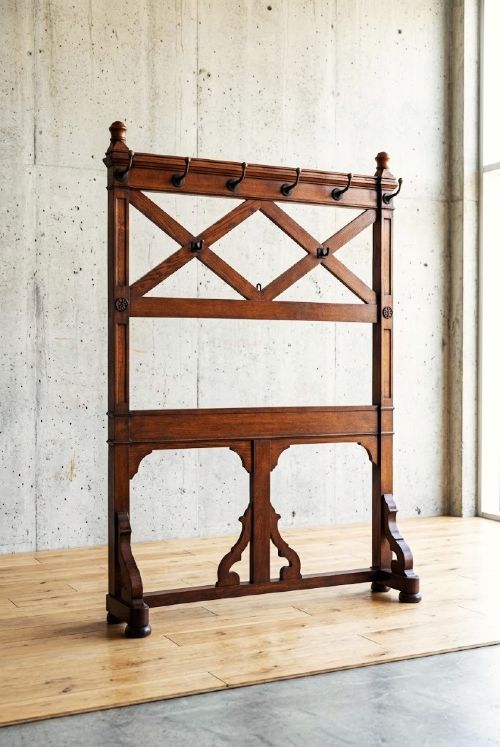
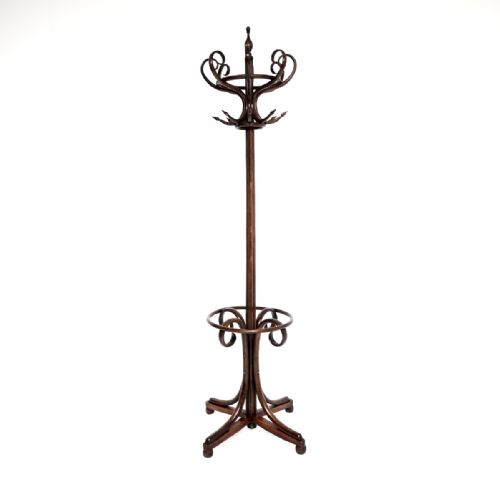
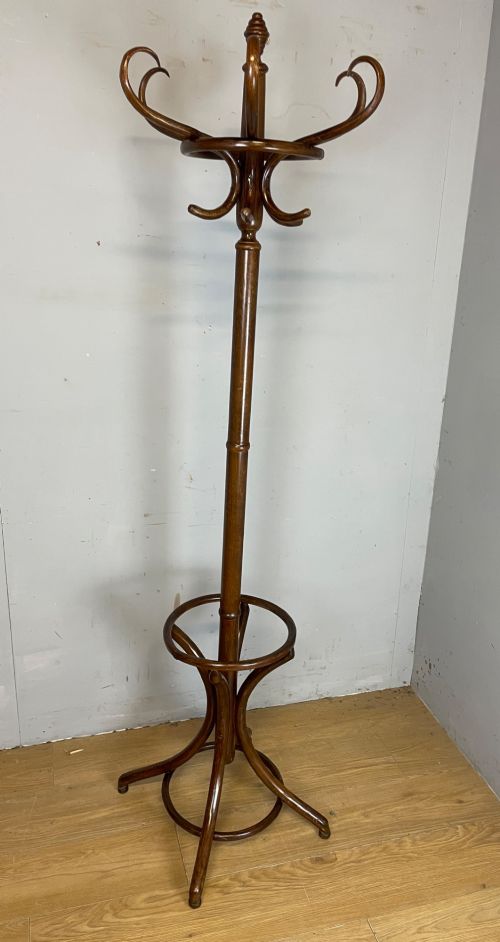
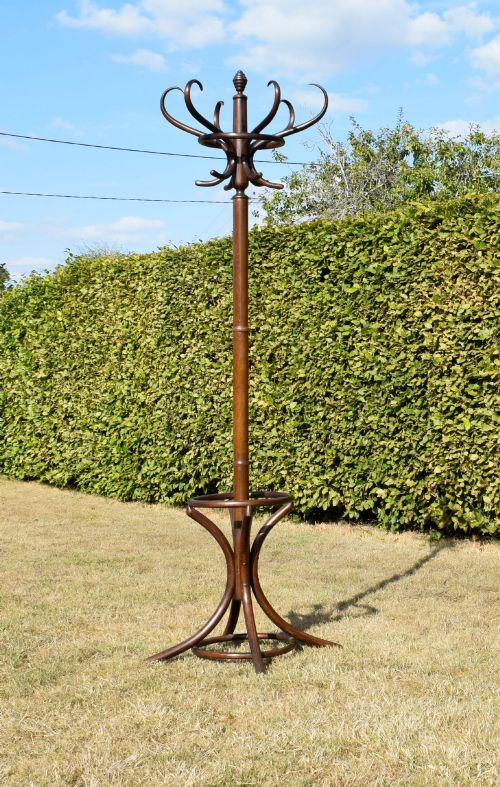
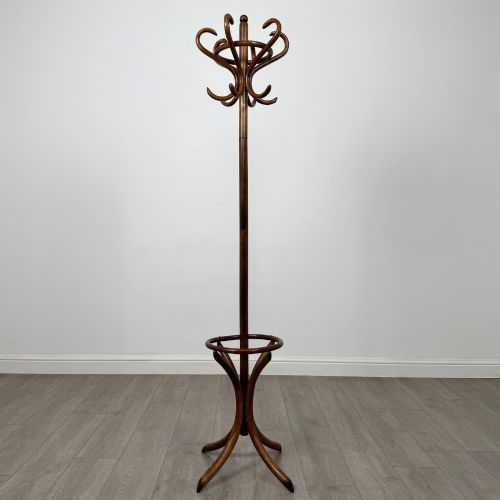
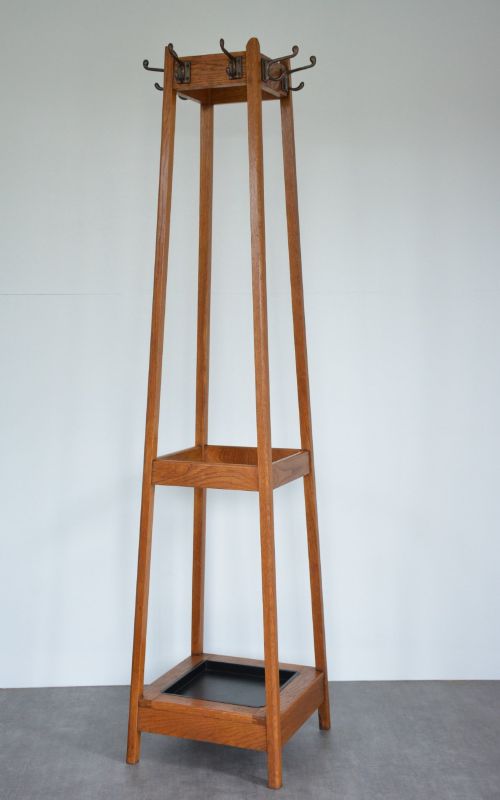
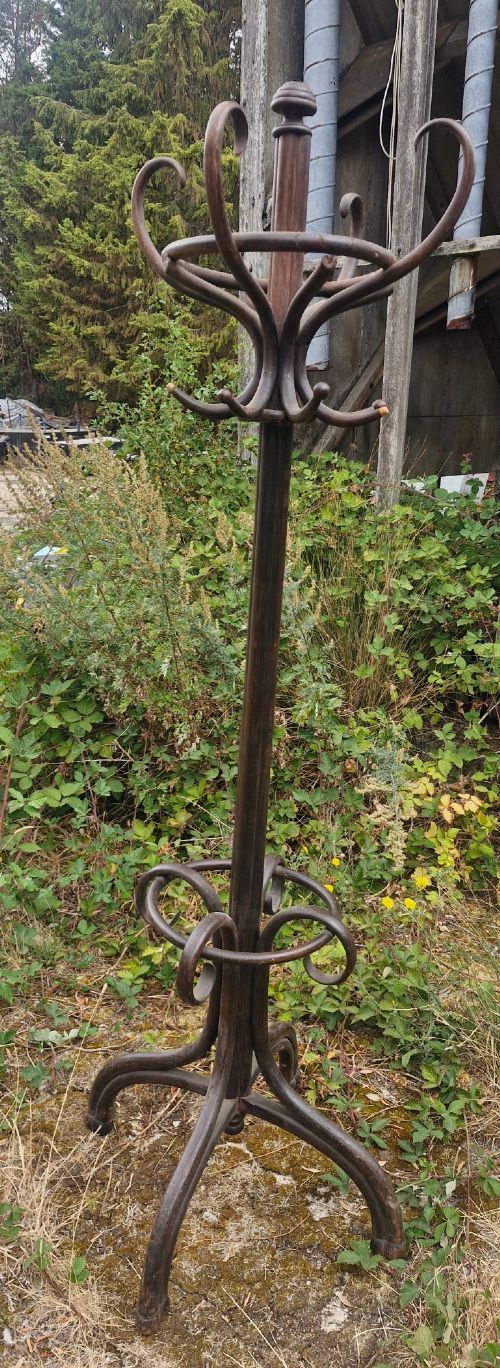
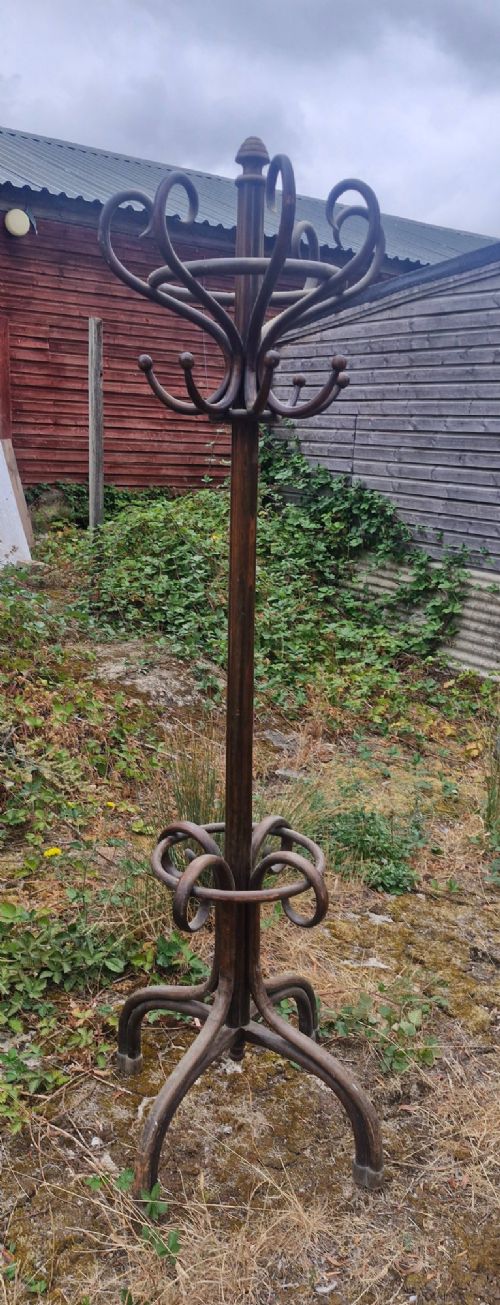
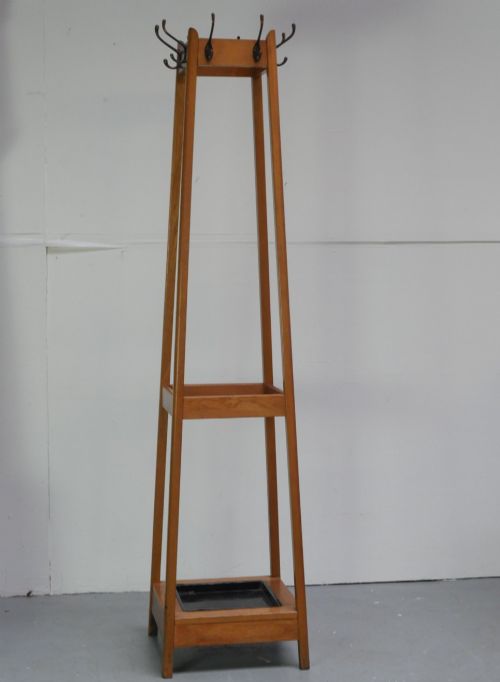
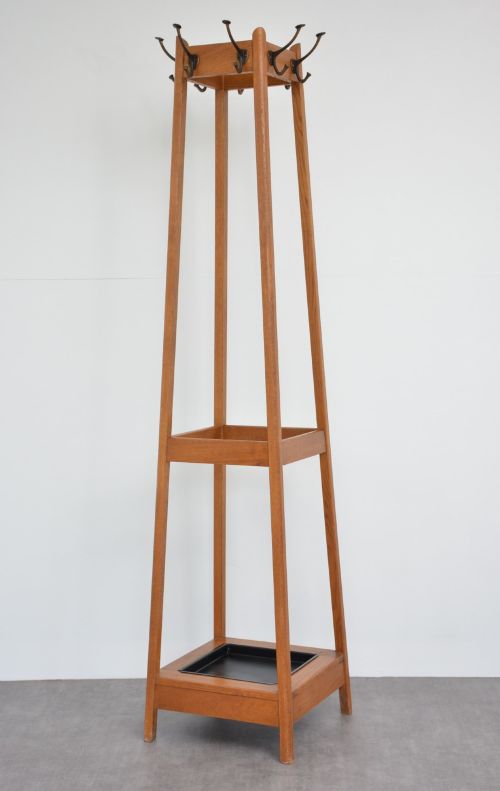
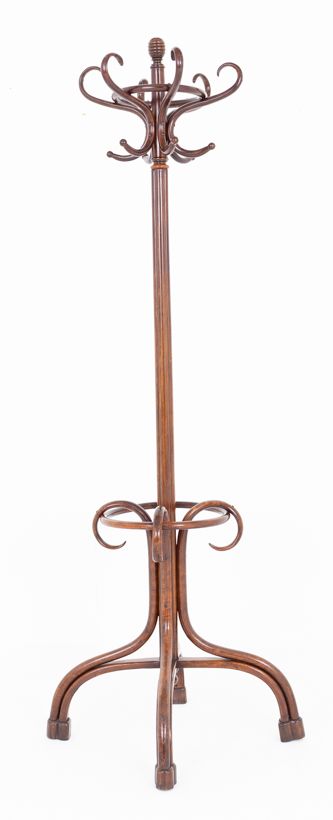
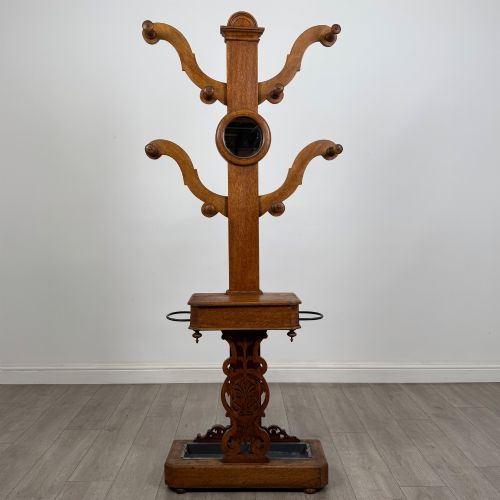
The versions most common on this page span the Victorian, Edwardian and early twentieth-century periods. They appear in diverse forms ranging from steam-bent beech bentwood frames to solid oak architectural pieces.
Origins include English workshops, French ateliers and Austrian production, reflecting broad European utility in domestic hallways.
How they were made
Makers utilised solid timbers such as oak, mahogany, walnut and beech, often pairing sturdy structural frames with cast iron or brass fittings. Umbrella sections frequently incorporate metal drip trays to collect moisture from wet walking sticks.
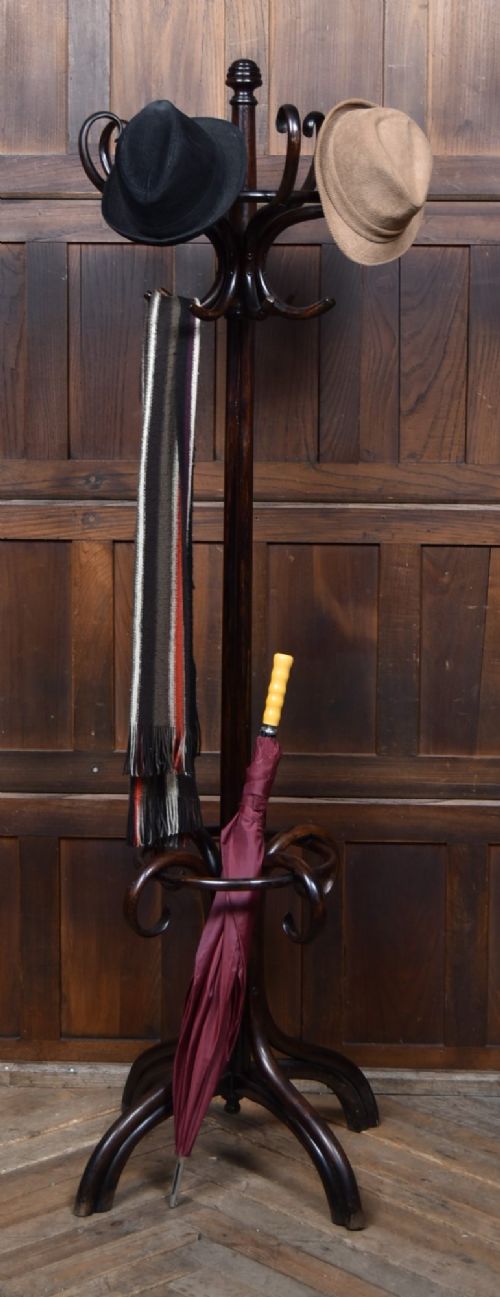
Bentwood examples rely on steam-heating beech or beechwood until pliable, then bending the timber into sweeping, curved profiles. This technique produces lightweight yet rigid vertical columns topped with scrolling hook configurations.
Listings feature periods spanning from the nineteenth century through the 1930s, constructed in oak, mahogany, beech and bamboo.
What varies in quality
Construction robustness distinguishes everyday utility pieces from finer examples. Heavy quality models exhibit stable bases, secure joints and thick timber scantlings that withstand the daily weight of winter garments.
Subtleties of turning, carved detailing and original metal hardware separate standard production items from workshop-attributed or labelled pieces.
Thonet·Fischel·Jas Shoolbred·Astrola
The Freestanding Hall Tree Glossary
- Bentwood
- Furniture formed by steaming timber and bending it into curved shapes. This technique creates graceful, continuous lines without traditional joinery.
- Hall tree
- A tall, freestanding piece of furniture designed for hallway storage. It typically supports coats, hats and umbrellas in a single vertical unit.
- Drip tray
- A small metal basin fitted at the base of a stand. It catches water running off wet umbrellas to protect the flooring beneath.
- Demi lune
- A half-moon shape used for hall stands designed to sit flush against a wall. This profile saves floor space in narrow corridors.
Freestanding Hall Tree: Frequently Asked Questions
Where should a freestanding hall tree go?
These pieces belong in entrance halls, porches or large boot rooms where household outerwear accumulates. Placing one near the primary entrance keeps coats and umbrellas immediately accessible upon arrival.
Ensure adequate floor clearance around the base so doors swing freely and hooks remain reachable for every member of the household.
How do I maintain bentwood stands?
Bentwood relies on steam-formed timber that responds best to stable indoor humidity. Keep pieces away from direct heat sources and sudden dampness to prevent the wood from shifting.
Dust regularly with a dry cloth and occasionally feed the timber with appropriate wax to preserve the polished surface finish.
Can these hold heavy winter coats?
Sturdy examples constructed from solid oak, mahogany or heavy bentwood handle multiple heavy garments without tipping. The weight distribution depends heavily on a balanced base design.
Distributing coats evenly around the upper hooks prevents undue strain on individual stems or joints.