


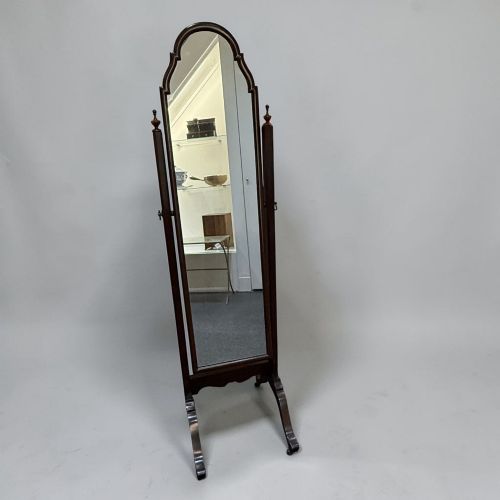
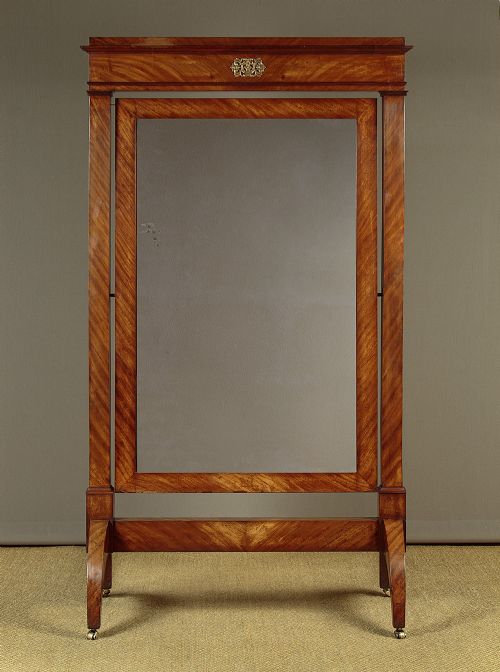
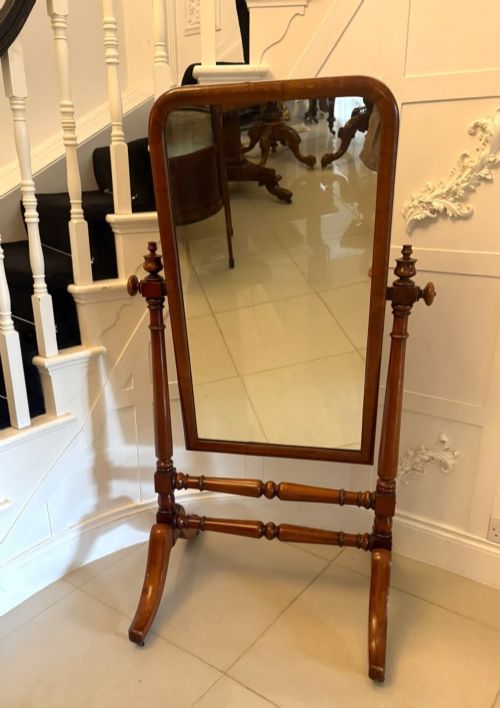
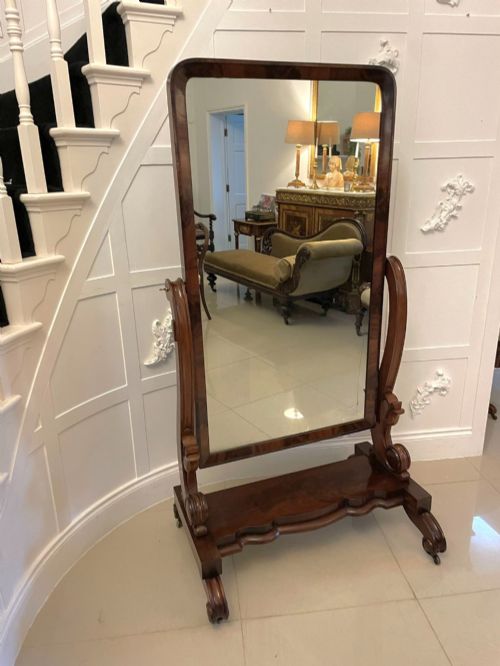
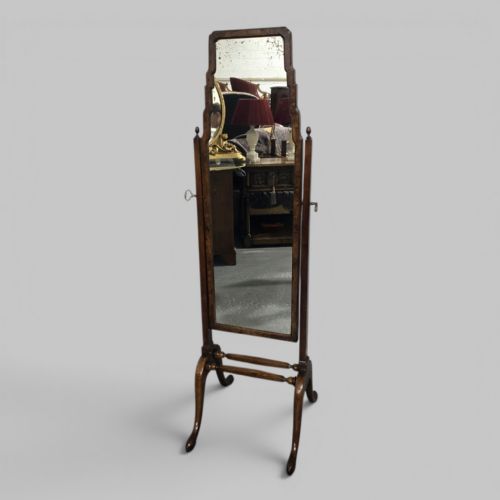


Freestanding Bedroom Mirror
A freestanding bedroom mirror brings full-length reflection and period character into a room, offering practical daily use alongside handsome timber framing.
Freestanding Bedroom Mirror
A freestanding bedroom mirror provides a full-length view for dressing and checking attire within a self-supporting frame. These pieces stand on independent floor bases or rest securely on tables and dressing chests.
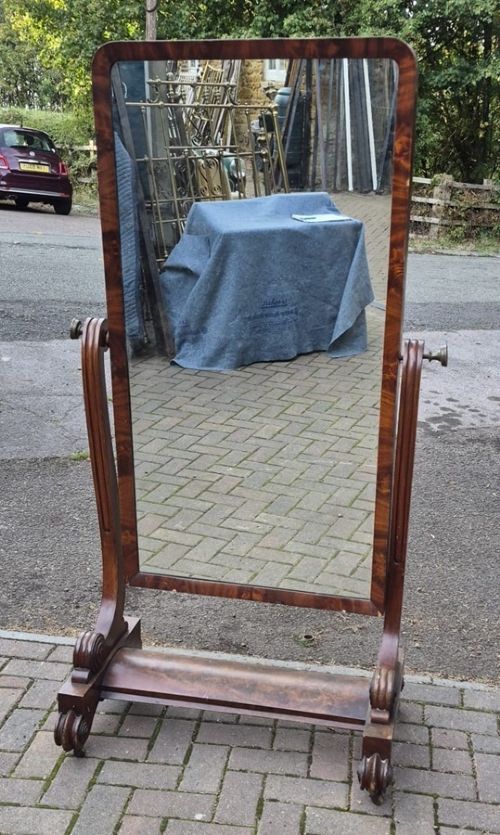
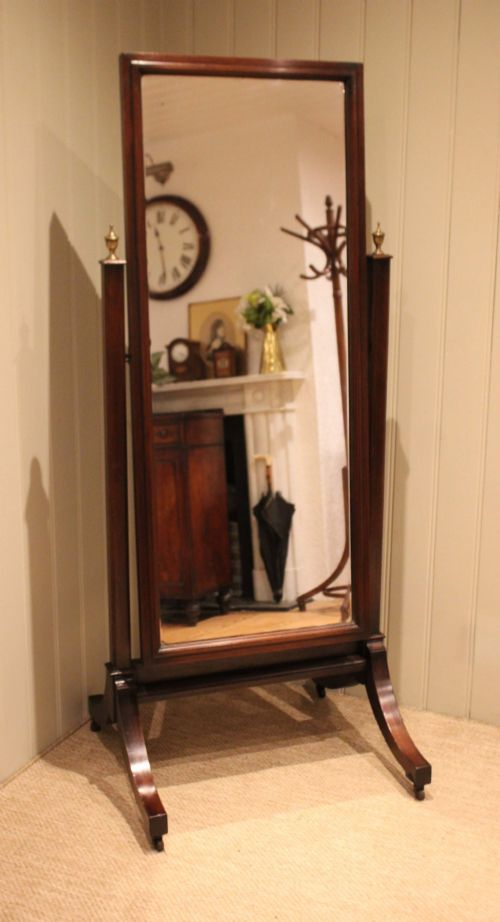
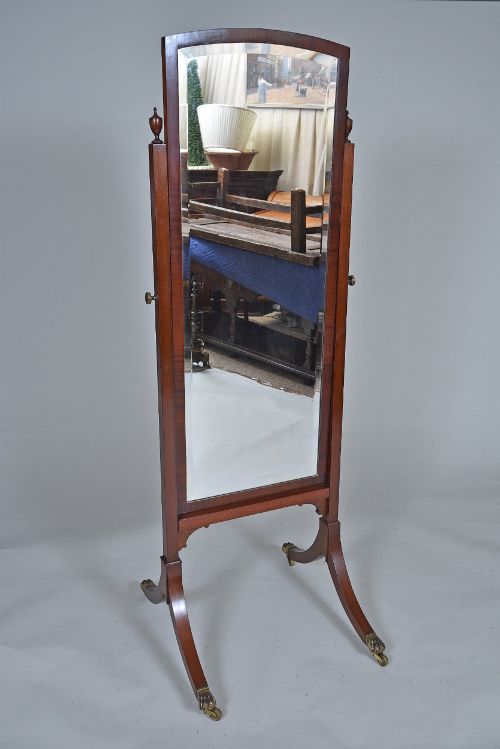
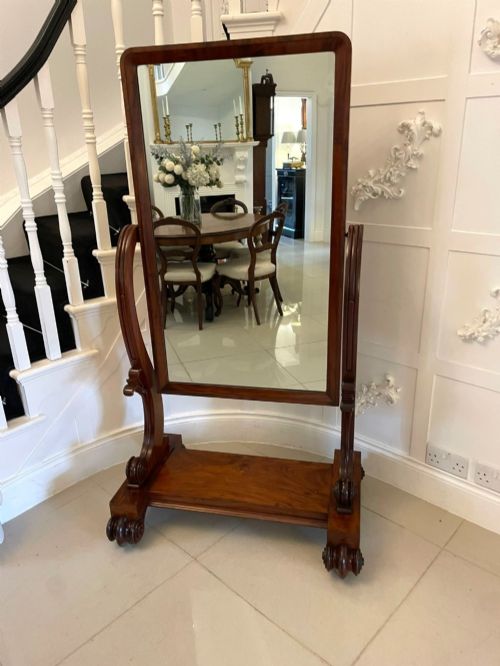
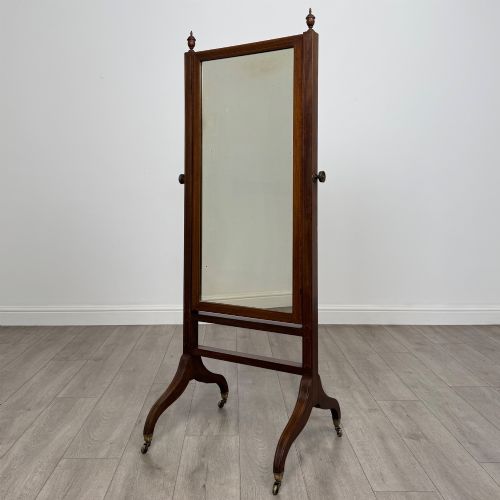
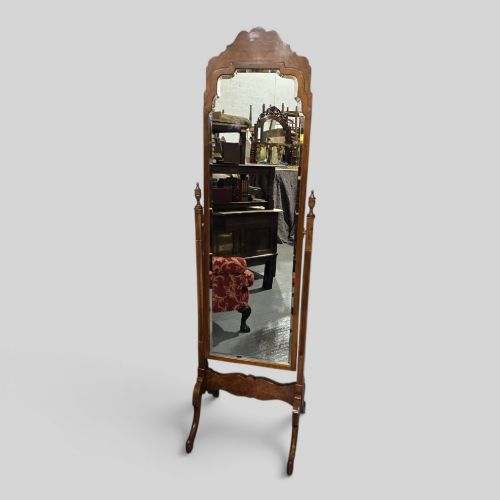
The selections available here range from tall cheval mirrors mounted on pivoting side supports to smaller toilet mirrors designed for tabletops. Mahogany forms the backbone of these pieces, alongside walnut, oak, satinwood, and painted wood.
Examples span the nineteenth century through the Edwardian period and into the twentieth century, covering Victorian, Regency, and Queen Anne styles. Buyers will frequently encounter mahogany cheval mirrors dating from the Victorian and Regency eras on this page.
How they were made
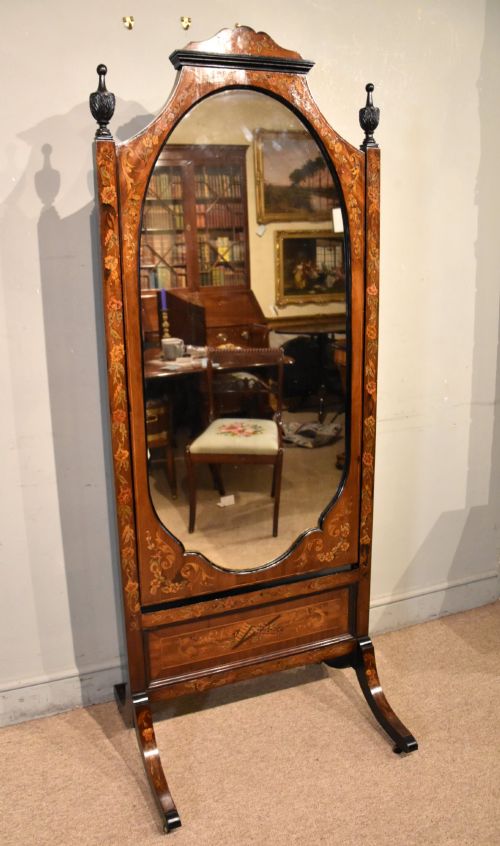
Cabinetmakers constructed the frames using timbers such as mahogany, walnut, and oak, often employing flame veneers and satinwood inlay for decorative contrast. Brass fittings secure the pivoting mechanism, allowing the glass frame to tilt at various angles.
Glass plates are set within sturdy wooden surrounds, supported by turned upright columns or carved trestle feet. Some pieces incorporate small drawers in the base plinth, adding stability and storage for small personal items.
Freestanding Bedroom Mirror Retail Price Guide 2026
Typical asking prices for freestanding bedroom mirror among the pieces listed under this phrase on Sellingantiques today, from the lower quarter to the upper quarter. They describe what is for sale here now, not the wider market.
Listings feature mahogany predominantly, alongside walnut, oak, satinwood, and pitch pine across Victorian, Edwardian, and Regency periods.
What varies in quality
The distinction between standard examples and finer pieces lies in the selection of timber figures, such as flame mahogany or burr walnut, and the crispness of carved details. Superior construction shows in heavy, stable frame designs and well-balanced pivot mechanisms that hold the glass firmly in position without slipping.
The quality of the mirror glass itself and the joinery of the surrounding frame determine the overall integrity of the piece. Well-executed marquetry inlay and substantial brass hardware distinguish high-end workshop production from simpler utility items.
Waring and Gillow
The Freestanding Bedroom Mirror Glossary
- Cheval mirror
- A large floor-standing mirror suspended on a frame with vertical posts and pivots, allowing the glass to swing freely. This form became popular during the Regency period for full-length dressing.
- Toilet mirror
- A smaller mirror designed to sit atop a dressing table or chest of drawers, frequently featuring a small box base with fitted drawers. These pieces served personal grooming needs in bedrooms and dressing rooms.
- Shaving stand
- A specialised vanity mirror incorporating adjustable glass and small surfaces for grooming equipment. They appear in Victorian interiors for daily personal care.
- Tilt dressing glass
- A mirror plate mounted on pivots between two upright supports, enabling the user to adjust the angle of reflection. This mechanism appears on both floor-standing and tabletop versions.
Freestanding Bedroom Mirror: Frequently Asked Questions
How do I choose between a cheval and a tabletop mirror?
A cheval mirror stands independently on the floor to provide a full-length reflection, making it suited for a dressing area or bedroom corner.
Tabletop mirrors require a surface like a chest of drawers or dressing table, offering a convenient height for seated grooming and facial reflection.
Where should I place a freestanding mirror in a bedroom?
Position the mirror near a natural light source, such as a window, to maximise illumination and brighten the surrounding space.
Ensure there is sufficient floor clearance or table space around the frame so the pivoting mechanism operates without obstruction.
How do the tilting mechanisms work?
Most pivoting mirrors use threaded brass screw pins or side knobs inserted through the vertical supports into the frame.
Tightening these brass fittings holds the glass plate securely at the desired angle for daily use.
What timber types are common in these mirrors?
Mahogany is the predominant timber found across Victorian and Regency pieces, often showing rich grain patterns and polished finishes.
Walnut, oak, satinwood, and painted wood also appear, reflecting the stylistic preferences of the Edwardian and later periods.