




Turned Mahogany Mirror
A turned mahogany mirror is a domestic glass of warmth and weight, built to anchor a room or steady a morning routine.
Turned Mahogany Mirror
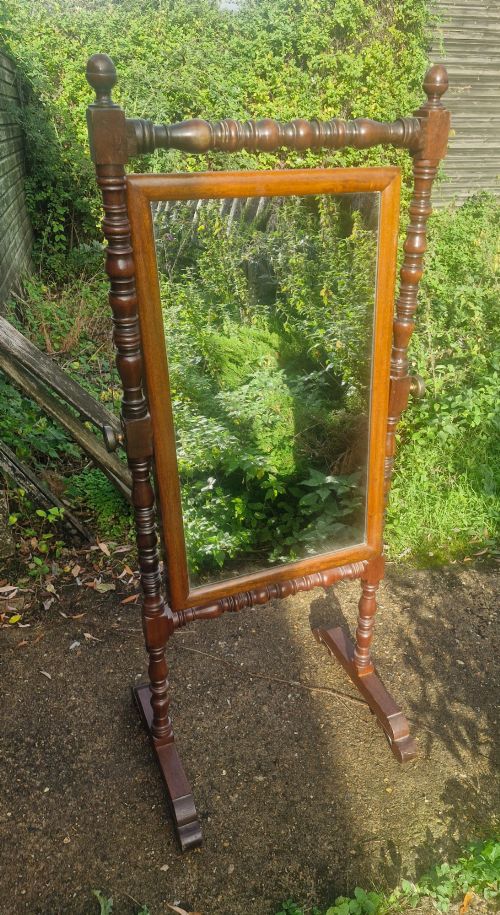
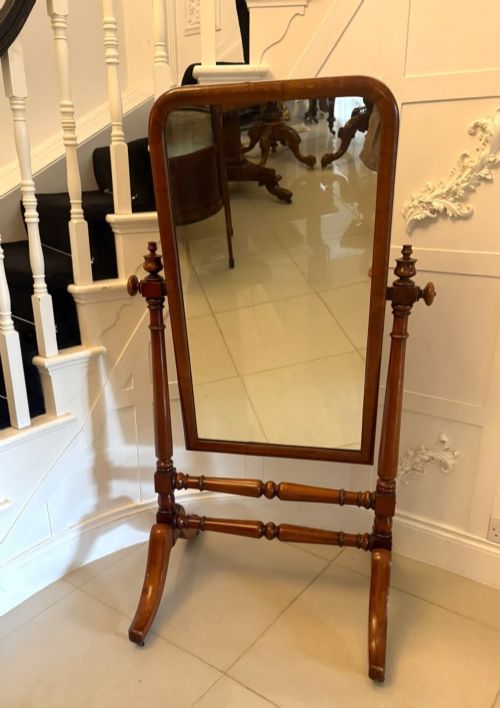
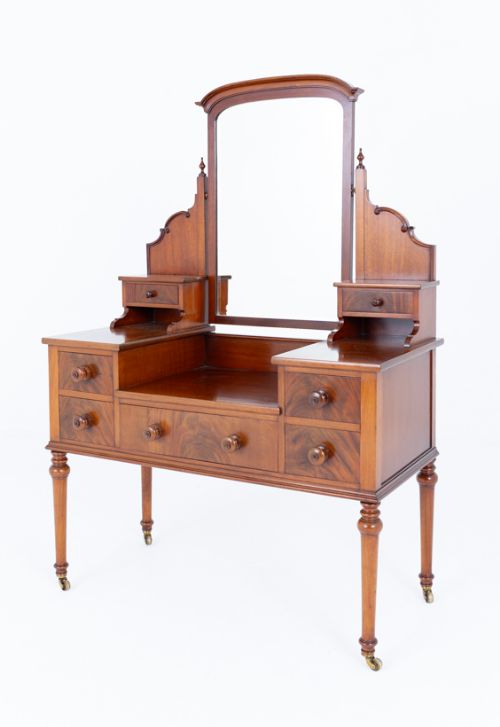
A turned mahogany mirror brings together dense tropical timber and lathe-worked framing, appearing most frequently on this page as a swing dressing glass or a floor-standing cheval mirror. These pieces span the eighteenth, nineteenth, and early twentieth centuries, drawing on Georgian, Regency, William IV, Victorian, and Edwardian design.
The forms range from compact table-top toilet mirrors to tall cheval frames supported by turned columns and ring-turned uprights. Makers built them for the dressing room, the pier wall, and the overmantle, utilising the deep grain of solid timber and flame mahogany veneer.
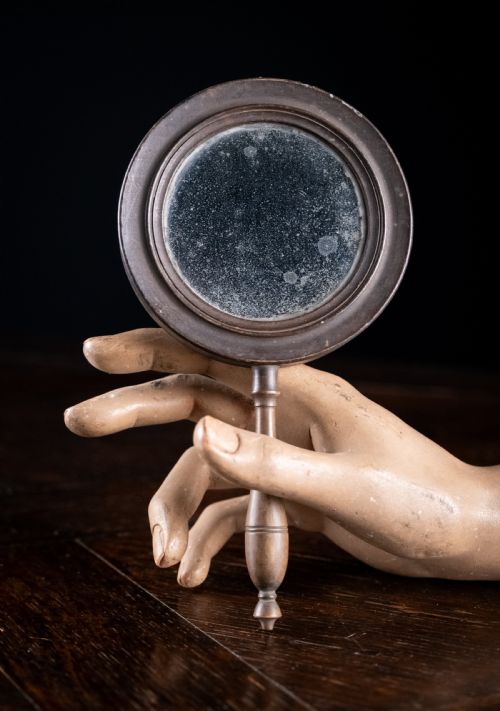
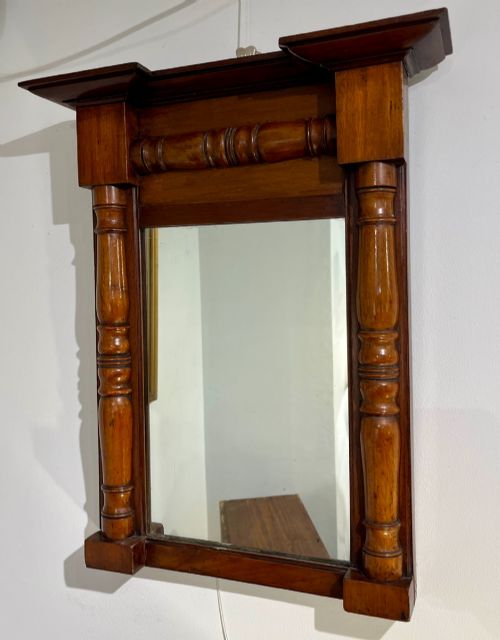
While many examples serve specific domestic tasks like hand-held grooming or dressing table reflection, larger scaled variants act as architectural pier mirrors. Each piece relies on the turnery of the wood to soften the linear geometry of the glass and frame.
Assessing quality and craftsmanship
The distinction between standard domestic items and finer pieces lies in the precision of the turnery and the choice of timber. Superior examples display crisp, well-defined ring turnings on the columns and balanced proportions that support the weight of the glass without sagging.
Surface preparation and timber selection also divide the range, with better pieces featuring carefully matched flame mahogany veneers and deep, hand-rubbed polishes. The integration of original brass mounts and clean, heavy mirror glass further elevates the standing of an individual piece.
Turned Mahogany Mirror Retail Price Guide 2026
Typical asking prices for turned mahogany mirror among the pieces listed under this phrase on Sellingantiques today, from the lower quarter to the upper quarter. They describe what is for sale here now, not the wider market.
Forms on this page range from small hand-held vanity glasses and travelling toilet mirrors to tall floor-standing cheval frames.
The Turned Mahogany Mirror Glossary
- Cheval mirror
- A full-length floor-standing mirror suspended on a vertical frame with pivoting side pins. This allows the glass to tilt to various angles.
- Swing mirror
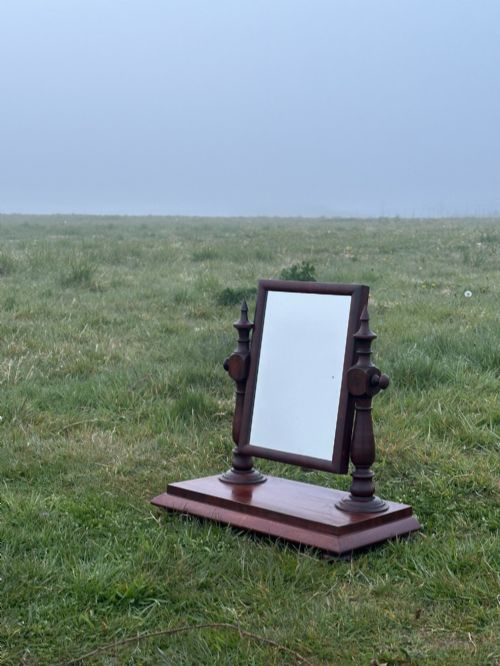
- A tabletop or dressing table glass mounted on pivots between two upright posts. The frame swings back and forth to adjust the angle of reflection.
- Flame mahogany veneer
- A decorative wood slicing taken from where a branch joins the main trunk, showing a distinctive flickering flame pattern. Cabinetmakers laid this over a stable base timber.
- Pier mirror
- A tall wall mirror designed to hang on the narrow section of wall between windows. These pieces often feature architectural framing to match interior joinery.
Turned Mahogany Mirror: Frequently Asked Questions
What is a cheval mirror?
A cheval mirror is a tall floor-standing glass that pivots within an upright frame, allowing a person to view their entire outfit.
These pieces were typically placed in bedrooms and dressing rooms during the Regency and Victorian periods.
How do I date a mahogany mirror?
Dating relies on observing the construction methods, turning styles, and the type of mirror glass used in the frame.
Earlier pieces from the Georgian era often feature hand-beveled plates and slender turned supports, while later Victorian and Edwardian examples show heavier proportions.
Where should I place a swing mirror?
A swing mirror sits comfortably on top of a dressing table, chest of drawers, or sideboard.
Position it near a natural light source to make the most of the glass reflection and highlight the turned wood frame.
Are these mirrors original?
The listings include antique pieces from the eighteenth through to the early twentieth century, retaining their period frames and turnery.
Many preserve their original glass plates, wood finishes, and brass hardware components.