


Free Standing Full Mirror
A free standing full mirror offers a complete reflection within a pivoting frame, bringing scale and utility to a room.
Free Standing Full Mirror
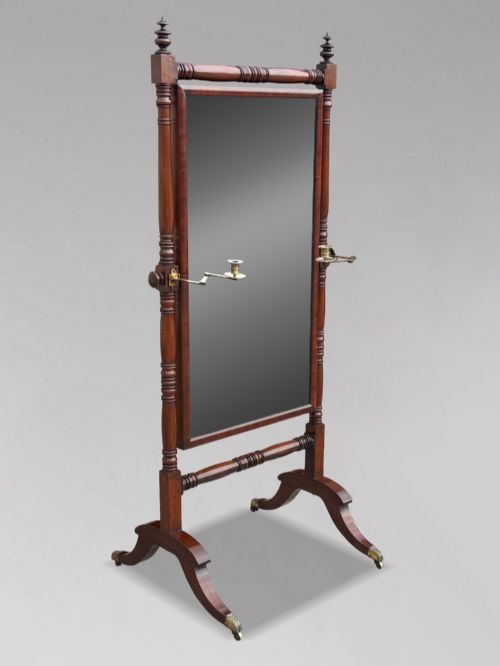
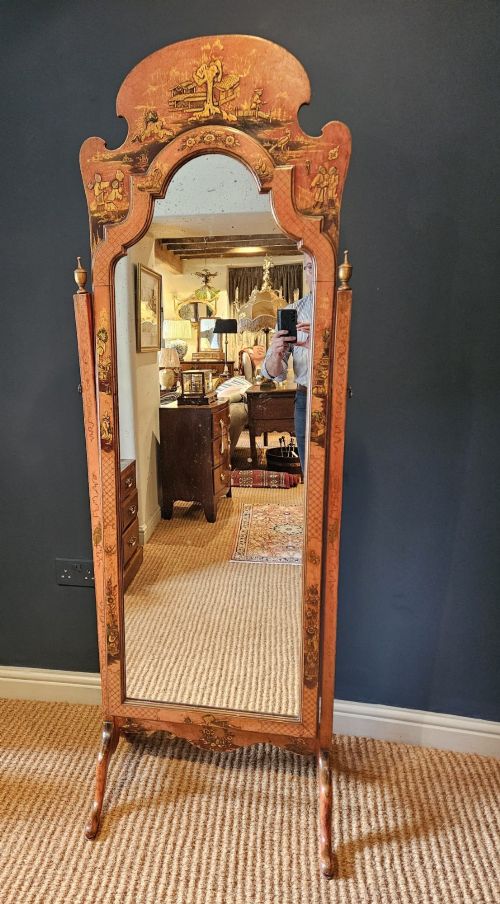
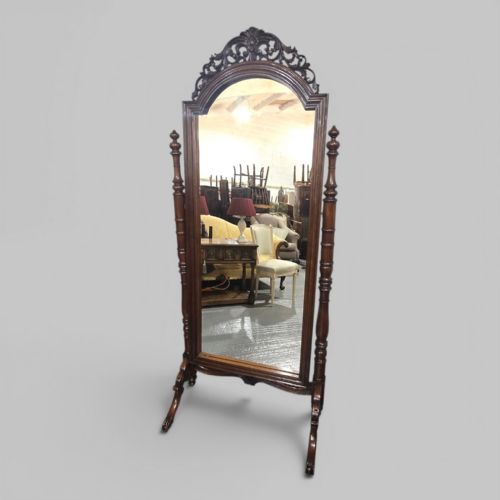
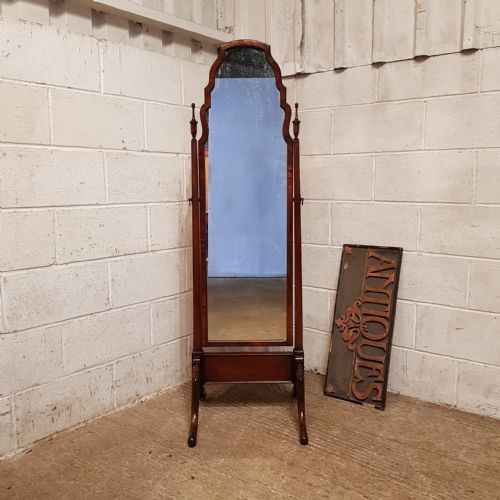
A free standing full mirror, often known as a cheval mirror or dressing mirror, stands independently upon its own base or floor supports rather than hanging from a wall. These pieces span multiple centuries, appearing in Georgian, Regency, Victorian, and later twentieth-century iterations.
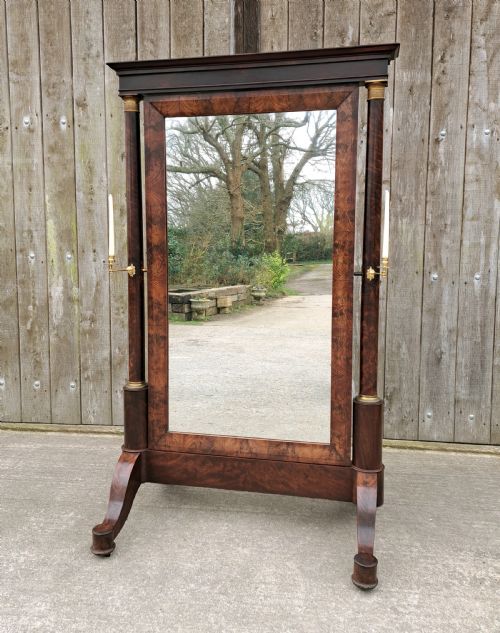
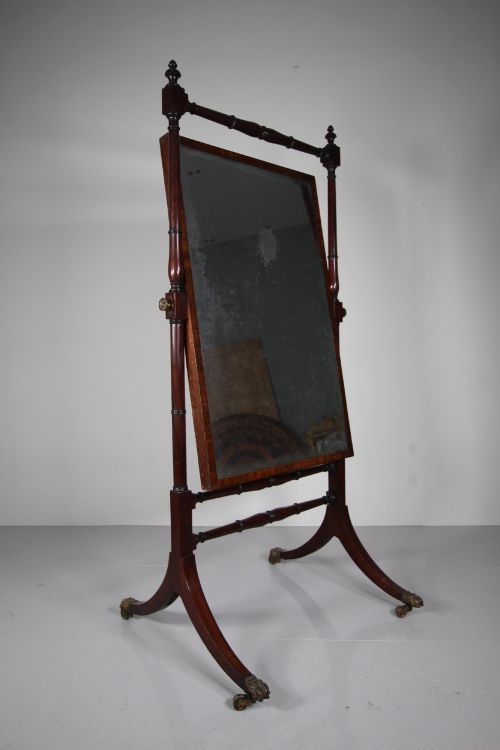
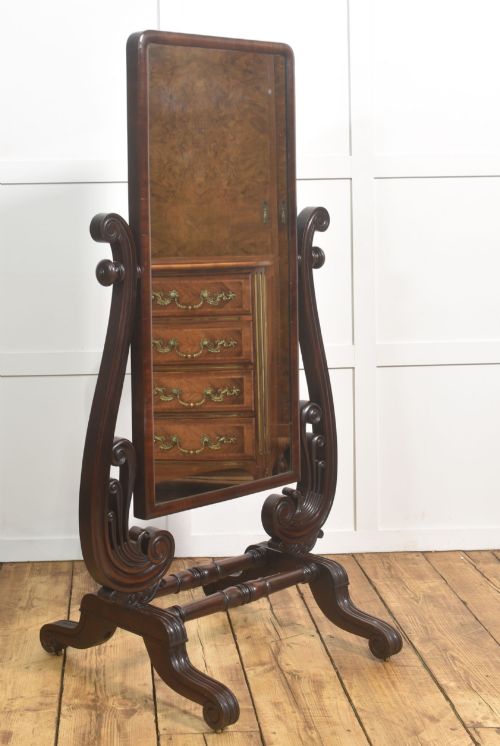
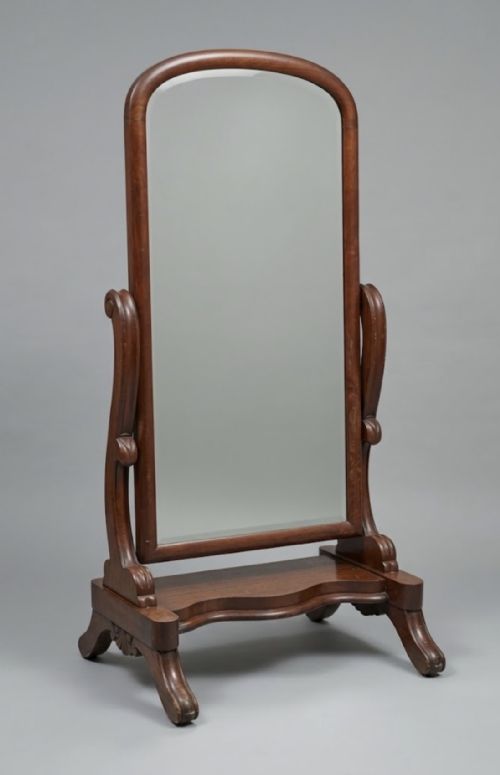
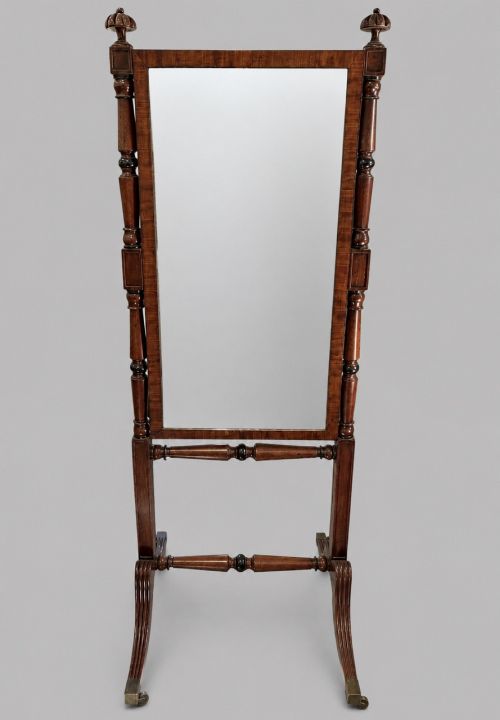
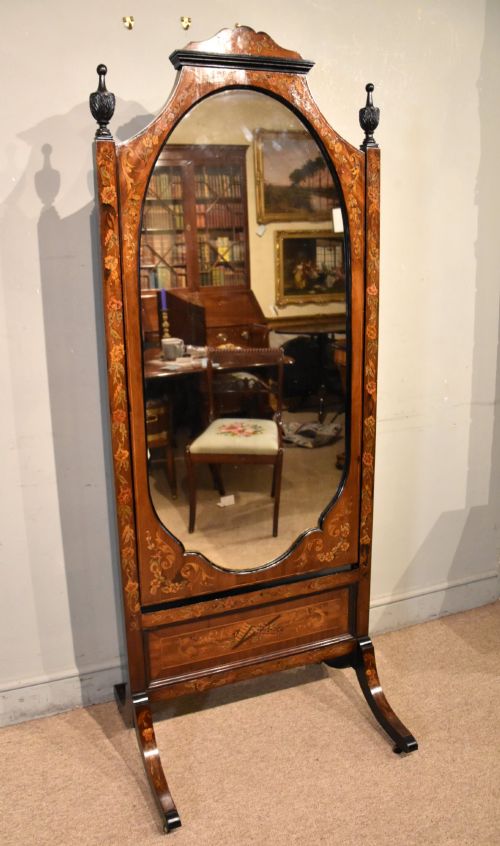
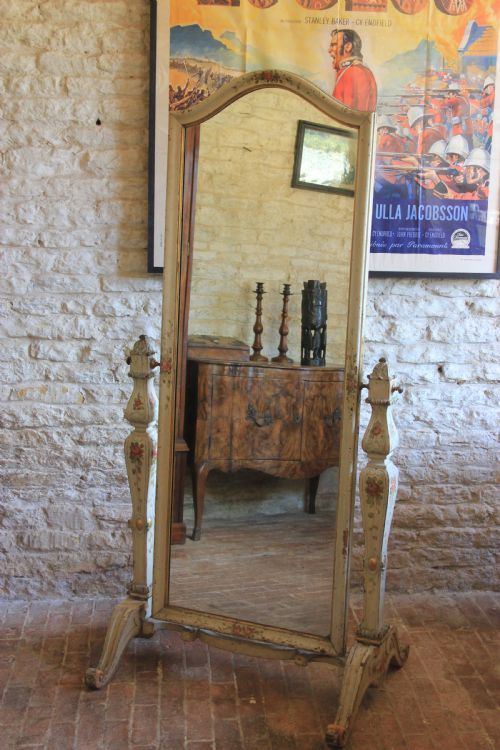
The most common examples on this page are mahogany cheval mirrors dating from the nineteenth century, typically featuring a swinging glass plate held between upright pillars. Buyers also encounter walnut, satinwood, pitch pine, and lacquered wood formats decorated with inlay or turnings.
Forms range from simple domestic dressing mirrors to large scale floor standing pieces originating from distinct periods such as the William IV era, the Art Deco years, and the French Empire style.
Materials and construction
Timbers such as mahogany, walnut, satinwood, and pitch pine form the structural frames and supporting pillars, often joined with traditional cabinetmaking techniques. Selected examples incorporate marquetry, inlay, or gilt details to enrich the timber surface.
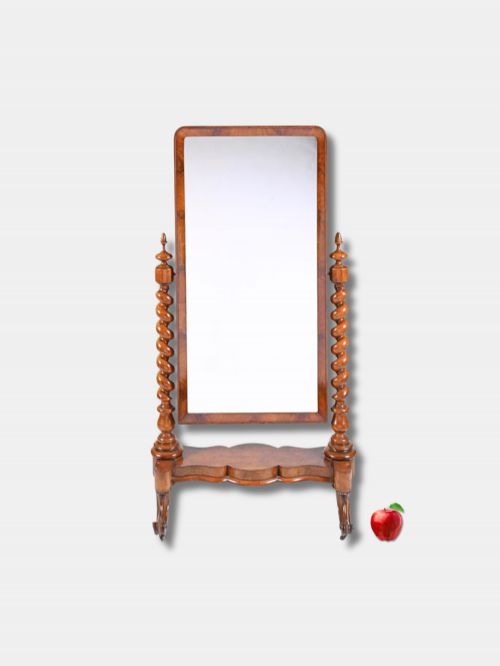
The glass plate pivots within the frame using brass pivots or pins inserted into the upright supports, allowing the user to tilt the reflection angle. Barley twist turnings, bracket feet, and robust floor bases provide the necessary stability for the heavy swinging mirror frame.
Quality differences
Subtleties in timber selection and joinery separate standard domestic pieces from exhibition quality examples. Selected pieces display fine marquetry inlay, superior burr walnut veneers, or bespoke turned elements like barley twist supports.
The weight and stability of the base relative to the pivoting frame indicate the level of craftsmanship. Original mirror glass plates and heavy brass hardware contribute to the integrity of earlier nineteenth-century and Georgian pieces.
Gillows
The Free Standing Full Mirror Glossary
- Cheval mirror
- A large floor standing dressing mirror that hangs in a vertical frame allowing it to swing. The term originates from the French word for horse, referring to the four-legged frame.
- Dressing mirror
- A smaller mirror used for grooming, which can be free standing on a table or designed as a full length floor standing unit. These pieces were standard bedroom furniture in Georgian and Victorian households.
- Mahogany
- A durable, reddish-brown tropical hardwood utilised extensively for furniture frames during the eighteenth and nineteenth centuries. It takes a high polish and resists warping.
- Marquetry
- Decorative woodwork where pieces of contrasting veneer are fitted into a ground material to form geometric or pictorial designs. This technique appears on satinwood and walnut frames.
- Barley twist
- A carved spiral column resembling a twisted rope, seen on the vertical supports of nineteenth-century frames. This decorative turning adds texture and visual weight to the uprights.
Free Standing Full Mirror: Frequently Asked Questions
What is a free standing full mirror?
A free standing full mirror is a tall looking glass mounted within a pivoting frame that rests directly on the floor. It allows the viewer to see their entire outfit without requiring wall attachment.
These pieces typically feature two upright pillars mounted on a stable base with side pivots. The glass swings freely so the angle of reflection can be adjusted.
Where were these mirrors used?
These mirrors were primarily placed in bedrooms, dressing rooms, and hallways of period homes to assist with daily attire. Large scale examples also stood in grand dressing quarters and gentlemen's outfitters.
Because they are portable, owners could position them to capture the best natural light from windows. Their independent frames meant no permanent wall fixings were needed.
How do I date a mirror?
Dating relies on timber choices, construction methods, and stylistic details such as turnings and inlay. Georgian and Regency examples often feature clean lines and mahogany, while Victorian pieces may display heavy mouldings or barley twist supports.
Later twentieth-century examples embrace Art Deco geometries or Chinoiserie lacquering. Examining the fixings and the backing boards provides further clues to the period.
How do I live with one?
Position the mirror on a flat, even floor surface where the heavy swinging frame remains stable and balanced. Keep it away from direct, harsh sunlight to protect the timber polish and the silvering behind the glass plate.
Ensure the brass pivot screws are adjusted carefully to maintain tension on the swinging glass. Clean the timber with appropriate wax and use gentle glass cleaner on the plate.