







Framed Woodland Oil Canvas
A framed woodland oil canvas brings the depth of the forest and the quiet of trees straight onto the wall.
Framed Woodland Oil Canvas
A framed woodland oil canvas captures trees, glades, and rustic paths through oil paint applied to canvas, often set within a period wooden frame. These works span from the seventeenth century through the Victorian era into the mid-twentieth century, recording changing attitudes toward nature and landscape painting.
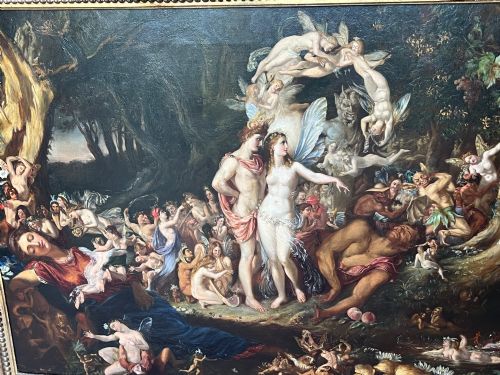
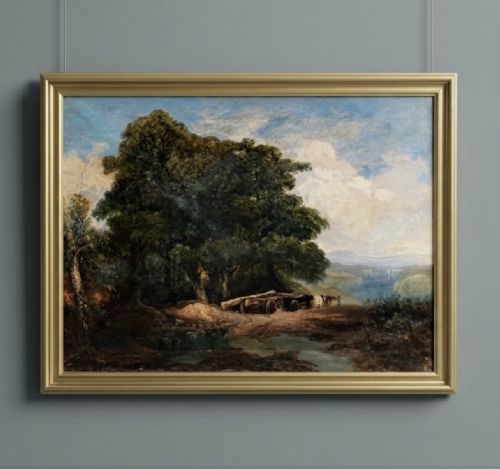
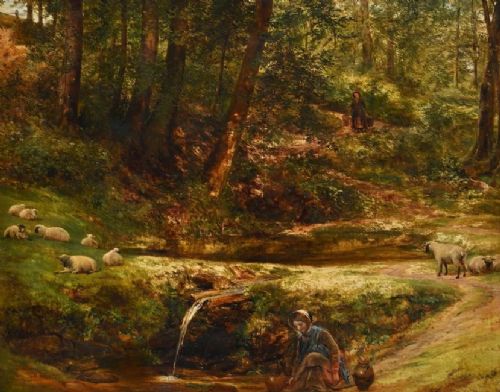
The selections available here lean heavily toward nineteenth-century British and continental examples, featuring cattle, figures, or streams tucked beneath dense canopies. Buyers will encounter romantic visions, pastoral scenes, and works influenced by the Barbizon School alongside later twentieth-century interpretations.
How they were made
These works rely on oil paint spread across woven canvas stretched over wooden frames, utilising rich pigments that allow for subtle blending of light and shadow among the trees. Artists built texture through layered brushwork, capturing the dampness of earth or the filtering of sunlight through leaves.
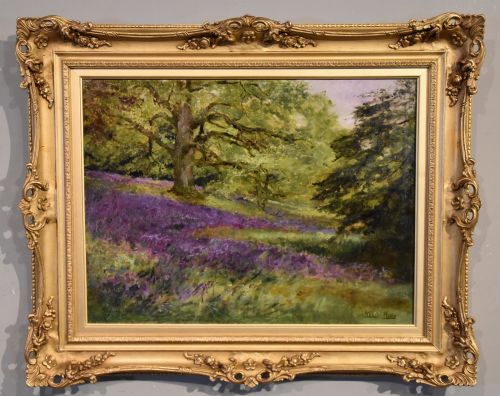
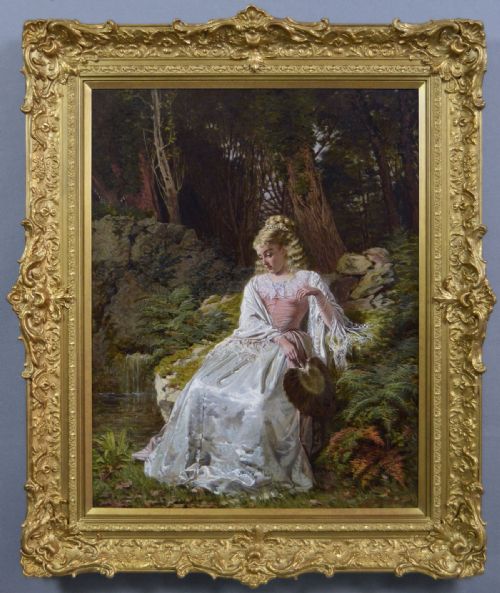
The canvases are housed in wood frames, frequently enhanced with gesso ornamentation and gilt surfaces that isolate the painted scene from the room. Over time, the interplay between the oil medium, canvas support, and wooden framing creates a stable, integrated object.
Listings feature works across the 17th, 19th, and 20th centuries, executed in oil on canvas with wood and giltwood frames.
What varies in quality
Quality rests in the handling of light, shadow, and depth within the wooded setting, distinguishing works with atmospheric presence from mechanical recordings of foliage. A stronger piece demonstrates confident brushwork that gives texture to bark, moss, and open sky.
The character of the frame matters equally, as period giltwood and gesso mouldings designed specifically for the canvas elevate the work, whereas mismatched or later replacements alter the intended presentation.
Sir Joseph Noel Paton·Richard Sebastian Bond·William H Myers·Sir Peter Lely·Thomas W Lascelles·Richard Redgrave·Paul Désiré Trouillebert·Henry Yeen King·Arthur Herbert Rigg·Thomas Bromley Blacklock·Thomas Edward Roberts·James Mallard Bromley·Owen Bowen·Clarence Henry Roe·David Watts·William Mellor·John Wright Oakes·James Proudfoot·Abraham Hulk Jnr·Thomas Hollingsworth·Frederick Golden Short·Ernest Higgins Rigg·J McIntyre·A Wood·Herbert Royle
The Framed Woodland Oil Canvas Glossary
- Oil on Canvas
- A painting medium where pigments are suspended in drying oils and applied to a woven fabric support. This combination allows for rich colour depth and gradual blending.
- Giltwood
- Wood that has been coated with a thin layer of gold leaf or powder. It provides a reflective, ornate border to period paintings.
- Gesso
- A plaster-like mixture used as a base for moulding or gilding on wooden frames. It creates smooth surfaces for decorative details.
- Barbizon School
- A mid-nineteenth-century French movement focused on direct observation of nature and tonal landscape painting. Painters in this circle worked outdoors to capture realistic woodland light.
Framed Woodland Oil Canvas: Frequently Asked Questions
What periods do these woodland paintings cover?
The selections span from the seventeenth century through Victorian and Edwardian eras into the mid-twentieth century. This range includes seventeenth-century Dutch and classical interpretations alongside nineteenth-century British naturalism and post-war modernist landscapes.
Each period brings distinct framing choices and painting techniques, reflecting how artists of different decades observed and recorded the natural world.
How should I hang a framed oil canvas?
Select a wall with stable temperature and humidity away from direct sunlight to protect both the oil paint and the wooden frame. Use appropriate wall anchors matched to the weight of the heavy wooden and gesso mouldings.
Ensure the canvas hangs securely from two points rather than a single hook to keep the heavy frame level over time.
Are the frames original to the paintings?
Many pieces retain their period wooden or giltwood frames, which show age and wear consistent with the canvas. Some works have been reframed over their long histories to suit changing interior tastes.
Examining the fit between the canvas stretcher and the rebate of the frame helps determine their long-term association.
What subjects appear alongside the trees?
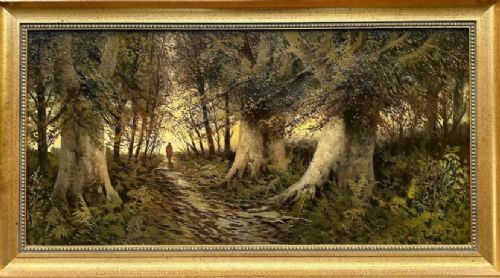
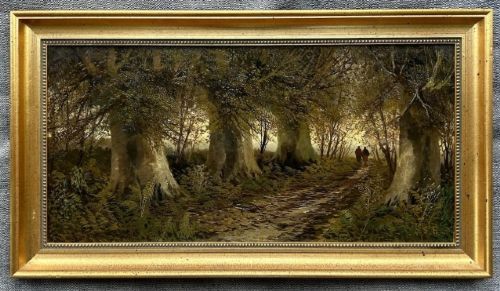
Many woodland scenes incorporate figures gathering firewood, cattle resting beneath canopies, or remote rivers and lakes. Others focus purely on the dense foliage, forest paths, and filtered sunset light.
These narrative elements help place the works within specific artistic traditions, from romantic landscapes to pastoral realism.