





Edwardian Impressionist Landscape Art
Edwardian impressionist landscape art brings light-filled scenes of countryside and coast directly to the wall through expressive brushwork.
Edwardian Impressionist Landscape Art
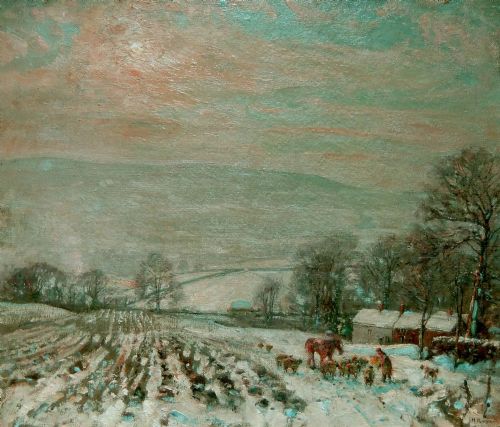
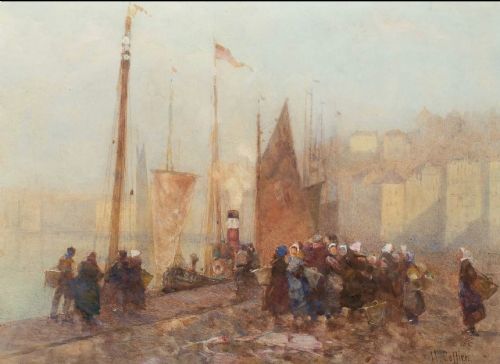
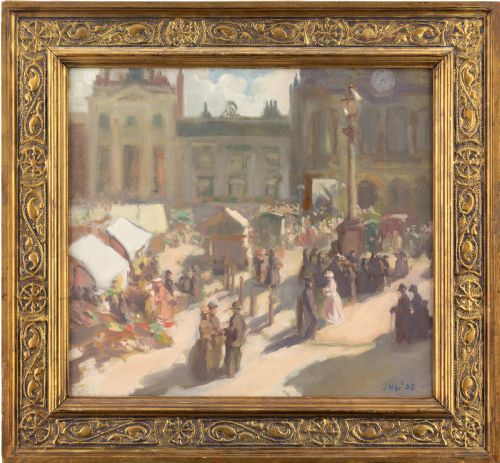
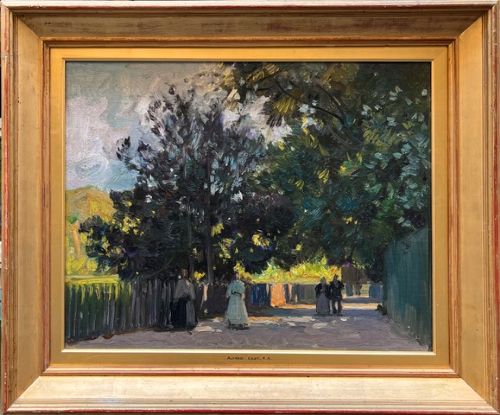
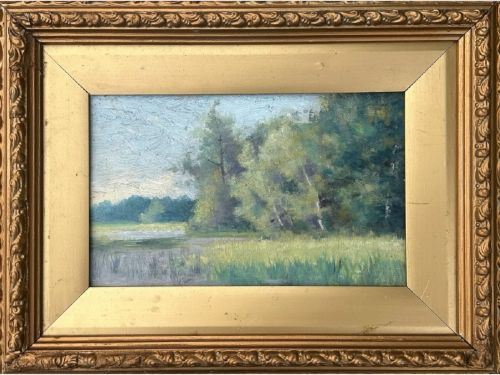
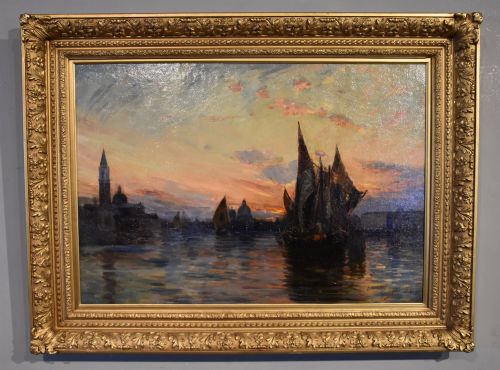
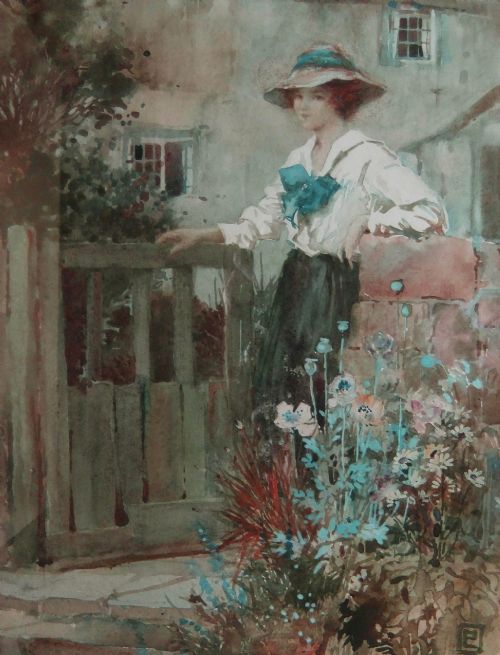
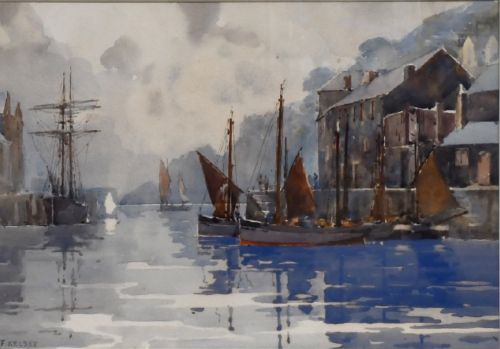
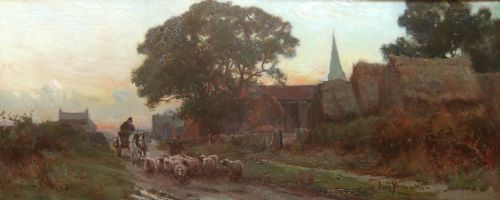
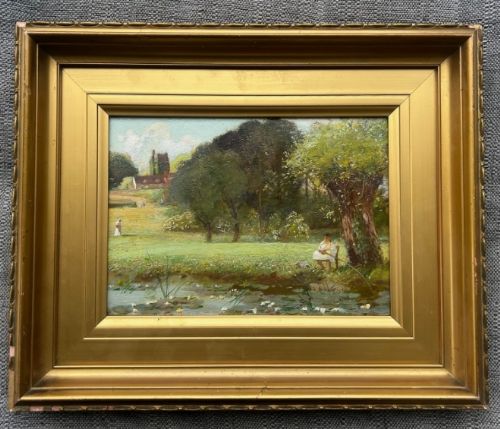
Edwardian impressionist landscape art encompasses framed watercolours and oil paintings created during the early twentieth century, capturing pastoral views, coastal harbours, and domestic gardens. Works range in date from the Victorian period through the 1940s, with a strong concentration of pieces from 1900 to 1930. Painters of this era turned their attention to everyday rural labour, river paths, and quiet village streets rendered with loose, immediate handling.
On this page, buyers primarily encounter original paintings on canvas, wood panel, board, and paper. Forms include fine art wall paintings depicting scenes such as Yorkshire evening light, Venetian canals, and Welsh farmyards. Many examples remain within their period gilt frames, preserving the original presentation intended by the artist.
Materials and Technique
Artists built these compositions using oil paint on stretched canvas, wood panels, or heavy paper boards, alongside delicate watercolours on paper. The application relies on visible, rapid brushstrokes designed to catch shifting natural light rather than precise academic finish. Support materials vary from traditional canvas to compact wood panels suited for outdoor plein air sketching.
Pigments were worked directly to build texture, particularly in oil paintings where impasto highlights describe sunlight on foliage or water. Watercolour pieces utilise fluid washes combined with confident pencil or ink underdrawing to establish form swiftly. Frames are predominantly wood, often finished with gilt or moulded decoration appropriate to the period.
Listings feature works spanning from the Victorian era through the 1940s, executed in oil and watercolour on canvas, panel, and paper.
Distinctions in Quality
Quality rests upon the artist's command of tone and the confidence of the brushwork in capturing atmospheric light. Stronger pieces display a deliberate arrangement of colour that creates genuine depth, moving beyond a mere topographical record into a study of illumination. The handling of difficult subjects, such as moving water or complex foliage, separates the most accomplished practitioners.
The preservation of the pigment and the integrity of the original support significantly influence the standing of a work. Paintings that retain their original unlined canvas and period framing offer a more complete historical survival. The presence of clear signatures and documented exhibition histories further distinguishes notable examples from standard studio output.
Herbert Royle·Hector Caffieri·John Hodgson Lobley·Sir Alfred East·Percy Lancaster·Frank Kelsey·Archibald Kay·Owen Bowen·Edgar Woollatt·Sir David Murray·Thomas Bromley Blacklock·Reginald Grange Brundrit·Charles James Lauder·Ernest Pile Bucknall·Rowland Henry Hill·John Atkinson·James Watson·Frederick W Jackson·William Grant Murray·Ernest Higgins Rigg·Kershaw Schofield·James William Booth·George Soper·Lorenzo Headley·Lilian Stannard
The Edwardian Impressionist Landscape Art Glossary
- Impressionism
- A style of painting emphasising loose brushwork and the depiction of light and its changing qualities. This approach prioritises overall visual effect over fine detail.
- Watercolour
- A painting method in which the paints are made of pigments suspended in a water-based solution. These works are typically executed on paper supports.
- Impasto
- The process of applying paint thickly on a canvas so that the brush or palette knife marks stand out. This technique adds tactile dimension to highlights and surfaces.
- Plein air
- The act of painting outdoors to capture the direct effects of light and air on a subject. Artists working in this manner often complete small panels on location.
Edwardian Impressionist Landscape Art: Frequently Asked Questions
What subjects appear in these paintings?
Painters focused primarily on British and European landscapes, including coastal harbours, river paths, farmyards, and country gardens. Common motifs involve rural workers, livestock, and village architecture observed under changing weather and seasonal light.
Urban street scenes and Venetian waterways also feature among the compositions, recorded with the same loose attention to atmosphere and immediate surroundings.
How should I frame and hang these works?
Many pieces retain their original period wood or gilt frames, which complement the tones of the pigment and should be preserved where possible. Hang the artwork away from direct sunlight and damp environments to protect the fragile surfaces of canvas and paper.
Ensure wall fixings match the weight of the framed piece and use professional picture wire secured firmly to the frame structure.
Are watercolours as durable as oils?
Watercolours on paper require careful protection behind glass and UV-filtering framing materials to prevent fading from natural light. They are inherently more sensitive to moisture and environmental shifts than oil paintings on canvas or wood panel.
Oil paintings offer a tougher surface, though both mediums benefit from stable indoor humidity and regulated temperatures.
How do I identify the period of a painting?
Dating relies on a combination of artist biographical dates, framing styles, stretcher construction, and the specific handling of pigment characteristic of early twentieth-century work. Inscribed titles, signatures, and exhibition labels on the reverse often provide precise historical documentation.
Examining the canvas weave, panel preparation, and paper watermarks helps confirm the era of creation.