


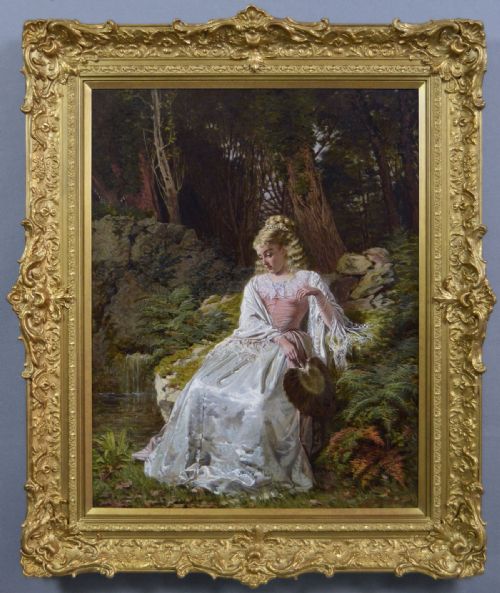


Green Woodland Artwork
Green woodland artwork brings the quiet shadow and rich foliage of the forest directly into your interior.
Green Woodland Artwork
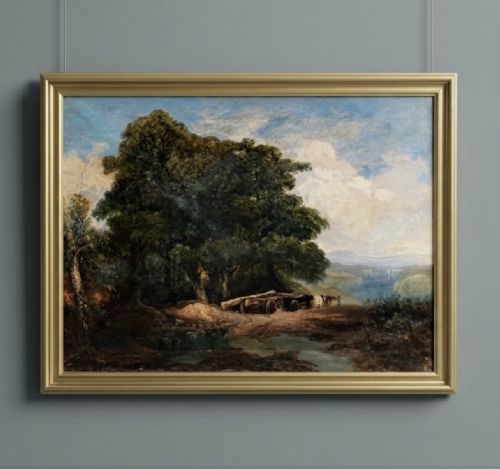
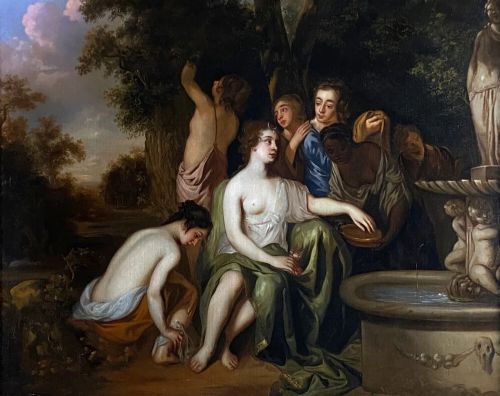
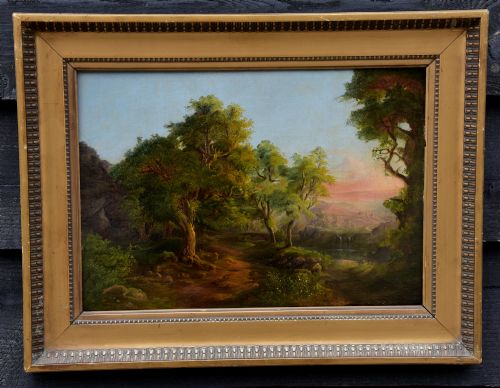
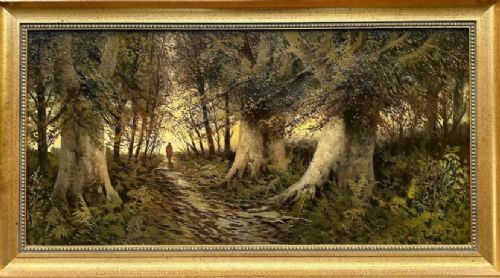
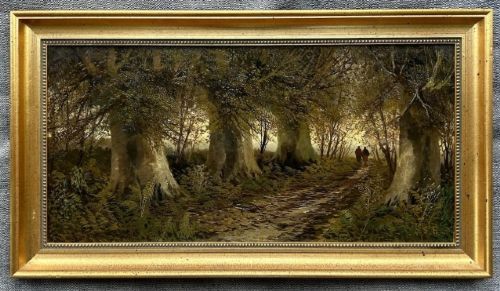
When you search for green woodland artwork, you encounter historical paintings and works on paper capturing forest scenes, pastoral paths, and secluded trees. These pieces span the nineteenth and twentieth centuries, recording changing artistic interpretations of the British and European countryside through oil, watercolour, and print.
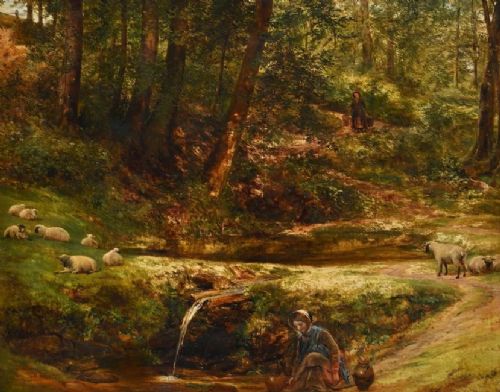
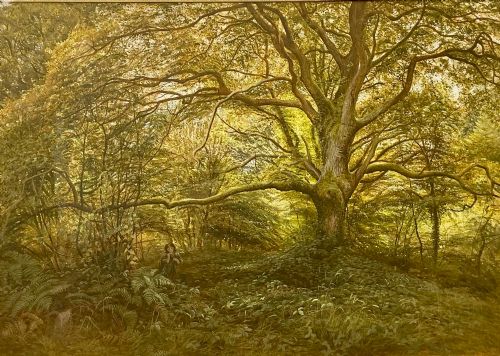
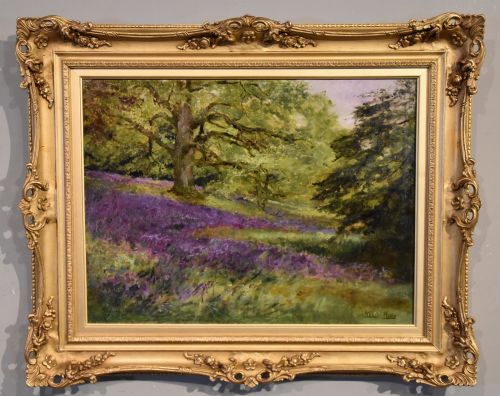
You are most likely to meet nineteenth-century oil paintings and Victorian watercolours depicting tranquil forest pathways, sunlit clearings, and leafy canopies. The selection ranges from expansive canvas landscapes by named nineteenth-century painters to intimate watercolours executed on paper by later artists.
The subjects often integrate figures, cattle, or distant rivers amidst dense foliage, reflecting Victorian and Edwardian approaches to landscape. Works on canvas dominate the selection, complemented by delicate watercolours and occasional collotype prints.
How they were made
Painters built up forest depth using oil paint on canvas or board, applying layered pigments to render the texture of bark, moss, and dense foliage. Canvas provides a robust ground for substantial oils, while wooden board supports firmer, smaller compositions.
Watercolour works utilise pigment suspended in water on paper, capturing the translucent light filtering through branches with thin, fluid washes. Some pieces incorporate gold leaf highlights to catch the illumination within romantic or classical compositions.
Several paintings record cows grazing quietly beneath the trees, reminding us that forest floors once doubled as pasture.
What varies in quality
The strength of the composition and the artist's handling of light define the upper tier of these works, where brushwork convincingly suggests the weight of leaves and the dampness of the woodland floor. Finer pieces demonstrate careful observation of tone, whereas weaker examples rely on repetitive formulas for foliage and tree trunks.
Preservation of the original surface and the condition of the canvas or paper alter the visual impact over time. Works retaining their initial pigment vibrancy without excessive retouching command greater appreciation from collectors.
Richard Sebastian Bond·William H Myers·Thomas W Lascelles·Richard Redgrave·Henri Joseph Harpignies·John Wright Oakes·James Proudfoot·Rowland Henry Hill·Abraham Hulk Jnr·Ernest Higgins Rigg·Beatrice Parsons·John Falconar Slater
The Green Woodland Artwork Glossary
- Canvas
- A heavy woven fabric stretched across a wooden frame to serve as a sturdy support for oil paintings. It has been used by artists for centuries to hold thick layers of pigment.
- Watercolour
- A painting method where fine pigment is mixed with a water-soluble binder and applied to paper. This technique creates transparent washes of colour that mimic natural light.
- Collotype
- A planigraphic printing process using gelatin coated on glass to produce continuous-tone photographic reproductions. It gained popularity in the early twentieth century for faithful art prints.
- Board
- A rigid wooden panel or stiff card used as a flat base for painting. Artists frequently utilised board for smaller, spontaneous plein air woodland studies.
Green Woodland Artwork: Frequently Asked Questions
What periods do these artworks cover?
The available selection spans from seventeenth-century classical interpretations up through nineteenth-century Victorian oil paintings and twentieth-century watercolours. Mid-twentieth-century pieces also appear alongside earlier works.
Most items originate from the nineteenth and early twentieth centuries, reflecting changing stylistic movements in landscape painting.
How were these woodland scenes displayed?
Period oil paintings on canvas were traditionally mounted within heavy gilded or moulded wooden frames designed to project the depth of the forest scene. Watercolours on paper required protective glass and matting to prevent moisture damage.
Original framing often accompanies the piece, helping to preserve the edges of the canvas or paper.
How do I care for antique canvas paintings?
Keep oil paintings away from direct sunlight and dramatic fluctuations in temperature and humidity to prevent the canvas from slackening and the paint from cracking. Gentle dusting with a soft, dry brush maintains the surface.
Avoid using water or liquid cleaners on the painted surface or the canvas reverse.
How do I distinguish watercolours from oils?
Oils possess a thicker, textured surface where brushstrokes stand proud of the canvas or board, often exhibiting a satin or gloss sheen. Watercolours present a flat, matte appearance on paper beneath glass.
Watercolour pigments sit smoothly within the paper fibres rather than resting on top as a distinct paint layer.