
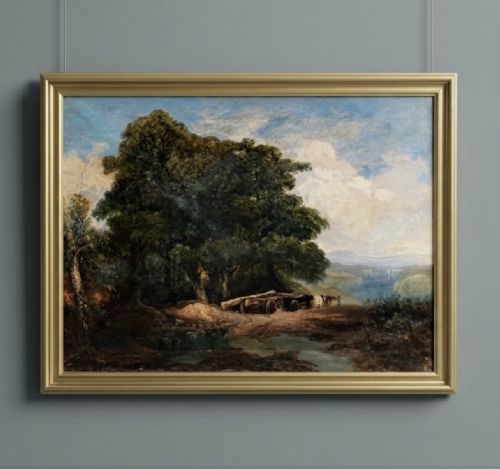

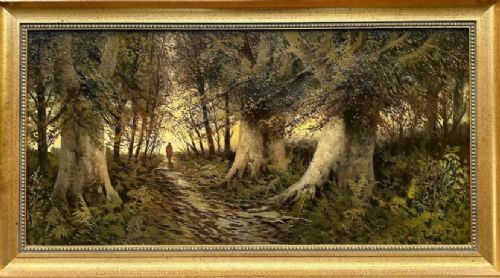
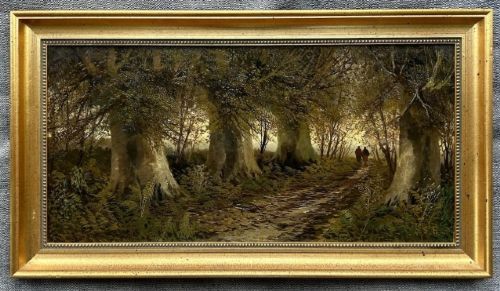
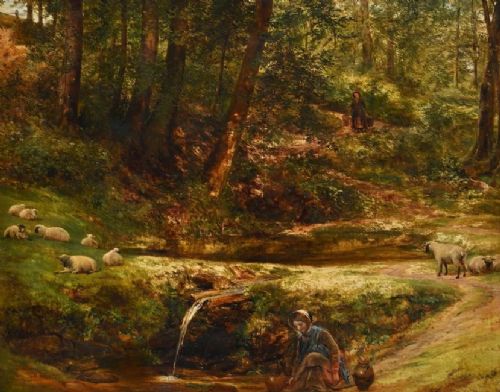
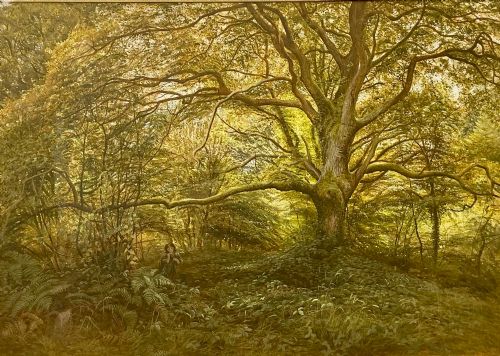
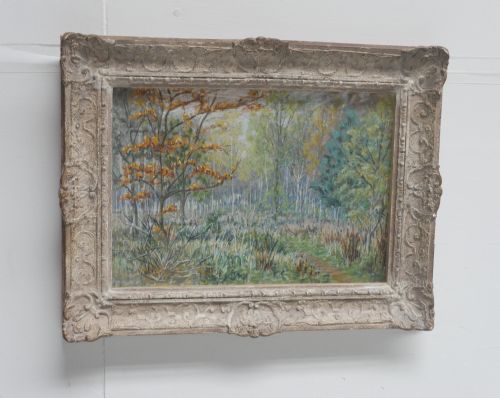


Framed Woodland Landscape Scene
A framed woodland landscape scene captures the quiet depth of trees, rivers, and shaded paths preserved across centuries of painting.
Framed Woodland Landscape Scene
A framed woodland landscape scene presents forested terrain, rivers, and country paths rendered in traditional media. These works range from expansive Victorian canvases to mid-century interpretations.
The selection on this page relies heavily on nineteenth-century oil paintings and watercolours. Artists across the Victorian, Edwardian, and mid-century periods recorded wooded settings with varied atmospheric detail.
How They Were Made
Makers applied oil paint to canvas or board, alongside watercolours worked on paper. These pigments capture the play of light through branches and seasonal changes in foliage.
Frames incorporate wood and gesso, enclosing the paintings under glass in many watercolour examples. The construction methods reflect standard studio practices of the nineteenth and twentieth centuries.
Listings feature works spanning the nineteenth century through the 1960s, using oil on canvas, paper, and watercolour.
What Varies in Quality
Quality rests in the handling of light, depth, and brushwork. Works by accomplished painters display a confident command of atmosphere and natural form.
The condition of the canvas, paper, and original framing contributes to the standing of each piece. Superior execution in the foliage and spatial arrangement distinguishes the finer works.
Richard Sebastian Bond·William H Myers·Thomas W Lascelles·Richard Redgrave·Arthur Herbert Rigg·James Mallard Bromley·David Watts·Alfred Grey·John Wright Oakes·Walter Follen Bishop·James Proudfoot·Rowland Henry Hill·Edmund George Warren·Charles James Adams·George Graham·Charles Edward Holloway·Charles Edward Wilson·Frederick Bartman·Benjamin Callow·Charles Edmond Rene His·William Mellor·Charles Duval·George Neil
The Framed Woodland Landscape Scene Glossary
- Oil on Canvas
- Pigment mixed with drying oil applied to a woven fabric support. This combination allows for rich colour blending and textured brushwork.
- Watercolour Painting
- A work executed with water-soluble pigments on paper. This medium produces translucent washes and delicate tonal shifts.
- Gesso
- A plaster mix applied to wood frames to create a smooth surface for gilding or moulding. It forms the decorative relief on period framing.
- Impressionism
- A style focused on accurate depiction of light and its shifting qualities. Artists often used visible brushstrokes and unblended colour.
- Victorian Naturalism
- An artistic approach emphasising detailed observation of the natural world. Painters recorded flora and terrain with close fidelity to physical appearance.
Framed Woodland Landscape Scene: Frequently Asked Questions
What is a framed woodland landscape scene?
These works are paintings and watercolours depicting trees, forests, and rural pathways presented in traditional frames.
They record changing seasons and light conditions through historical artistic styles.
How were these landscape paintings used?
Owners displayed these artworks in domestic interiors to bring views of nature into urban and country homes.
They served as decorative focal points in nineteenth and twentieth-century reception rooms.
How do I live with a framed woodland painting?
Hang the artwork away from direct sunlight to protect pigments and paper from fading over time.
Maintain stable room humidity to preserve both the canvas and the wooden frame.
How can I tell the periods apart?
Nineteenth-century pieces often show detailed realism, while twentieth-century examples lean towards impressionist or mid-century abstraction.
Examining the materials, framing style, and artist signatures helps date each piece.