
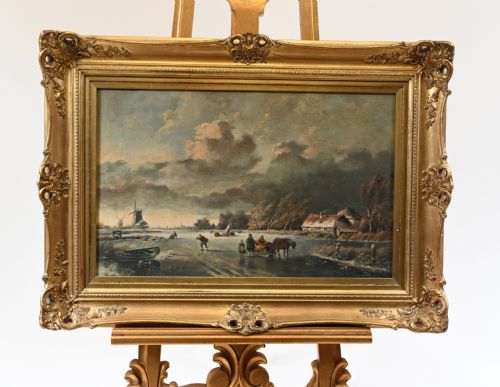


Framed Winter Scene Art
Framed winter scene art captures cold landscapes, frozen rivers, and snowbound villages through historical paintings and watercolours.
Framed Winter Scene Art
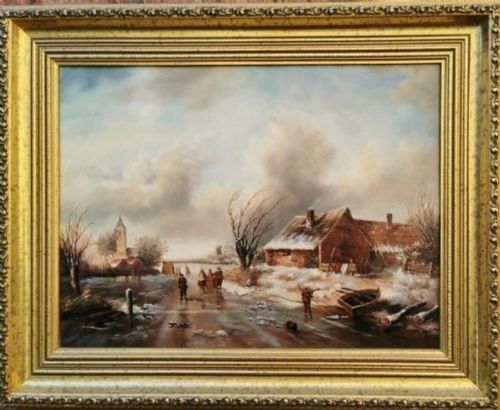
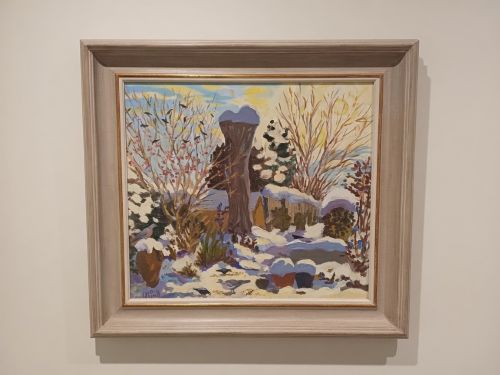
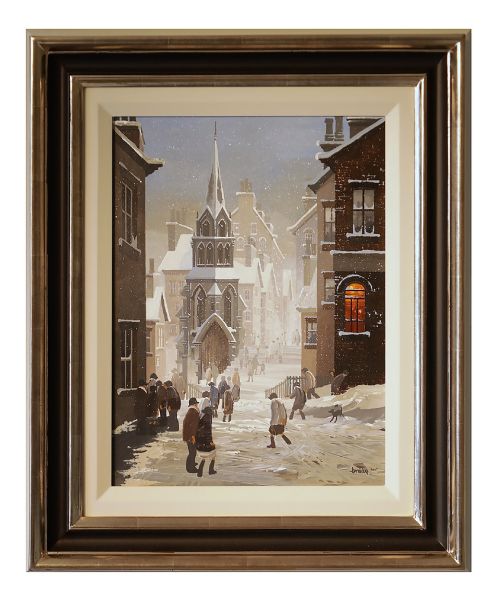
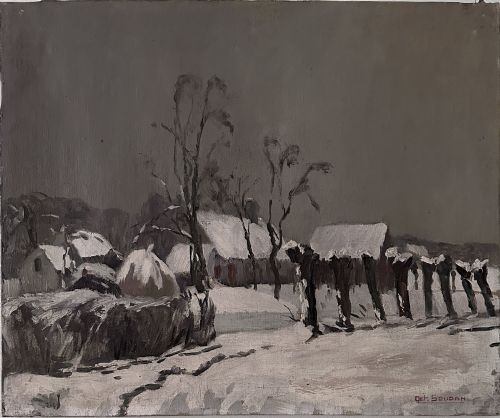
Framed winter scene art encompasses oil paintings, watercolours, and pastel drawings depicting snowy landscapes, coaching scenes, and frozen waterways. When you search for framed winter scene art, you will encounter works spanning the nineteenth century through the mid-twentieth century, including Dutch school landscapes and British Impressionist views.
The subjects range from quiet rural pastures and sheep droving scenes to bustling city streets and Dutch village views. These pieces frequently record historical winter conditions, from stagecoaches caught in snowstorms to figures skating on frozen lakes.
Materials and methods
Artists painted these scenes using oil paint on canvas, wood panels, or board, while others employed watercolour and gouache on paper. Canvas supports often received heavy applications of oil pigment to capture the texture of snow and frost.
Many works retain their period gilt or wooden frames, which protect the paper, canvas, or board beneath glass where watercolours are concerned. Pastel drawings on paper appear alongside these oils, fixed behind glass to prevent surface disruption.
Subjects frequently include stagecoaches in snowstorms, sheep droving, and figures skating on frozen Dutch lakes.
Factors determining quality
Quality rests upon the handling of light and atmospheric depth, distinguishing accomplished compositions from standard topographical records. The articulation of snow texture and the subtle shifts in tone during twilight or heavy snowfall reveal the hand of a skilled practitioner.
The provenance and attribution to listed or exhibited artists elevate certain works above anonymous regional pieces. Preservation of the original paint surface, uncompromised by extensive restoration, dictates the standing of each piece.
Lucy Pratt·Brian Shields Braaq·Gaston Cornil·Ernest Uden·John Charles Maggs·William Tatton Winter·Sydney Kendrick·Pieter Cornelis Steenhouwer·Ernest Higgins Rigg·Ludwig Hermann·Louis Smets·Anthonij Anton Mauve·George Augustus Williams
The Framed Winter Scene Art Glossary
- Dutch School
- A term denoting painters influenced by the naturalistic landscape traditions of the Netherlands. These works often focus on frozen canals, skaters, and low winter sun.
- Impressionism
- A style characterised by visible brushstrokes and an emphasis on the shifting qualities of light. In winter scenes, this technique renders the cold illumination of snow effectively.
- Gouache
- An opaque water-based medium frequently combined with watercolour on paper. It provides solid highlights of white to depict settled snow.
- Genre painting
- Artwork depicting scenes from everyday life, such as figures collecting firewood or travelling by stagecoach. These compositions bring human narrative to the landscape.
Framed Winter Scene Art: Frequently Asked Questions
What periods do these winter scenes date from?
The pieces span from the nineteenth century through the mid-twentieth century, capturing changing artistic styles across several decades. Victorian and Edwardian examples sit alongside mid-century interpretations.
Dates are established through stylistic analysis, artist signatures, and occasionally framing or historical records noted within individual listings.
How should I care for an antique oil painting?
Oil paintings on canvas or board require stable indoor humidity away from direct sunlight and heat sources. Gentle dusting with a soft, dry brush maintains the surface.
Avoid using water or chemical cleaners on the paint layer, and consult a professional conservator if the canvas requires tension or cleaning.
What is the difference between an oil painting and a watercolour?
Oil paintings utilise pigment suspended in drying oil applied to canvas, wood, or board, creating a textured and durable surface. Watercolours use water-soluble pigments on paper and require protection beneath glass.
Oils generally allow for thicker paint application, whereas watercolours offer translucent washes of colour.
Are these works signed by the artists?
Many pieces feature visible signatures or monograms applied by the original hand, while others remain unsigned or attributed based on style and subject matter. Documentation within listings identifies known artists where records permit.
Unsigned works are typically judged purely on their technical execution and period characteristics.