



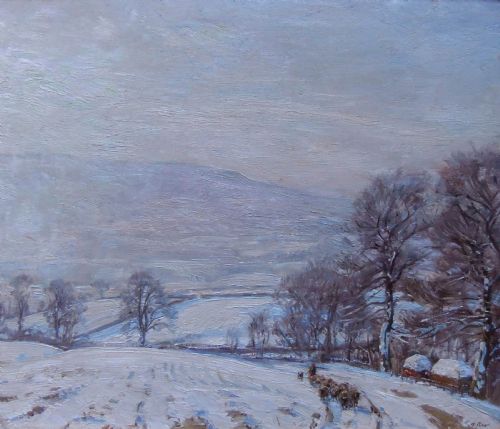

Blue Winter Landscape Artwork
Blue winter landscape artwork brings the quiet chill of snow and frost indoors through brushwork captured across the nineteenth and twentieth centuries.
Blue Winter Landscape Artwork
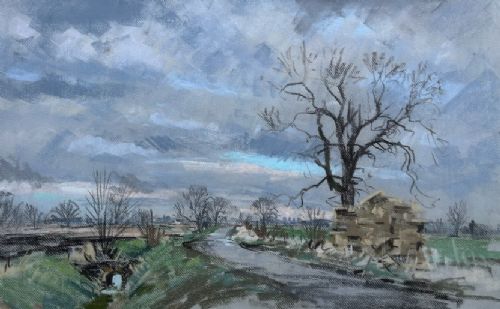
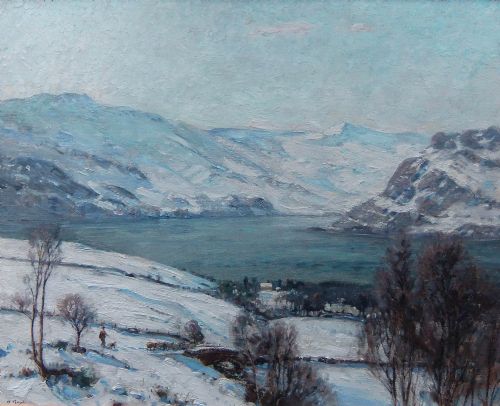
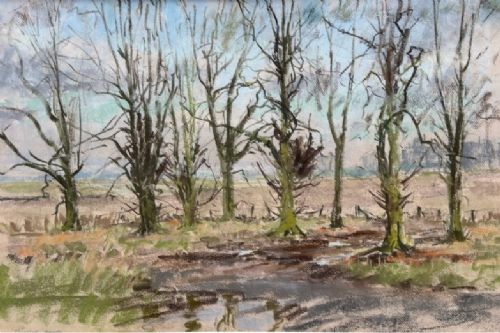
These pieces encompass fine art paintings, watercolours, and pastels that focus on snowy scenes and cold seasonal views. When searching for blue winter landscape artwork, collectors encounter varied interpretations ranging from early twentieth-century British watercolours to German Expressionist canvases and French post-impressionist pastel works.
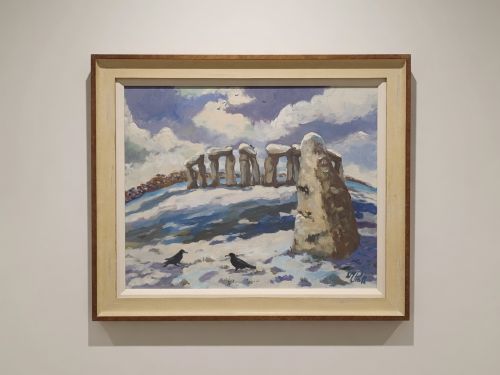
The selections span distinct periods, including the nineteenth century, the 1920s, 1930s, 1940s, 1950s, 1960s, and later eras. Common regional subjects feature British rural locations such as Wensleydale, Wharfedale, and Stonehenge alongside continental scenes in France and Germany.
Most examples arrive framed, preserving delicate paper and canvas mediums. The visual weight relies heavily on cool palettes and atmospheric winter conditions, capturing snow, frost, and overcast skies.
Distinctions in quality
Quality rests on the artist's ability to command atmosphere and light within a restricted cool palette, distinguishing expressive works from formulaic depictions. Finer pieces demonstrate confident brushwork and precise tonal control, particularly when rendering the subtle nuances of snow and winter skies.
The condition of the medium also dictates standing, with well-preserved watercolours retaining vibrant pigments without fading or foxing, and oil paintings maintaining stable surfaces across canvas or wood.
Blue Winter Landscape Artwork Retail Price Guide 2026
Typical asking prices for blue winter landscape artwork among the pieces listed under this phrase on Sellingantiques today, from the lower quarter to the upper quarter. They describe what is for sale here now, not the wider market.
Materials documented in the inventory include canvas, wood, paper, glass, oil paint, watercolour, and pastel.
Lucy Pratt·A. McDonald·Fred Lawson·Ernest Uden·Herbert Royle·William Tatton Winter·A. Winter Shaw·Ernest Higgins Rigg·Emily M. Paterson·William Cave Day
The Blue Winter Landscape Artwork Glossary
- Watercolour Painting
- A work executed with water-soluble pigments on paper. This medium allows for transparent washes that suit the pale, luminous qualities of winter light.
- Oil on Canvas
- A painting technique using pigments bound in a drying oil applied to a stretched canvas support. This method permits rich texture and deep layering, often utilised for dramatic winter skies and snowdrifts.
- Pastel Painting
- An artwork created using powdered pigment sticks compressed into chalk-like cylinders. The technique produces velvety surfaces with soft blended edges ideal for atmospheric frost.
- German Expressionism
- An early twentieth-century artistic movement focused on evoking emotional states rather than physical reality. In winter subjects, this style employs stark forms and intense hues to convey the harshness of the season.
Blue Winter Landscape Artwork: Frequently Asked Questions
What periods do these winter paintings come from?
The pieces span the nineteenth century through the 1920s, 1930s, 1940s, 1950s, 1960s, and later decades.
This broad chronological range includes Edwardian impressionism, British realism, and mid-century modernist interpretations.
How should I care for a watercolour winter scene?
Watercolours require protection from direct sunlight to prevent pigment fading and paper yellowing.
Displaying them behind glass with acid-free mounts ensures the delicate paper and pigments remain stable.
What materials were used for these artworks?
Artists utilised oil paint on canvas and wood panels alongside watercolours, ink, and pastels on paper.
Each medium creates a distinct texture, from heavy oil impasto to translucent watercolour washes.
Are these paintings usually framed?
Most works are listed with their frames, which range from period wooden mouldings to simple contemporary surrounds.
Frames provide essential structural support and protection, particularly for works on paper.