


Vintage Winter Artwork
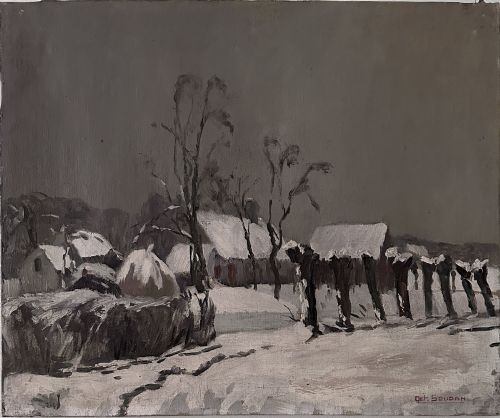
Vintage winter artwork captures the stillness of snow-covered landscapes and frost-bitten days through the eyes of past painters.
Vintage Winter Artwork
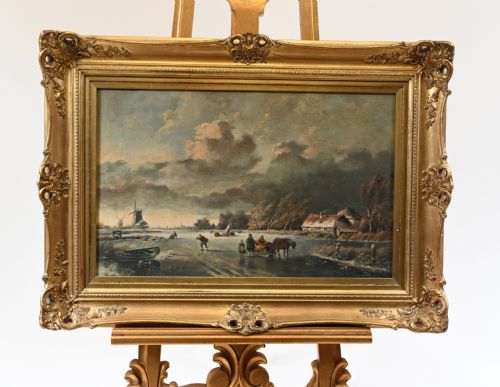
Vintage winter artwork encompasses painted and drawn scenes of snow, ice, and cold weather spanning from the nineteenth century into the later twentieth century. Buyers seeking this phrase encounter rural pastoral views, frozen Dutch lakes, and snowy village streets rendered across various decades.
The selections available here lean heavily toward oil paintings on canvas and board alongside delicate watercolour and pastel drawings on paper. These pieces range from intimate sketches to large mid-century pastoral and cityscape compositions depicting seasonal chill.
Materials and methods
The physical makeup relies primarily on oil paint applied to canvas, wood, or board, building thick textures to convey heavy snow and frozen ground. Watercolours and pastels on paper offer a lighter touch, capturing the misty atmosphere and pale light of short winter days.
Framed artworks incorporate traditional wooden supports and gilt surrounds, protecting the fragile paper or canvas surfaces. Pigments are handled with varying brushwork styles, from the tight detail of Dutch school influence to the looser strokes of British Impressionism.
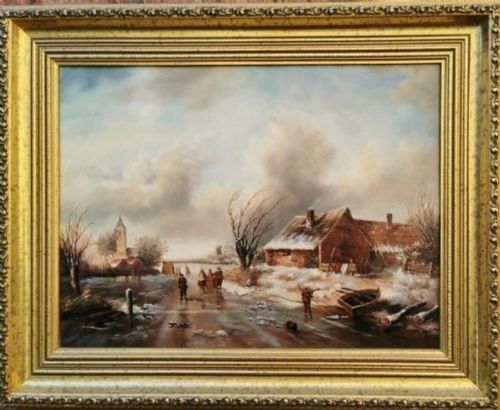
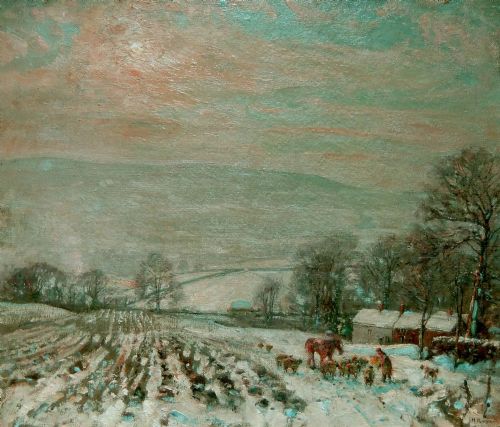
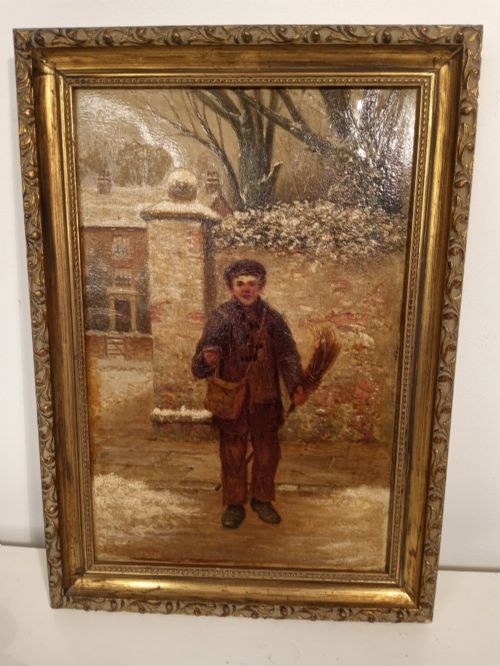
Several artists clearly felt the chill, capturing frozen lakes, chimney sweeps, and sheep braving the Yorkshire snow.
Distinctions in quality
Quality rests upon the artist's ability to render the specific, muted light and cold atmosphere unique to winter without relying on formulaic brushwork. Superior works demonstrate a confident handling of tone, where whites and greys carry depth rather than appearing flat.
The strength of the composition and the preservation of the paint or paper surface dictate the standing of a piece. Works by listed artists with established exhibition histories command attention through their precise capture of seasonal mood and place.
Herbert Royle·Brian Shields Braaq·Thomas Hicks·Ernest Uden·John Hobson Nicholson·John Smith Atherton·Arthur Winter Shaw·William Tatton Winter·Pieter Cornelis Steenhouwer·George Graham·Ernest Higgins Rigg·John Richard Worsdale·Emily M Paterson·Louis Smets·Eveline Lance·Fred Lawson
The Vintage Winter Artwork Glossary
- Oil paint
- A slow-drying medium consisting of pigments suspended in a drying oil, typically linseed. This allows artists to build rich, textured layers suitable for heavy snowscapes.
- Watercolour
- A paint consisting of colour pigments suspended in a water-soluble vehicle, frequently applied to paper. It relies on the white of the paper to shine through for icy highlights.
- Pastel
- A dry drawing medium made of powdered pigment and a binder, creating a soft and velvety texture. It is often utilised for atmospheric winter skies and misty cityscapes.
- Gilt frame
- A wooden picture surround coated with a thin layer of gold leaf or metallic gilt paint. These frames enhance the visual weight of traditional oil paintings.
- British Impressionism
- A painting style focusing on light and everyday subjects using visible brushstrokes, prominent among artists working in the late nineteenth and early twentieth centuries.
Vintage Winter Artwork: Frequently Asked Questions
What periods do these winter artworks come from?
The selections span from the nineteenth century through the Edwardian era and into the mid-twentieth century. Many pieces date from the early decades of the nineteen-hundreds.
Each era brings its own distinct painting style, ranging from Victorian pastoral traditions to later mid-century interpretations of snowy scenes.
Are these paintings original works?
The inventory consists of original paintings, watercolours, and pastel drawings created by individual artists. These are hand-rendered pieces rather than modern reproductions.
Signatures, dates, and artist attributions are noted where recorded on the canvas, board, or paper.
How should I care for a vintage painting on paper?
Works on paper, such as watercolours and pastels, require protection from direct sunlight to prevent fading. Framing behind glass with acid-free mounts helps preserve the delicate medium.
Keep these pieces in stable indoor environments away from excessive moisture and extreme temperature fluctuations.
What subjects appear most frequently in these scenes?
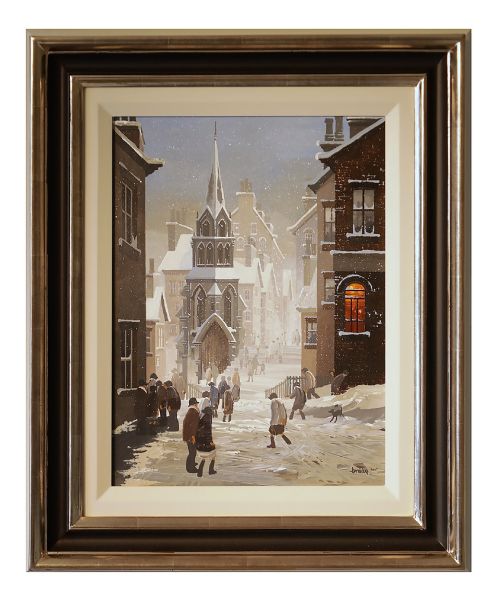
Common subjects include snow-covered Yorkshire dales, frozen Dutch lakes with figures skating, and quiet rural cottages. City streets blanketed in snow also feature across the mid-century works.
These compositions focus on capturing the quiet mood and pale daylight of the winter season.