

Framed Victorian Genre Painting
These framed victorian genre painting pieces capture everyday domestic scenes and social history, offering collectors a direct window into nineteenth-century life.
Framed Victorian Genre Painting
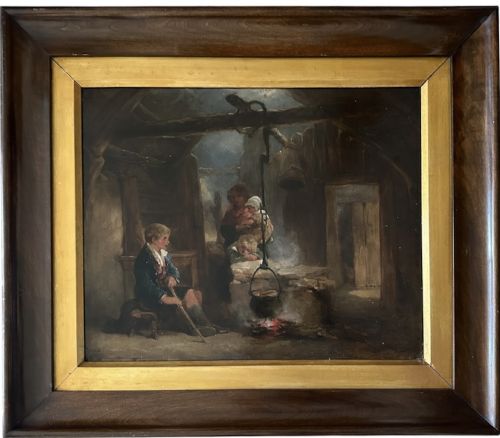
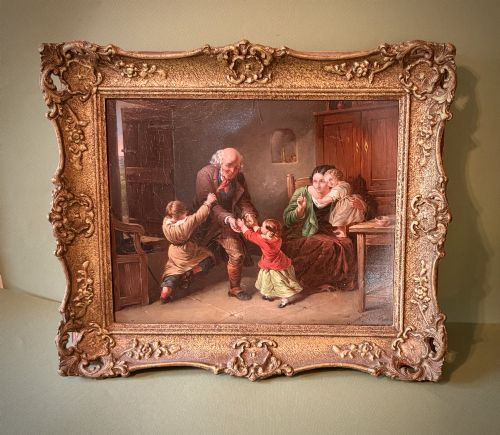
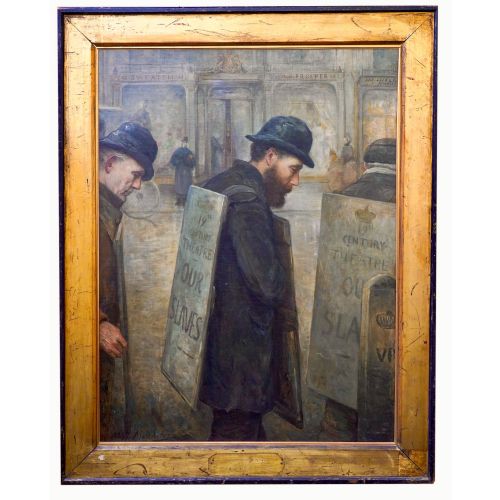
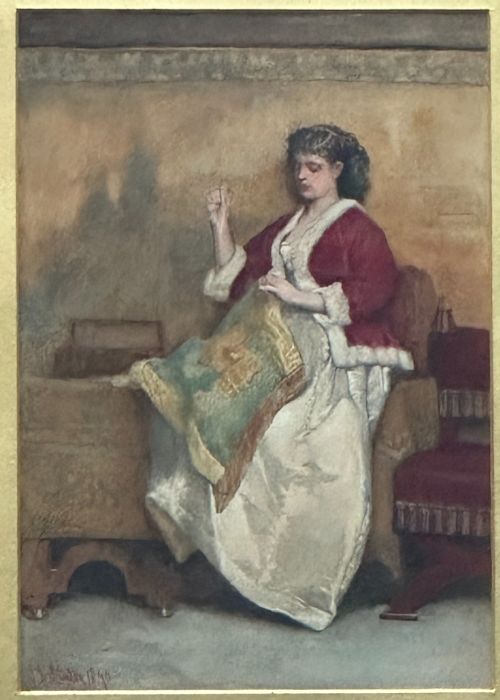
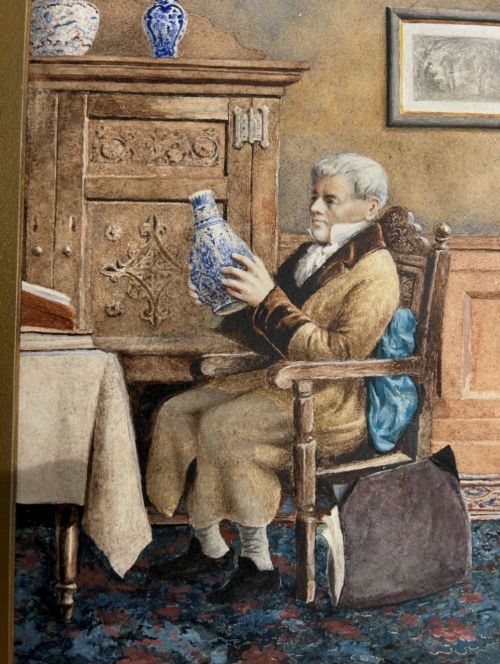
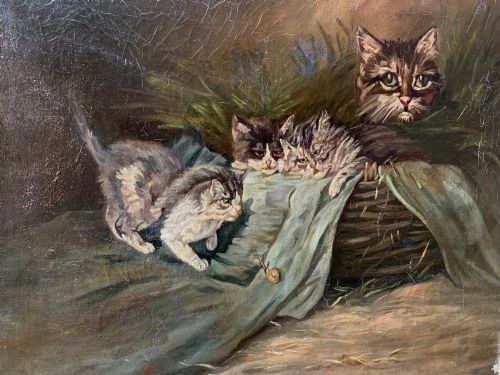
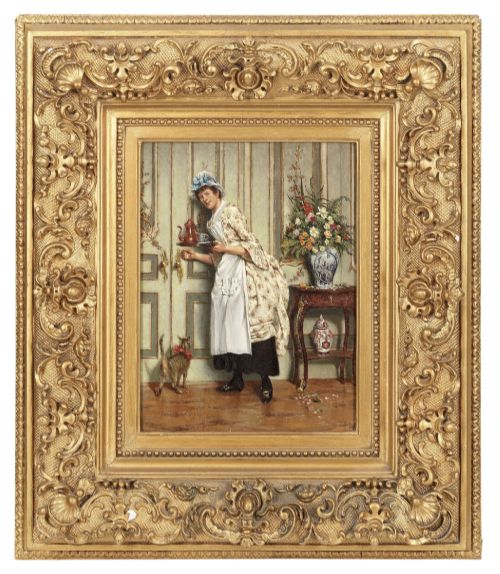
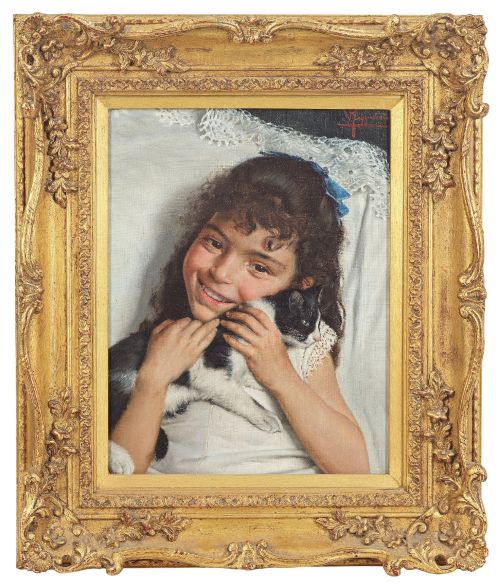
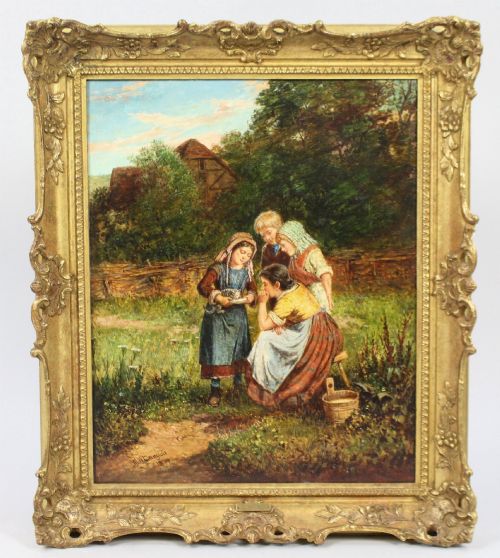
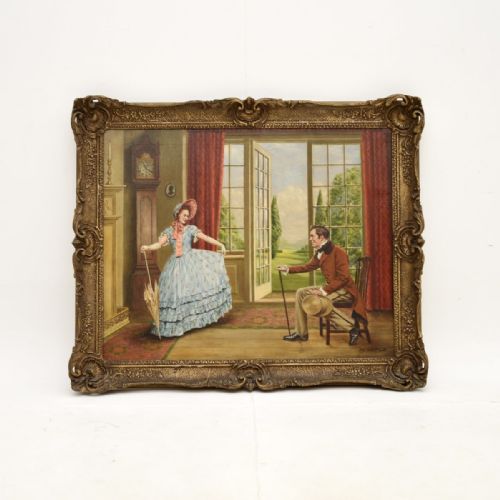
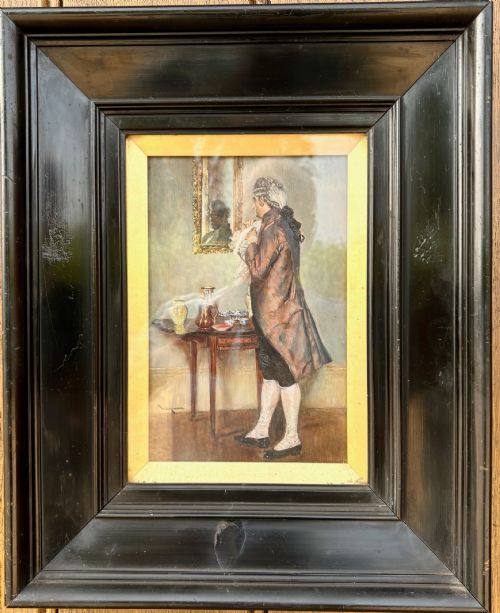
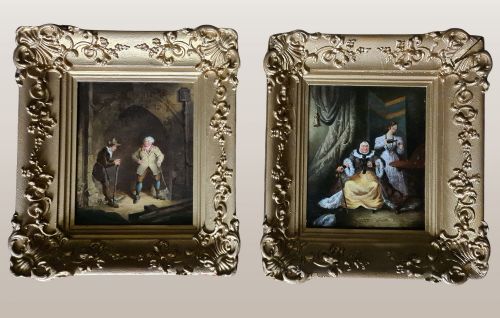
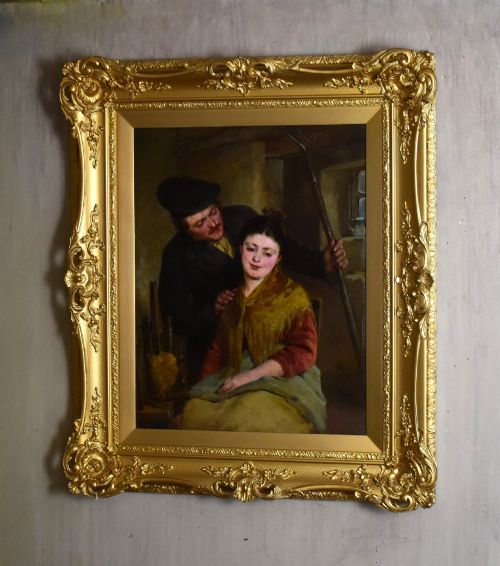
A framed victorian genre painting depicts scenes of everyday life, domestic interiors, and social narratives from the nineteenth century. The subjects range from children feeding animals and cottage interiors to street vendors and social history moments.
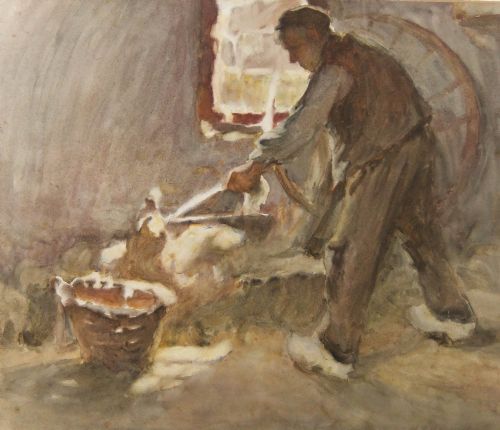
Most pieces on this page originate from the Victorian period and broader nineteenth century, utilising oil on canvas, oil paint, oil on board, and watercolour painting on paper. Artists from British, French, Scottish, and Italian schools contribute to the selection.
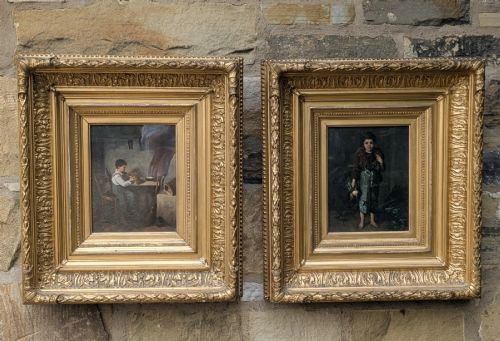
The physical formats include wall art, framed artwork, and oil paintings housed in decorative wood, gesso, and giltwood frames. These works bridge portraiture and landscape by telling stories about ordinary people.
Materials and Technique
Painters applied oil paint or watercolour onto canvas, paper, or board to build up narrative compositions. Canvases are frequently stretched over wooden frames and secured within ornate surrounds.
Moulded gesso and carved giltwood provide the decorative structure for the frames enclosing these artworks. Wood serves as the primary support for both the stretchers and the surrounding mouldings.
Victorian artists spent hours painting kittens getting into mischief just to make stern gentlemen smile in their parlours.
Assessing Quality
The skill of the brushwork and the expressive detail in human figures and animals set individual works apart. Superior pieces demonstrate precise draftsmanship in interior lighting and facial expressions.
The preservation of the original paint surface and the matching period frame influence the integrity of the piece. Intricate giltwood and gesso mouldings add distinct character to the presentation.
Felix Stone Moscheles·Sir James Dromgole Linton·Valentine T. Garland·Stephen Samuel Lewin·Vittorio Reggianini·Mark William Langlois·Henry Silkstone Hopwood·Alfred Lyndon Grace·W.D. Almond·Howard Helmick·Adelaïde Salles-Wagner·Max Kaltenmoser·George Augustus Holmes·Joseph H Barnes·Frederick Walker·Louis Charles Verwee·James Hamilton·Charles Hunt·Joseph Farquharson·Carlo Ferranti·Renato Moretti·Alfred Arthur Brunel de Neuville·Delapoer Downing·Thomas Kent Pelham·Charles Henry Slater
The Framed Victorian Genre Painting Glossary
- Genre Painting
- Depiction of aspects of everyday life by depicting ordinary people engaged in common activities. These works focus on narrative rather than grand historical or mythological subjects.
- Gesso
- A plaster-like mixture applied to wood frames to create a smooth surface for gilding. It allows for intricate moulded ornamentation.
- Giltwood
- Wood carved and covered with a thin layer of gold leaf or metallic gilt. It provides a bright, reflective border for the artwork.
- Social Realism
- An artistic movement that highlights the everyday conditions of the working classes and poor. These paintings document contemporary social issues without idealisation.
- Watercolour Painting
- A painting method where paints are made of pigments suspended in a water-based solution. Paper serves as the standard support medium for this technique.
Framed Victorian Genre Painting: Frequently Asked Questions
What is a framed victorian genre painting?
It is a nineteenth-century artwork depicting everyday human subjects, domestic scenes, or social narratives, enclosed in a display frame. These pieces focus on the lives of ordinary people rather than formal portraiture.
Such works utilise oil paints or watercolours on canvas, paper, or board. They record the clothing, domestic spaces, and activities of the era.
How were these paintings displayed originally?
Owners mounted them on interior walls within prominent domestic rooms of nineteenth-century homes. The frames were chosen to complement the decorative style of the interior.
Giltwood and gesso frames provided a formal boundary that separated the narrative scene from the wall surface. This presentation elevated domestic subjects to important decorative art.
How do I care for antique oil paintings?
Keep the artwork away from direct sunlight and fluctuating humidity levels to protect the canvas and paint layers. Dust the frame gently with a dry, soft cloth without applying cleaning solutions.
Avoid touching the painted surface directly with bare hands. Professional conservators should handle any structural repairs to the canvas or giltwood frame.
How can I tell the period of the artwork?
Examine the materials of the canvas, stretcher bars, and framing techniques for nineteenth-century characteristics. Handwritten signatures, artist biographies, and dated inscriptions provide clear chronological markers.
The subject matter, clothing styles, and painting techniques also align with nineteenth-century realists and Victorian schools.