




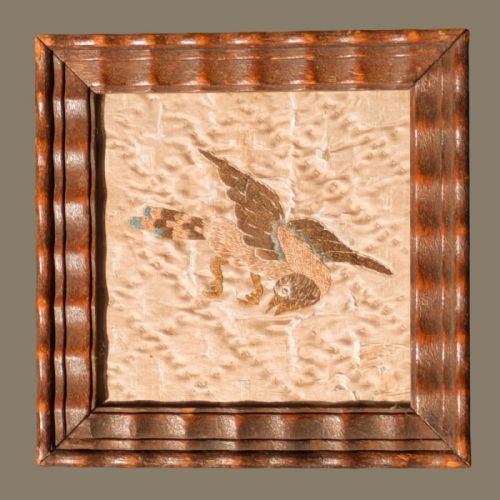
Framed Silk Thread Embroidery
Framed silk thread embroidery works capture meticulous needlecraft preserved behind glass, offering a direct window into historical textile traditions.
Framed Silk Thread Embroidery
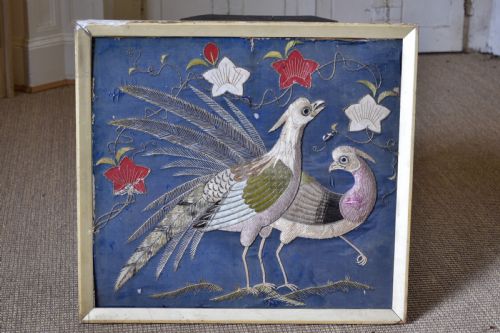
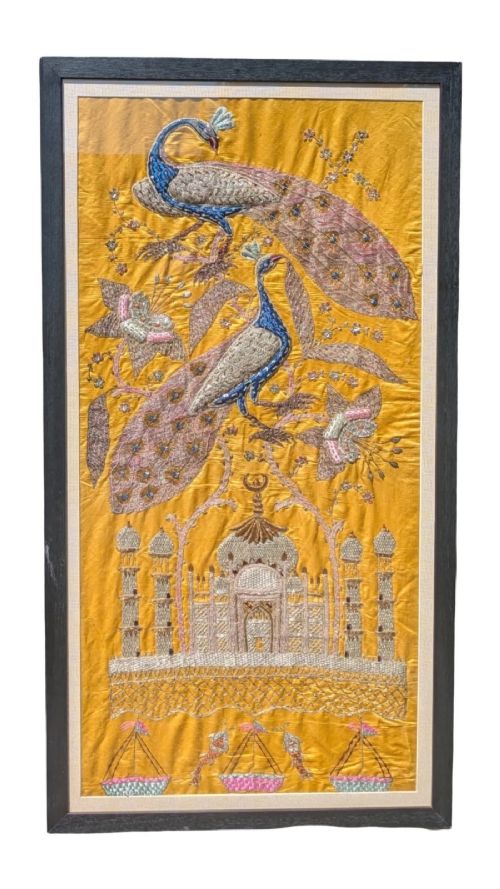
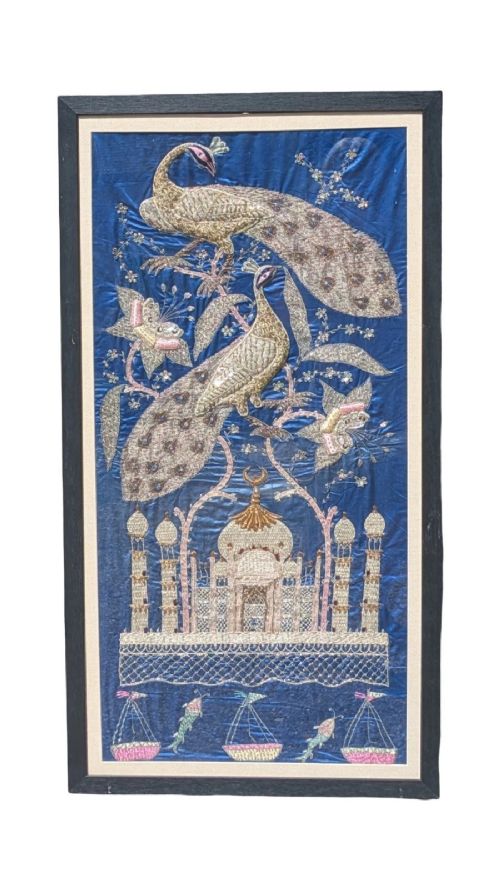
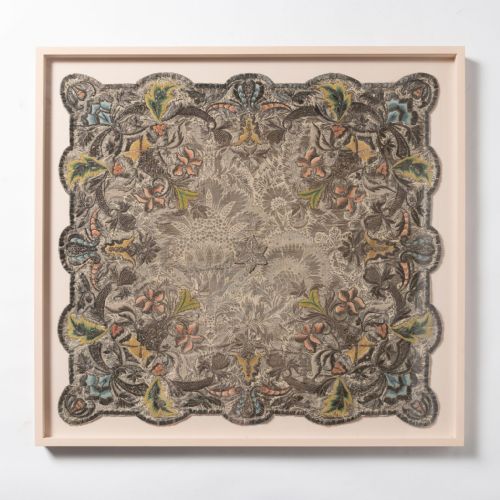
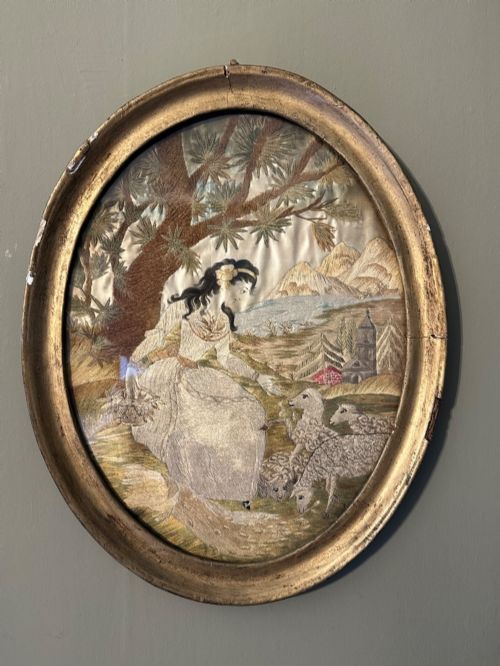
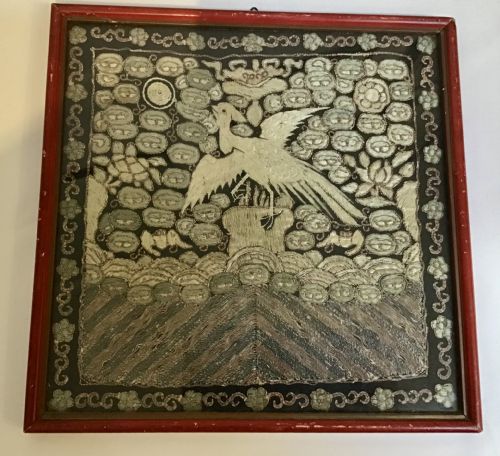
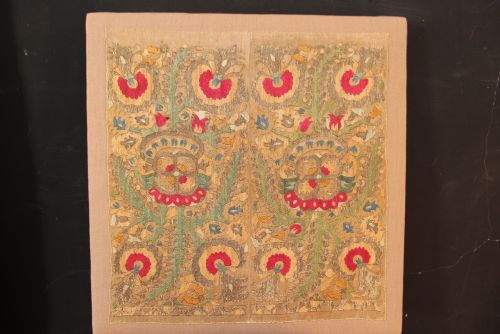
When you search for framed silk thread embroidery, you are looking at textile panels, samplers, and pictorial wall art created across the eighteenth, nineteenth, and early twentieth centuries. These pieces encompass diverse regional styles, from Georgian pastoral pictures and Chinoiserie compositions to Indian depictions of the Taj Mahal, Ottoman fragments, and Chinese rank badges.
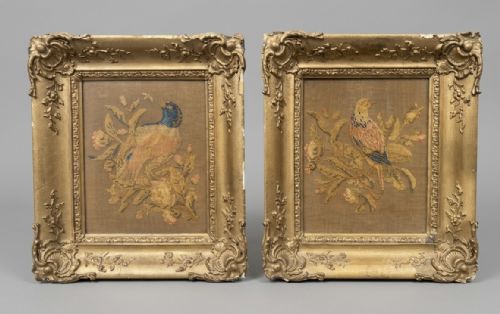
The most common examples you will encounter on this page date from the nineteenth century, often taking the form of framed needlework pictures of birds, figures, or commemorative subjects. Alongside these hang eighteenth-century panels, samplers worked by young girls, and specialised regional works utilising metal threads and wool alongside silk on linen grounds.
How they were made
These works rely on fine silk threads, often combined with metallic thread, gold wire, or wool, stitched meticulously onto a base of linen or silk fabric. Needleworkers employed various stitches, including long stitch and stumpwork, to build texture and dimension within the design.
Once completed, the fragile textile panels were mounted within wood frames, frequently under glass to protect the delicate fibres and metallic elements from dust and atmospheric damage over the centuries.
Listings feature periods spanning from the seventeenth century through the 1930s, utilising silk, wool, linen, glass, and metallic thread.
What varies in quality
The distinction between ordinary and exceptional pieces lies in the precision of the needlework and the complexity of the pictorial composition. Masterly shading, intricate stitch variety, and well-preserved metallic threads elevate a piece well above simpler, repetitive or heavily faded examples.
Context and provenance also influence standing, particularly when a sampler retains a fully documented maker, date, and school origin, or when a picture demonstrates sophisticated regional artistry such as detailed Chinoiserie or Ottoman design.
The Framed Silk Thread Embroidery Glossary
- Stumpwork
- A raised embroidery style popular in the seventeenth century that utilises padded elements and wire foundations to create three-dimensional pictorial figures and motifs.
- Sampler
- A piece of needlework produced to demonstrate proficiency in various stitches and alphabets, often bearing the maker's name, age, and date.
- Chinoiserie
- A European artistic style reflecting Chinese aesthetic influences, frequently appearing in eighteenth-century embroidered screens and pictorial wall art.
- Rank badge
- A square embroidered insignia worn on Chinese garments to denote official civil or military status during the Qing dynasty.
- Long stitch
- A straightforward embroidery technique where parallel stitches of varying lengths fill pictorial areas, commonly seen on Regency silk pictures.
Framed Silk Thread Embroidery: Frequently Asked Questions
Were these always framed?
Many textiles began life as working samplers, decorative panels, or garment fragments before being mounted behind glass for display.
Framing became more common in the eighteenth and nineteenth centuries as owners sought to preserve delicate needlework pictures as formal wall art.
How do I date a silk embroidery?
Dating relies heavily on stylistic clues, framing materials, and inscribed details such as a maker's name, date, or schoolgirl signature.
Examinations of the underlying linen, thread types, and subject matter also help narrow the period of creation.
Can I hang them in sunlight?
Silk threads and natural dyes fade rapidly when exposed to direct or bright ambient sunlight over extended periods.
Position your framed textile on a shaded wall away from windows to protect the integrity of the historical colours.