


Embroidered Woolwork Picture
These embroidered woolwork picture pieces bring tactile charm and historic narrative into a room, offering enduring warmth through stitched wool and canvas.
Embroidered Woolwork Picture
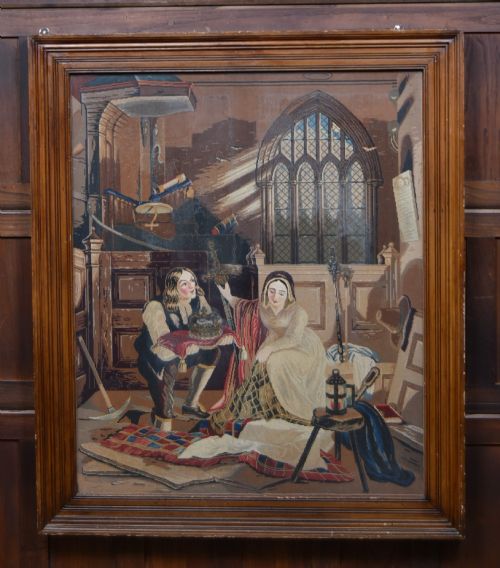
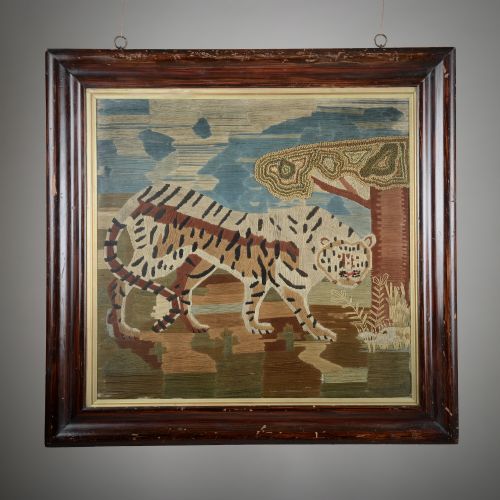
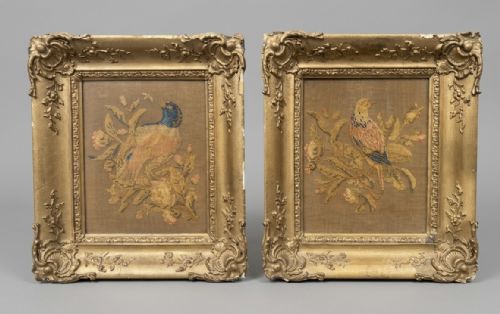
An embroidered woolwork picture presents a stitched scene rendered in wool and canvas, spanning periods from the early nineteenth century into the Victorian era. You encounter varied subjects ranging from religious figures and military commemorations to animals, birds, and figures in gardens.
The objects take the form of framed textile art and wall pieces, often housed in period surrounds such as giltwood, wood, or verre églomisé frames. These works bridge domestic craft and fine art, capturing historical narratives and folk traditions through needlework.
Victorian examples dominate the selection, alongside Regency pieces and items showing Gothic Revival or Victorian Rococo Revival styling. Buyers find everything from intimate oval portraits to broader framed panels depicting medieval motifs or horses.
Materials and construction
Maker execution relies upon wool and silk stitched onto a canvas foundation, occasionally augmented with felt elements. These textiles capture colour and texture through dense needlepoint and tapestry techniques.
Framing forms an integral part of the construction, utilising wood, giltwood, and glass protection including verre églomisé panels with gilded borders. Gold leaf detailing further enhances the presentation of selected pieces.
Materials recorded across current items include wool, silk, canvas, wood, glass, and gold leaf.
Assessing quality in needlework pictures
Quality rests in the precision of the stitching and the vitality of the composition, where expressive animal or human forms distinguish superior output from simpler execution. The sophistication of the surrounding frame, particularly original giltwood or verre églomisé glass, elevates the piece.
Material preservation dictates distinction, as intact wool pile and bright silk thread retain their visual impact more effectively than degraded textiles. The harmony between the subject matter, such as military commemorations or religious iconography, and its period frame marks higher craftsmanship.
The Embroidered Woolwork Picture Glossary
- Verre églomisé
- A process of applying cold gilding and painting on the reverse side of glass to produce a mirrored panel. This technique often appears in Regency and Victorian framing.
- Needlepoint
- A type of canvas work where yarn is stitched through a stiff open-weave canvas. It forms the structural base for many historic pictorial textiles.
- Giltwood
- Wood carved and treated with gold leaf or a metallic substitute. It provides an ornate and reflective border for framed artworks.
- Tapestry
- A form of textile art traditionally woven on a loom, though the term also describes needle-worked wall panels imitating woven designs. These pieces often feature medieval or pastoral scenes.
- Felt
- A non-woven textile produced by matting, condensing, and pressing fibres together. Early nineteenth-century makers occasionally integrated this material into wool work pictures.
Embroidered Woolwork Picture: Frequently Asked Questions
How do I date an embroidered woolwork picture?
Dating relies upon stylistic clues within the subject matter, the framing materials, and the textile construction techniques. Pieces from the Regency era often utilise specific glass treatments like verre églomisé, whilst Victorian examples frequently feature elaborate floral or animal motifs.
Examining the reverse of the frame and the type of canvas can also provide contextual evidence for the period of manufacture.
Where should I hang a needlework picture?
These framed textiles suit dining rooms, studies, or hallways where they receive indirect natural light. Direct sunlight can fade wool and silk threads over time, so positioning them away from bright windows preserves the colours.
Pairing them with traditional wooden furniture or historic interiors allows the framed panels to complement the surrounding decor.
How do I clean an antique woolwork picture?
Dusting the exterior glass gently with a dry microfiber cloth is the safest method for routine maintenance. You should avoid applying moisture or cleaning agents directly to the exposed textile or the inner glass.
Professional textile conservators should handle any deep cleaning or restoration needs to prevent fibre damage.
What subjects are common in these pictures?
Common subjects include domestic animals, birds, religious figures, military commemorations, and pastoral garden scenes. Makers drew inspiration from contemporary events, religious narratives, and folk art traditions.
This thematic variety allows collectors to focus on specific historical threads or decorative styles.