


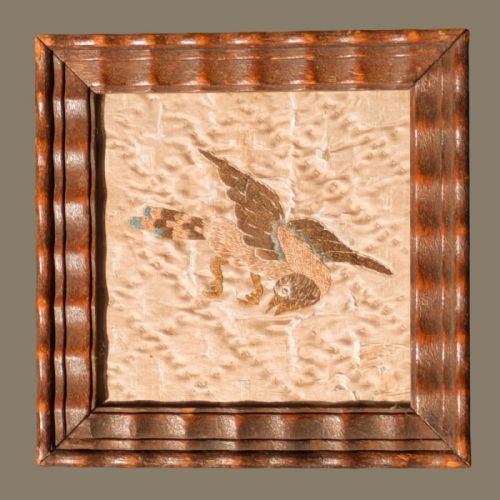


Framed Needlepoint Birds
Framed needlepoint birds bring hand-worked wool, silk and canvas into interiors within wood and gilt frames.
Framed Needlepoint Birds
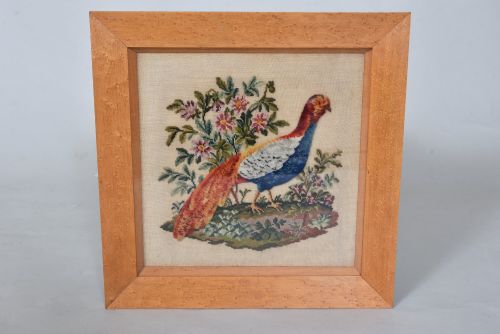
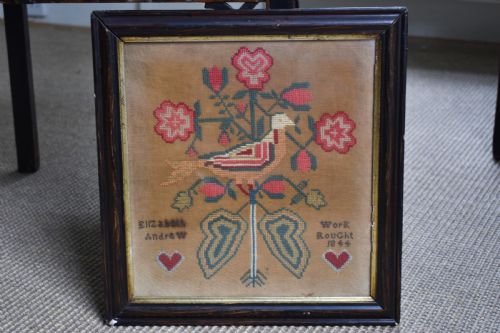
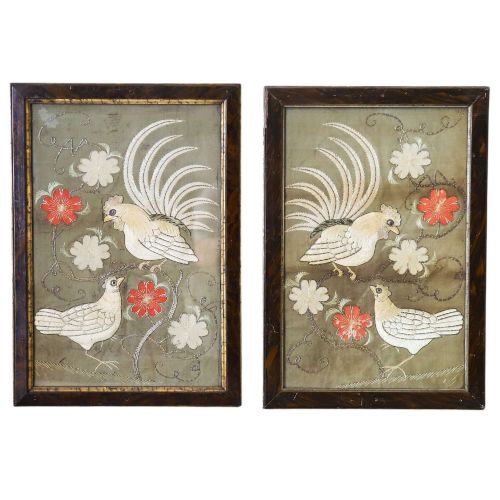
Framed needlepoint birds comprise textile art and embroidery panels created across the eighteenth, nineteenth and early twentieth centuries, depicting avian subjects within period frames. Buyers searching for framed needlepoint birds encounter wool work samplers, plushwork pheasants, Chinese garden birds, mandarin ducks and French silk cockerels.
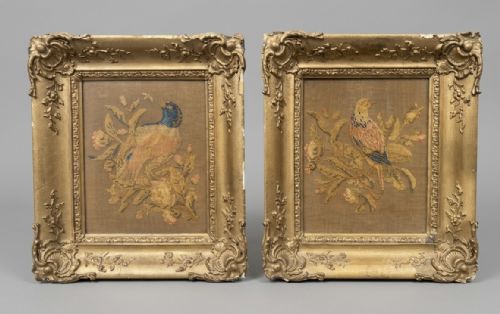
The examples found on this page span Georgian, Victorian, Biedermeier and French Napoleon III styles, alongside Chinese export pieces and sailors woolies. Most pieces are framed wall art set behind glass in wooden surrounds, including maple wood and faux tortoiseshell frames.
Originating from domestic handwork and professional workshops alike, these textiles preserve historical embroidery techniques within protective glazing. A buyer selects these pieces for their tactile surface and the distinct character each handmade bird brings to a wall display.
How they were made
Maker execution relies on stitching wool, silk and cotton threads onto a foundation of canvas or linen, sometimes incorporating raised plushwork to give birds a tactile, dimensional texture. Workers utilised specialised embroidery stitches to build up plumage and foliage.
Framing methods involve enclosing the textile panel behind glass within wooden mouldings such as maple wood, gilt frames or faux tortoiseshell surrounds. Gold leaf details frequently accent the frames of nineteenth century examples.
Listings feature maple wood, glass, gold leaf, wool, silk and canvas across Georgian, Victorian and Biedermeier periods.
What varies in quality
Quality differences emerge in the precision of the needlework and the anatomical definition of the birds depicted, where skilled shading of silk and wool creates realistic depth. Simpler domestic samplers contrast with finely detailed professional Chinese embroideries and French pairs.
The integrity and originality of the surrounding frame also influence the piece, with period maple wood and gilt frames contributing to the overall historical cohesion. Preservation of the textile under glass without excessive fading determines the visual strength of the surface.
The Framed Needlepoint Birds Glossary
- Needlepoint
- Embroidery stitched onto an open-weave canvas foundation rather than directly onto a solid fabric. This technique completely covers the backing material to form a dense pictorial surface.
- Plushwork
- A specialised Victorian embroidery method utilising cut loops of yarn to create a raised, velvety texture. It appears on bird depictions to imitate soft plumage.
- Samplers
- Practice or demonstration pieces featuring alphabets, motifs or pictorial scenes worked by hand. They record the needlework skill of the maker.
- Woolie
- Embroidered textile pictures created by nineteenth century sailors using coloured wool threads. These often depict maritime scenes or commemorative subjects.
- Biedermeier
- A Central European style dating from the early nineteenth century characterised by clean lines and domestic comfort. Frames from this period frequently feature birds eye maple veneers.
Framed Needlepoint Birds: Frequently Asked Questions
What periods do these embroideries come from?
The pieces span the eighteenth century, the Georgian era, the nineteenth century and the Victorian period, extending into around 1900.
Makers across these eras utilised wool, silk and canvas to stitch avian subjects within period frames.
How are the textile panels protected?
Most examples are set behind glass inside wooden or gilt frames to shield the delicate threads from dust and atmospheric moisture.
Maple wood, gold leaf and faux tortoiseshell surrounds commonly house the textile art.
What materials make up the needlework?
Makers stitched with wool and silk thread onto foundations of linen or canvas, occasionally adding raised plushwork for texture.
These materials create the varied plumage seen on pheasants, cockerels, garden birds and mandarin ducks.
Are these pieces English or continental?
The selection includes English samplers and sailors woolies alongside French silk embroideries and Chinese export pieces.
Regional styles range from Victorian Rococo Revival and Biedermeier to Chinese garden bird compositions.
How do I hang and live with them?
These framed textile artworks mount directly onto walls as framed wall art or picture frames, much like traditional paintings.
Placing them out of direct sunlight preserves the dyed silk and wool threads over time.