




Pair of Framed Embroideries
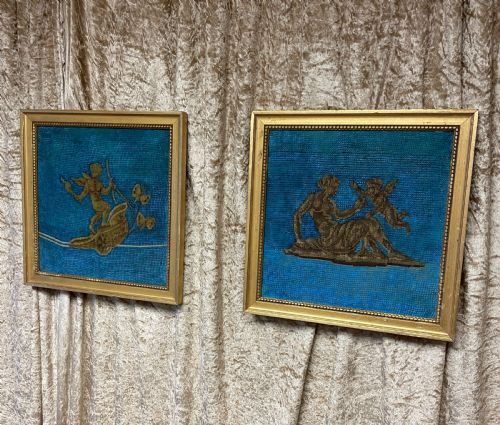
A pair of framed embroideries brings together textile art and period frames, offering matched wall display from the eighteenth century to nineteen hundred.
Pair of Framed Embroideries
A pair of framed embroideries comprises matching textile panels, pictures, or samplers designed to hang together as wall art. The selections on this page span the eighteenth century, the Regency era, and the Victorian period, reflecting varied decorative tastes across British, French, and Chinese origins.
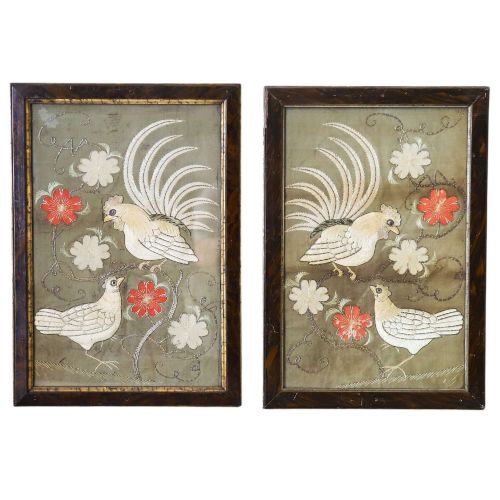
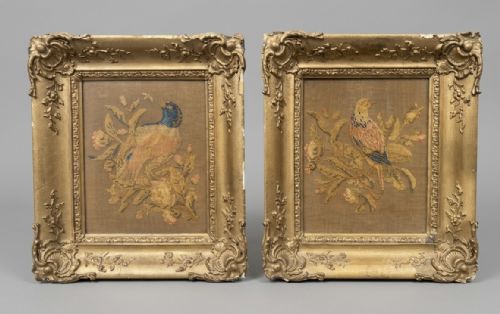
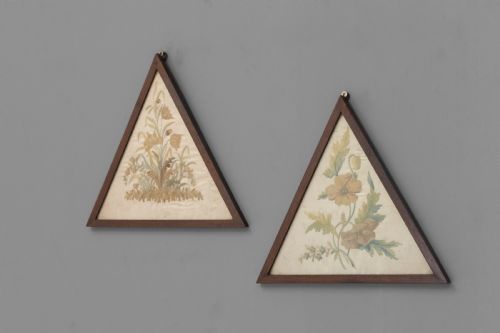
Most items appear as framed pictures, panels, or samplers rather than upholstery. Buyers frequently encounter silkwork pictures featuring birds, theatrical scenes, or floral motifs alongside long stitch work and samplers.
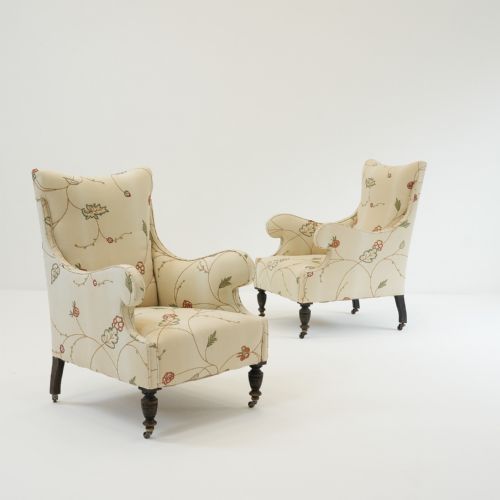
The format also extends into functional seating through framed crewelwork armchairs. These pairings provide symmetrical balance for interior display, matching the decorative ambition of country houses and parlours.
What varies in quality
Quality rests upon the crispness of the needlework and the preservation of silk or wool threads. Finer examples display intricate pictorial detail in subjects like garden birds or theatrical figures.
The framing contributes significantly to the overall merit. Original gilt wood, water gilded ovals, and specialised black glass elevate the presentation far beyond replacement surrounds.
Mandarin ducks and theatrical cockerels share wall space with solemn samplers, proving ancestors had a sense of drama.
Stevens of Coventry
The Pair of Framed Embroideries Glossary
- Crewelwork
- Embroidery executed with wool yarn on a sturdy fabric ground. This technique creates textured surface designs often seen on large panels and upholstery.
- Mezzotint glass
- Darkened or tinted glass used in framing to enhance contrast and depth behind prints or textiles. It adds a moody backdrop to Regency silk pictures.
- Long stitch
- An embroidery technique using parallel stitches of varying lengths to create smooth pictorial surfaces. It appears frequently in nineteenth century silkwork pictures.
- Sampler
- A piece of needlework produced to demonstrate skill in various stitches and alphabets. These instructional panels often include dates and maker signatures from the eighteenth and nineteenth centuries.
- Water gilding
- A traditional framing method applying gold leaf over wet gesso and bole. This produces a bright, burnished finish characteristic of fine period frames.
Pair of Framed Embroideries: Frequently Asked Questions
How should I hang them?
Hang these framed textiles away from direct sunlight to protect delicate silk and wool threads from fading. Maintaining stable room humidity prevents the timber frames and backing boards from warping.
Position the pair at eye level with adequate spacing to preserve their symmetrical visual impact. Ensure the fixings securely support the combined weight of the timber and glass.
Are the frames original?
Many listings retain their period frames, such as original gilt wood, water gilded ovals, or faux tortoiseshell surrounds. These housing elements match the era of the needlework within.
Inspect the joinery and finish of the timber to understand its history. Period enclosures significantly enhance the integrity and character of antique textile art.
What subjects are common?
Common subjects include garden birds, mandarin ducks, cockerels, hens, and theatrical scenes. Floral compositions and traditional samplers also appear frequently across the centuries.
These motifs reflect the domestic and decorative interests of the makers. Each pair offers a matched narrative designed for symmetrical wall display.
How do I date them?
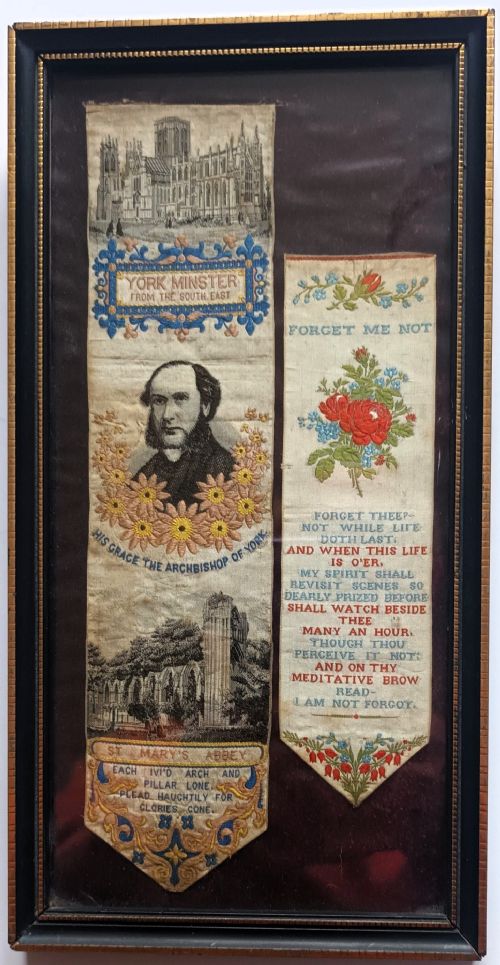
Dating relies upon stylistic cues in the needlework, the framing materials, and construction techniques. Eighteenth century pieces often feature water gilded oval surrounds, whilst Victorian examples showcase crewelwork or silk bookmarkers.
Comparing the stitch types and fabric grounds against documented periods helps establish age. Frame construction provides secondary evidence to confirm the era.