


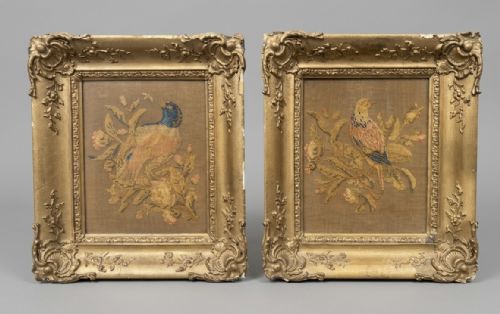


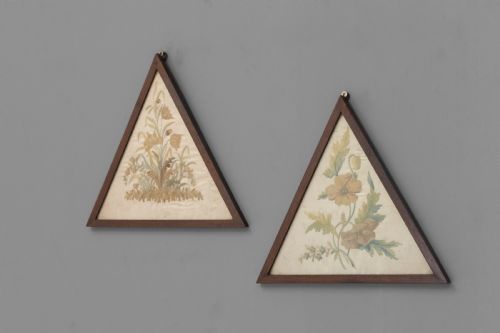

Framed Silk Embroidery Picture
A framed silk embroidery picture brings tactile depth to a wall, combining threadwork and historical narrative within period glass.
Framed Silk Embroidery Picture
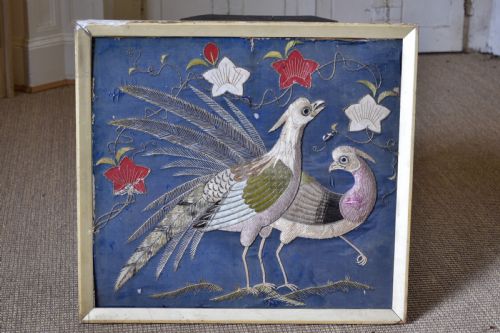
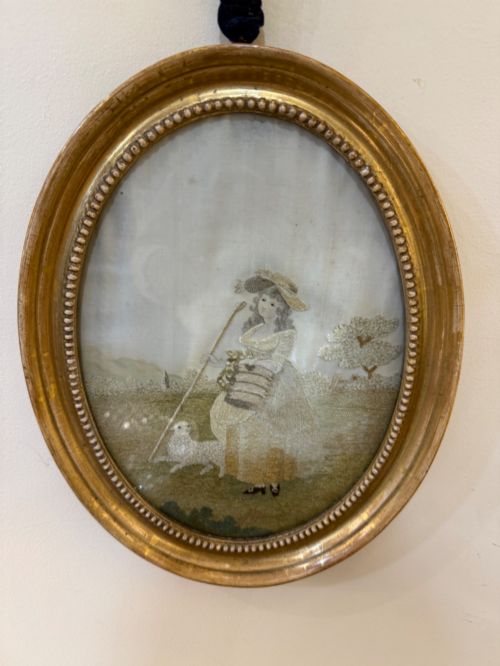
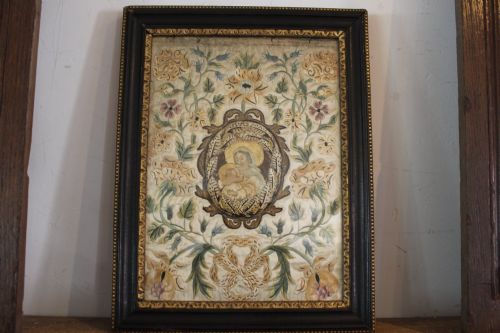
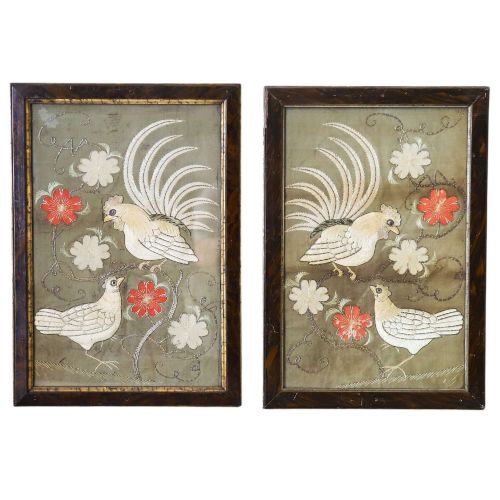
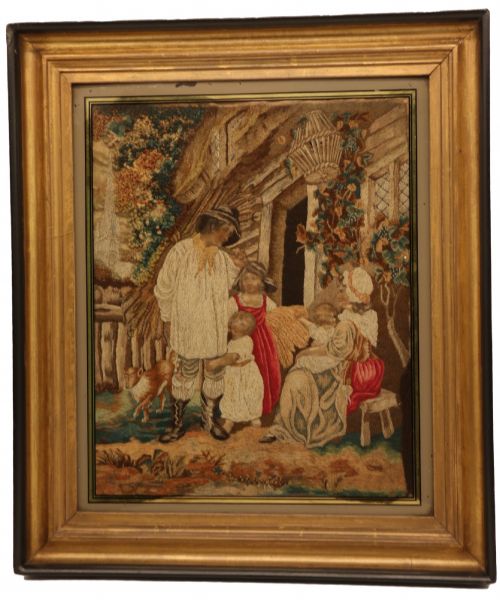
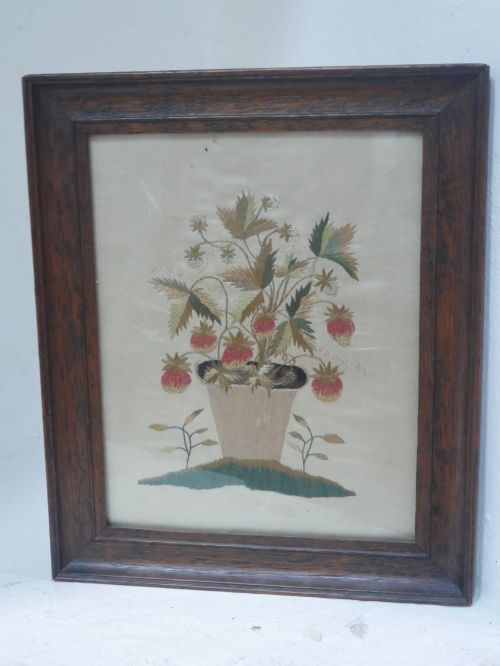
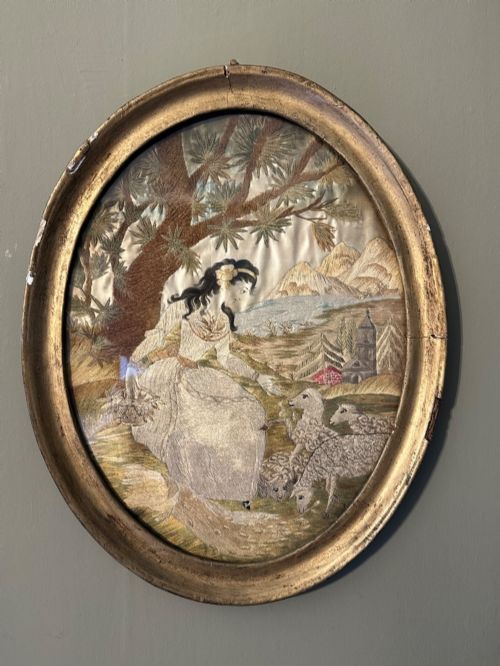
A framed silk embroidery picture represents needlework artistry created across several centuries, primarily emerging from English, European, and Asian workshops. These textiles range from pastoral scenes and domestic animals to elaborate historical and religious subjects.
The 19th century and Georgian periods provide many of the examples seen here, often executed by skilled hands using fine silk threads on linen or wool foundations. Alongside these, 17th-century Stuart panels and Chinese embroidered panels appear within period frames.
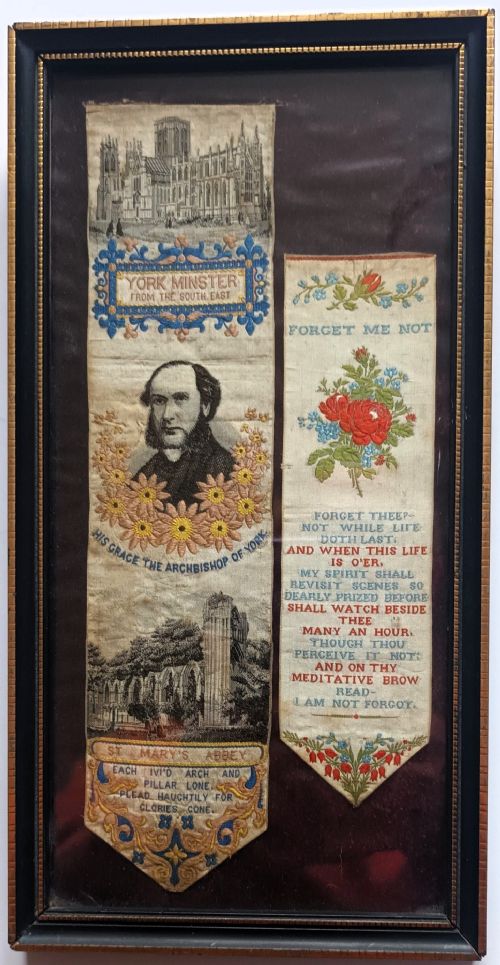
Collectors encounter diverse formats including needlework pictures, silk bookmarkers, maps, and portrait panels. Each piece preserves textile techniques through historic glazing and wooden surrounds.
Assessing Quality
Execution skill distinguishes finer panels, where varied stitch lengths and nuanced colour blending create depth and perspective in human figures and animals. Complex compositions, such as stumpwork or detailed pastoral narratives, demand higher technical mastery.
The preservation of the original silk threads and the integrity of the period frame contribute significantly to the standing of a piece. Original glazing and minimal fibre loss maintain the visual impact intended by the maker.
Stitchers occasionally included hidden family pets and lopsided farmyard ducks peering out from behind pastoral shrubbery.
Stevens of Coventry
The Framed Silk Embroidery Picture Glossary
- Stumpwork
- A raised embroidery style popular in the 17th century that uses padded stitches to create three-dimensional figures and motifs. This technique often depicts historical or biblical scenes.
- Verre Églomisé
- A process of applying gold or silver leaf to glass before engraving and painting designs on the rear surface. It frequently provides a decorative border for silhouettes and needlework pictures.
- Sampler
- A piece of cloth featuring rows of various embroidery stitches, alphabets, or motifs created to demonstrate needlework proficiency. Historic examples often record the maker's name and age.
- Crewel Work
- Embroidery executed using fine wool yarn on a linen twill fabric. This traditional method produces robust textures suitable for floral and animal designs.
- Silk Flos
- Untwisted silk filament used for smooth, glossy stitching in needlework pictures. It allows for subtle shading and realistic depiction of plumage and foliage.
Framed Silk Embroidery Picture: Frequently Asked Questions
How do I date a framed silk embroidery picture?
Dating relies on stylistic elements, costume details of depicted figures, and the construction methods of the frame. Samplers and certain pictorial works often bear stitched dates or makers' names.
Secondary indicators include the type of glass, backing boards, and the specific composition of the silk and wool threads used in the needlework.
Where should I hang these textiles?
These pictures require placement away from direct sunlight to prevent the silk threads and painted details from fading. Stable indoor humidity protects the delicate organic materials and wooden frames.
Wall selection should also consider artificial lighting, keeping spotlights at a distance to avoid heat damage to historic textiles.
What is the difference between stumpwork and flat embroidery?
Stumpwork incorporates padding, wire foundations, and carved wooden or slip elements to make figures and objects project from the background. Flat embroidery relies entirely on surface stitches.
While flat work creates pictorial depth through shading, stumpwork introduces genuine physical relief to the textile panel.
How are these pictures cleaned?
Historic needlework under glass should remain sealed within its frame to protect the fragile fibres from atmospheric dust and handling. Professional conservators handle any internal cleaning or stabilisation.
Dusting the exterior glass and frame with a dry, soft cloth is the only maintenance required for home display.