




Gilt Framed Embroidery Picture
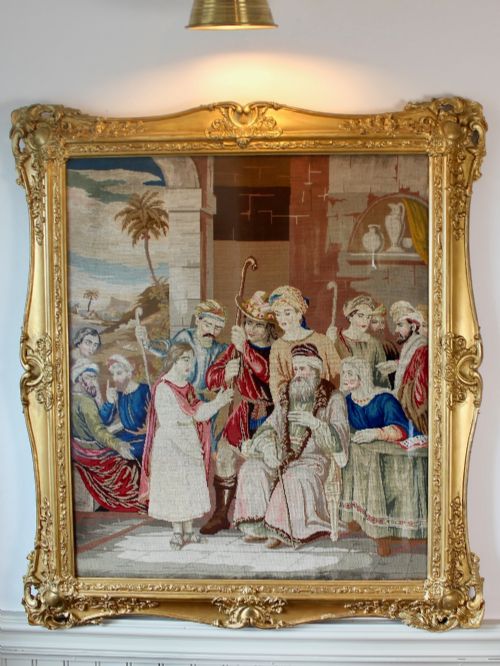
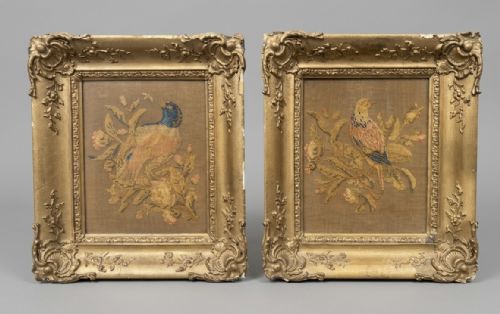
These gilt framed embroidery picture examples combine needlework and gilded timber to form decorative panels from the eighteenth and nineteenth centuries.
Gilt Framed Embroidery Picture
A gilt framed embroidery picture unites textile artistry with decorative woodwork, serving as wall art from periods including the Georgian, Regency, and Victorian eras. These works range from small oval portraits to large tapestries depicting landscapes, historical scenes, and pastoral farming subjects.
The most common examples encountered in this category include nineteenth century Berlin wool work and silk embroideries set within original wood frames. Such pieces often combine hand stitching with painted elements or specialised glass surrounds.
Originating across England, Scotland, France, Italy, and America, these textiles reflect domestic accomplishments and professional workshop production alike. Buyers find everything from intimate needlepoint portraits to grand framed wall hangings.
How They Were Made
Needles and threads of silk, wool, and metal were worked onto canvas, silk, or felt foundations to create pictorial scenes. Many nineteenth century examples utilise Berlin wool work charts, while earlier pieces rely on freehand stitching and crewel work.
The enclosing frames combine carved wood, gesso, and gold leaf gilding, frequently protected by glass panels. Some Regency and eighteenth century versions incorporate verre églomisé or mezzotint black glass borders to frame the textile.
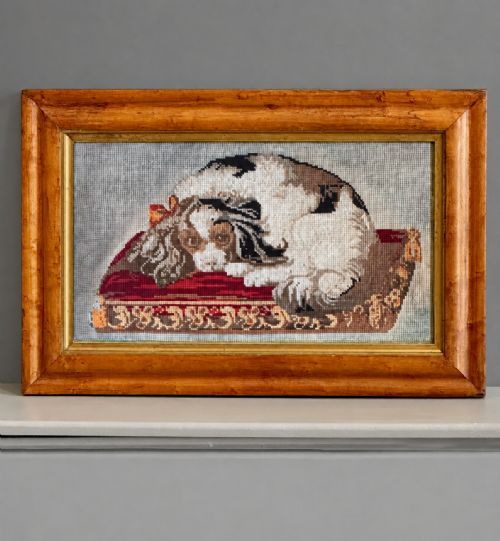
A King Charles spaniel immortalised in wool gazes out from a burr maple frame.
What Varies in Quality
The visual strength of the needlework separates ordinary decorative textiles from exceptional examples. Finer pieces demonstrate careful tonal shading in silk and wool, secure stitch tension, and sophisticated pictorial composition.
The integrity and originality of the surrounding gilt frame also dictate the overall standard. Water-gilded timber frames and specialised glass mounts that survive intact enhance the historical worth of the textile within.
The Gilt Framed Embroidery Picture Glossary
- Berlin wool work
- A style of needlepoint popular in the nineteenth century that used charted designs and brightly coloured wools. It allowed makers to produce shaded pictorial scenes on canvas.
- Verre églomisé
- A cold decoration technique where gilt designs and paintings are applied to the reverse of glass. It appears on borders surrounding period textile art.
- Crewel work
- Embroidery executed with wool yarn using various traditional stitches. This technique creates textured surface patterns on linen or canvas grounds.
- Mezzotint glass
- Dark glass borders often found on Regency frames. They provide a reflective contrasting mat around silk embroideries.
Gilt Framed Embroidery Picture: Frequently Asked Questions
How do I clean a gilt framed embroidery picture?
Textiles and gilded frames require gentle dusting with a soft, dry brush to remove surface particles.
Moisture and direct sunlight damage silk threads and gold leaf, so these works belong in stable indoor environments away from windows.
Are these embroideries made by professionals?
The pieces encompass both amateur domestic samplers and professional tapestry works. Skill levels range from schoolgirl needlework to elaborate atelier productions.
Closer inspection of the stitch regularity and backing materials often reveals the context of production.
What frames are original to these textiles?
Period frames include burr maple, water-gilded wood, and moulded giltwood structures. Many retain their initial glass covers and backing boards.
Matching the wood grain and gilt wear to the textile date helps confirm the pairing.