
Framed Rural Oil Artwork
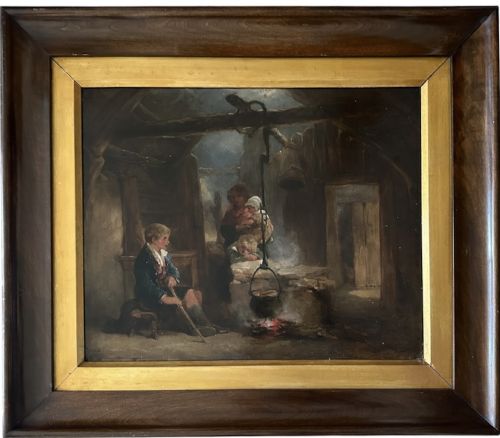
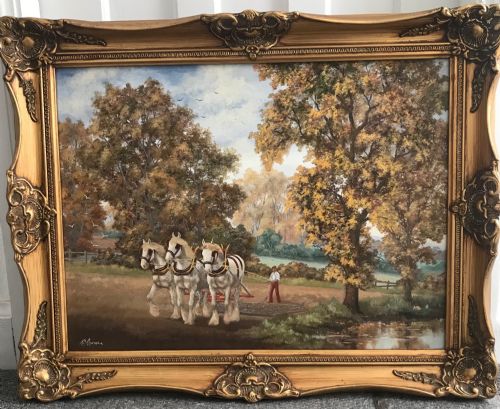
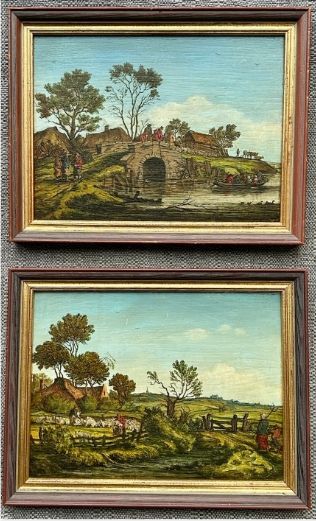
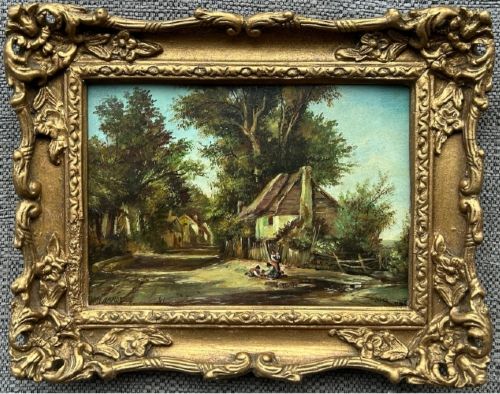
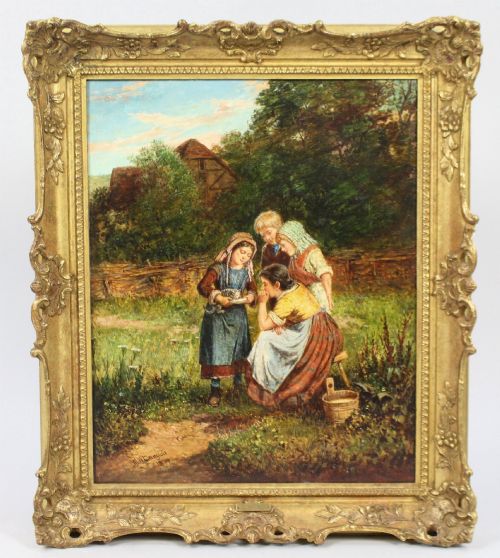
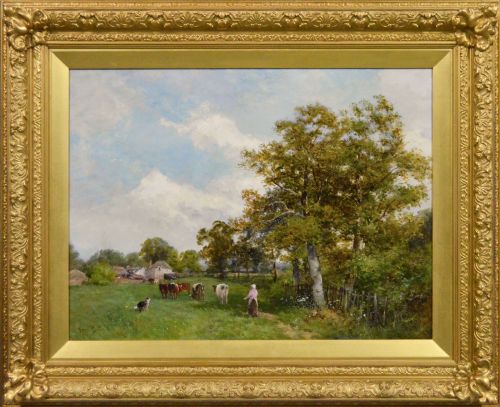
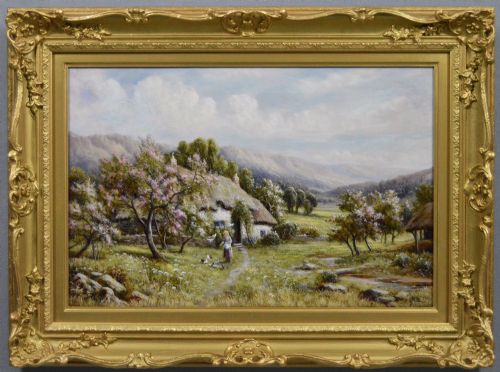
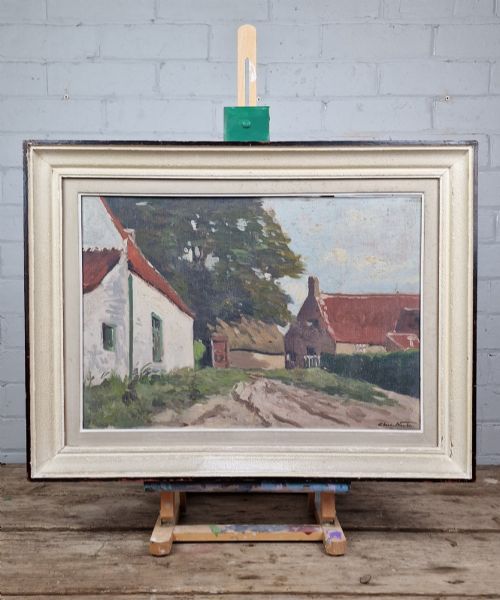
These framed rural oil artwork pieces capture pastoral scenes and country life across centuries, offering buyers a window into traditional landscapes.
Framed Rural Oil Artwork
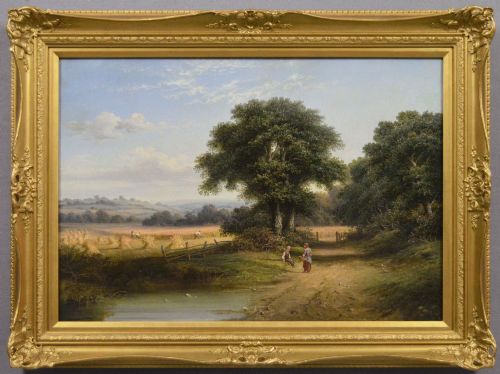
A framed rural oil artwork represents countryside scenes, agricultural life, and pastoral settings captured by artists across the nineteenth and twentieth centuries. These paintings bring cottage views, harvest fields, and working horses into domestic interiors.
Buyers will most frequently encounter nineteenth-century and early twentieth-century works on this page, executed in oil paint upon canvas, wood panels, or card. Many retain their original or period gilt wood and gesso frames.
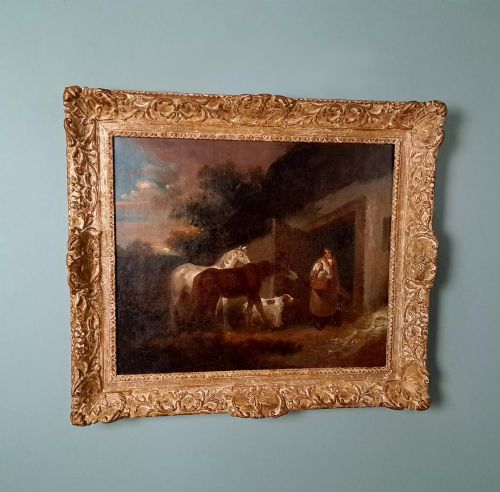
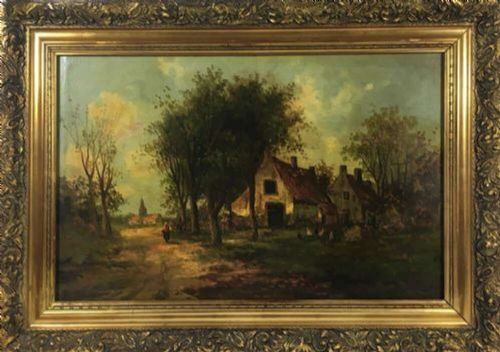
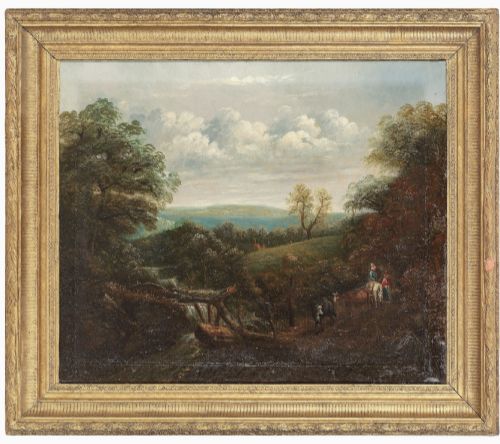
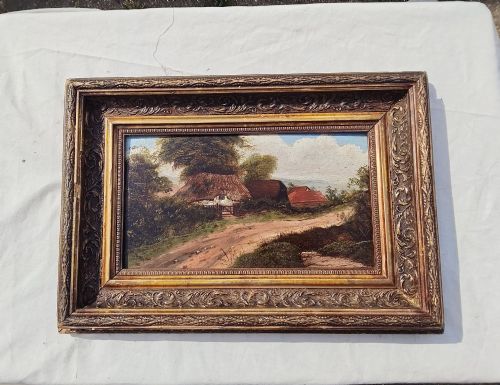
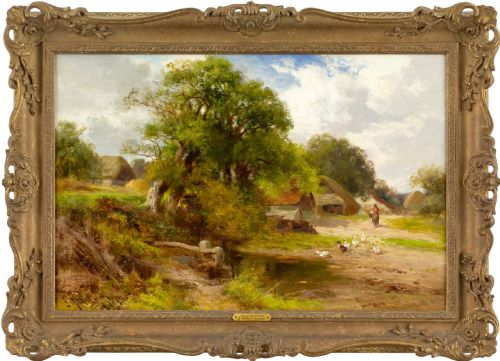
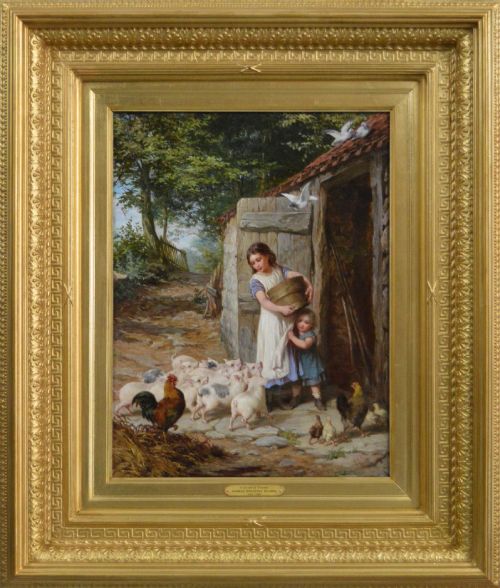
The subjects range from British and European landscapes featuring thatched cottages and river views to detailed animal portraits and genre scenes involving farmyard animals.
Materials and Technique
Artists painted primarily with oil pigments applied to stretched canvas, wooden boards, panels, or card, utilising the slow-drying medium to build rich textures and tonal depth. These supports were frequently housed within decorative gilt wood and gesso frames.
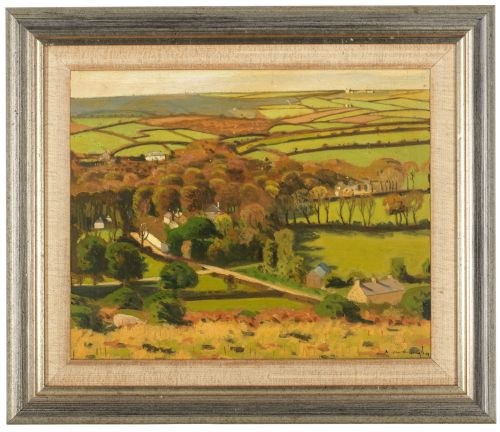
The execution spans traditional academic brushwork, Barbizon influences, and impressionist applications, where layered paint creates the atmosphere of rural light, weather, and rustic surfaces.
Several canvases capture cows, sheep, and ponies persistently demanding attention right in the middle of a hard day's work.
Distinctions in Quality
Quality rests upon the artist's ability to handle light, perspective, and anatomical detail within the landscape or animal subject. Works by recognised painters exhibit more confident brushwork and balanced composition than anonymous school pieces.
The preservation of the paint surface and the integrity of the original frame contribute significantly to the standing of a piece. Finer examples maintain their original pigment vibrancy without heavy overpainting.
William Howard Hardy·William Joseph Shayer Senior·Robert Morson Hughes·Mark William Langlois·David Bates·Robert John Hammond·Charles Houben·Walter Heath Williams·John Horace Hooper·George Augustus Holmes·Ernest Higgins Rigg·Edgar Hunt·Umberto Volpato·William Greaves·George Morland·Charles Clair·Harry Freckleton·Raimond Louis Lecourt·William Henry Mander·Thomas Sidney Cooper·James Kyd·Owen Bowen
The Framed Rural Oil Artwork Glossary
- Canvas
- A heavy woven fabric stretched across a wooden frame to serve as a support for oil painting. It provides a flexible and textured surface that holds pigment securely over centuries.
- Gesso
- A plaster-like mixture applied to wood frames to create a smooth surface for gilding. It allows for intricate moulded decorative details around the artwork.
- Panel
- A flat piece of wood used as a rigid support for painting instead of canvas. Wooden panels were common in nineteenth-century works and offer a stable surface for detailed brushwork.
- Genre painting
- Artwork depicting scenes from ordinary life, such as figures working in fields or tending farm animals. These pieces record social history alongside natural scenery.
- Barbizon School
- A nineteenth-century French art movement focused on realistic, unidealised depictions of rural landscape and forest life. Its influence spread widely among British and European painters.
Framed Rural Oil Artwork: Frequently Asked Questions
What periods do these paintings come from?
The selection spans from the late eighteenth century through the Victorian era and into the mid-twentieth century. Most examples date from the nineteenth and early twentieth centuries.
These pieces reflect changing artistic movements such as British Pastoralism, the Barbizon influence, and early impressionism while maintaining a consistent focus on rural subjects.
Are the frames original to the artworks?
Many works retain their period gilt wood and gesso frames, which match the era of the painting's creation. Framing styles often help confirm the age of the piece.
Some artworks have been reframed in later periods to suit prevailing interior tastes while protecting the canvas or panel.
What surfaces were used for these paintings?
Artists utilised stretched canvas, wooden panels, card, and board as supports for their oil pigments. Each material influences the texture and preservation of the finished work.
Canvas was preferred for larger landscapes, whereas wood panels and card frequently supported smaller, intimate rural studies.
How should I care for an oil painting?
Display the artwork away from direct sunlight and dramatic fluctuations in temperature or humidity to protect the canvas and wood. Gentle dusting with a soft, dry brush is sufficient for routine maintenance.
Avoid using water or chemical cleaners on the paint surface or the gilt frame, as these can cause permanent damage.