



Antique Chicken Oil Painting
An antique chicken oil painting brings the quiet charm of the farmyard directly into your interior, capturing feathered subjects with remarkable depth and texture.
Antique Chicken Oil Painting
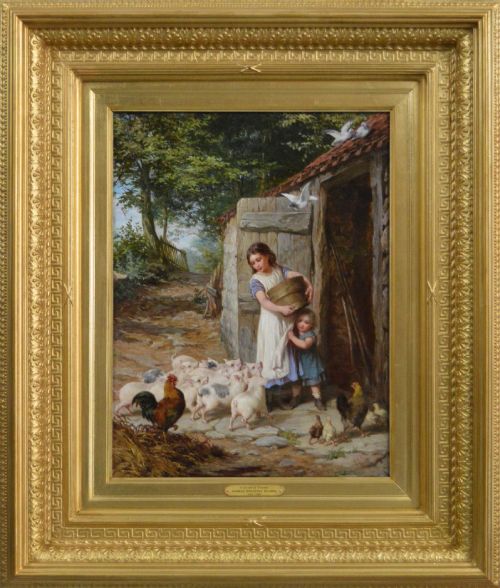
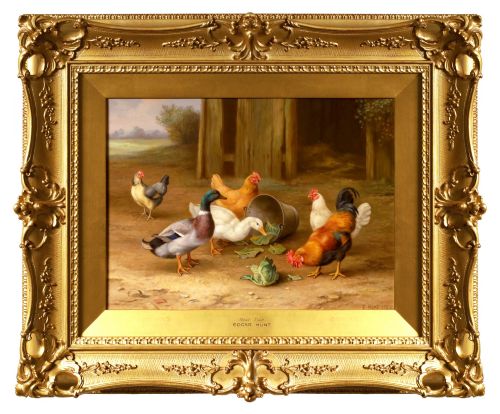
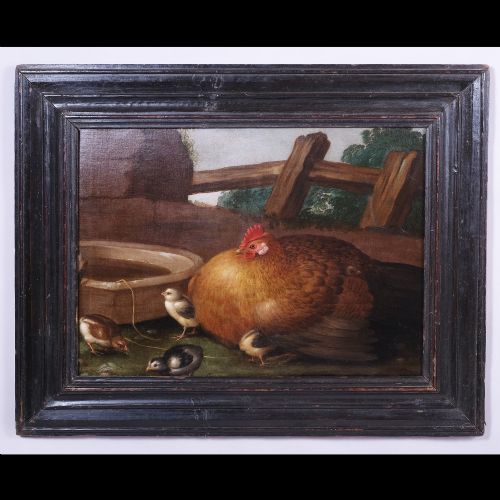
When searching for an antique chicken oil painting, collectors encounter works spanning the eighteenth century through to the interwar decades, taking in Victorian rural realism and Edwardian pastoral scenes. These canvases and panels portray farmyard life, featuring cockerels, hens, and chicks alongside rustic settings, cottages, and occasional livestock.
The version most commonly met on this page is the Victorian or Edwardian realist composition, often executed on canvas or wood panel and housed in a period frame. Painters of this school focused closely on the plumage and natural behaviour of poultry, placing them within detailed agricultural or orchard backgrounds.
How they were made
Artists built these works using oil paint applied to stretched canvas, wooden panels, or board supports, sometimes utilising gesso priming to prepare the surface. The oil medium allowed painters to build rich layers of pigment, capturing the iridescent sheen of feathers and the earthy tones of farmyard soils.
Finished works found their homes in ornate giltwood frames or simpler wooden mouldings finished with gold leaf. These frames were integral to the presentation, protecting the edges of the canvas and complementing the warm palette of the rural scene.
Several canvases capture chickens mid-peck, proving that farmyard models possessed very little patience for portrait sittings.
What varies in quality
Quality rests upon the artist's command of anatomical detail and the subtlety with which light falls across the plumage and the surrounding farmyard. Superior works display a careful observation of texture, making the feathers appear tactile and distinct rather than flat or uniform.
The harmony of the composition and the preservation of the original painted surface further distinguish finer examples. Works that retain their original giltwood framing and show minimal overpainting hold greater visual integrity.
George Augustus Holmes·Edgar Hunt·Claude Cardon·John Frederick Herring Jnr·Percival Glenfern·Robert Russell MacNee·J L VAN Leemputten·James Hey Davies·Paul Henry Schouten·Ernest Betigny·Cornelius Van Leemputten
The Antique Chicken Oil Painting Glossary
- Oil on Canvas
- A traditional painting technique utilising pigments suspended in drying oils applied to woven fabric. This combination provides durability and a flexible surface for detailed brushwork.
- Giltwood
- Wood that has been coated with a thin layer of gold leaf or gold paint. Frames finished in this manner enhance the warmth of the oil painting within.
- Gesso
- A plaster-like mixture applied to panels or canvases to create a smooth, stable surface for painting. It prepares the ground for the oil layers.
- Board
- A rigid support material used by artists as an alternative to stretched canvas. It offers a firm base for panel paintings.
Antique Chicken Oil Painting: Frequently Asked Questions
How do I date an antique chicken painting?
Dating relies on stylistic clues, framing methods, and the type of support used, such as canvas or wooden panel. Victorian and Edwardian works often feature distinct brushwork and signature styles associated with specific animal painters of those decades.
Examining the stretcher bars, canvas weave, and any inscriptions on the reverse can provide further chronological context. Comparing the handling of the subject matter to known dated works helps narrow down the period.
Where should I hang these paintings?
These rural scenes suit dining rooms, kitchens, or living spaces where their warm palettes can complement traditional interiors. Placing them away from direct sunlight protects the oil pigments and the surrounding giltwood frames.
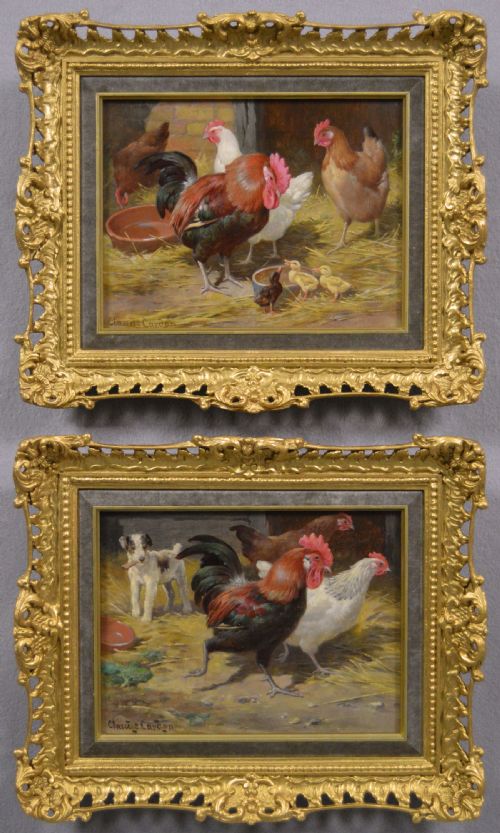
Consider pairing smaller panel paintings together on a wall to create a cohesive farmyard grouping. Adequate wall lighting helps bring out the fine details in the plumage and background landscapes.
How are wooden panel paintings constructed?
Artists used solid wooden boards as a rigid alternative to canvas, sometimes applying gesso to create a smooth painting surface. These panels provide stability and a fine grain that allows for meticulous detail in the rendering of feathers.
Panel works from the nineteenth and early twentieth centuries often require stable indoor humidity to prevent warping. The sturdy support helps preserve the paint layer over generations.
What frames typically accompany these works?
Many of these paintings retain their original ornate giltwood or wooden frames, which reflect the aesthetic tastes of the Victorian and Edwardian periods. Gilded mouldings add brightness and frame the rustic composition effectively.
Original frames are valued for maintaining the historical context of the piece. Minor wear on the gilding is common and simply reflects the age of the frame.