



Framed Oil Painting Chickens
Framed oil painting chickens capture rural farmyard scenes, offering collectors charming studies of hens, cockerels and chicks rendered in oils.
Framed Oil Painting Chickens
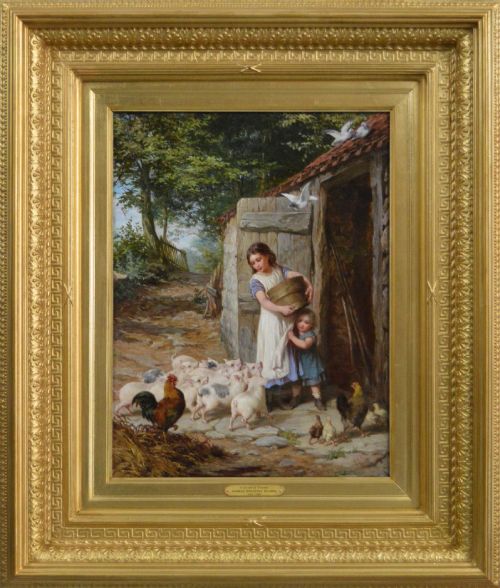
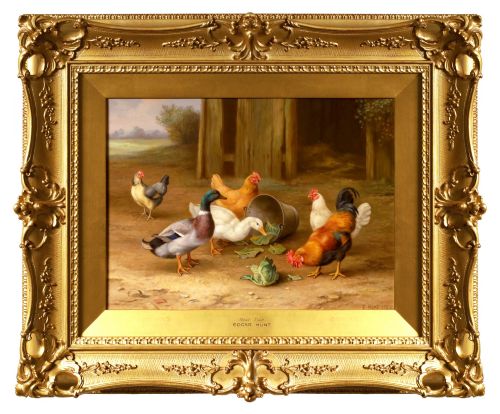
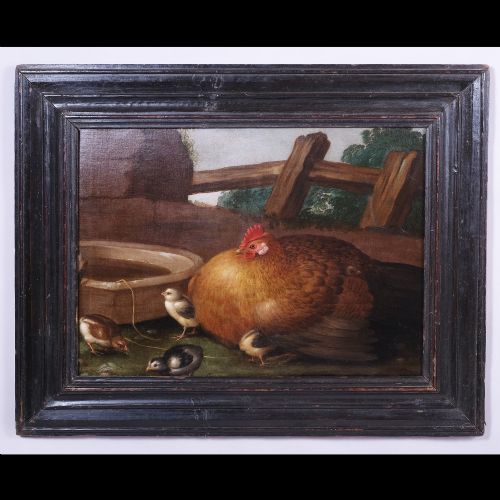
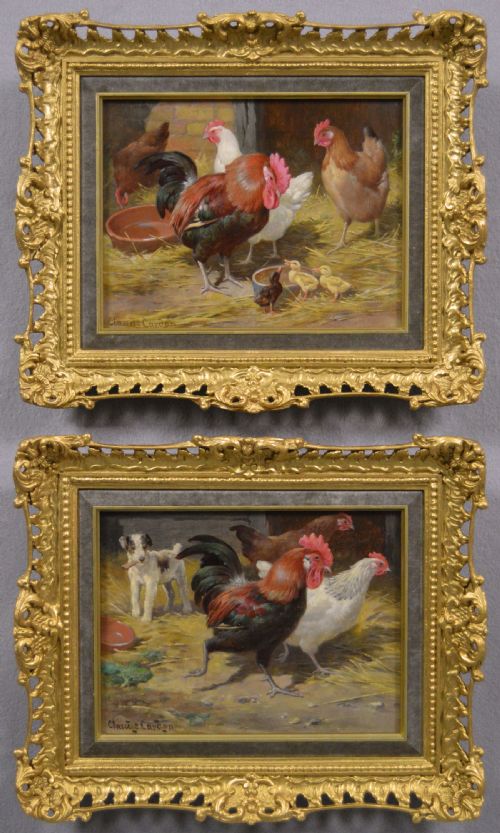
When you search for framed oil painting chickens, you encounter pastoral scenes depicting farmyard life across the eighteenth, nineteenth and twentieth centuries. These works focus on domestic poultry, often grouped with other farm animals or figures in rustic settings.
The pieces listed on this page span several distinct movements, including Victorian Realism, British Animalier and Scottish Impressionism. You are most likely to meet canvases or boards housed in original wood, giltwood or gesso frames.
Subjects range from simple studies of a cockerel and hens to busy farmyard scenes featuring ducks, horses and figures feeding livestock. Each piece reflects the enduring appeal of rural life through the medium of oil paint.
How they were made
Artists painted these works using oil paint applied to canvas, board or panel supports. The layering of oil colours allowed painters to build rich textures in the feathers of the birds and the earthy tones of the farmyard ground.
Frames play an integral part in the presentation, constructed from wood and embellished with gesso and gold leaf. These ornate or simple surrounds protect the edges of the canvas and complement the rural subject matter within.
Several canvases capture the exact moment a haughty cockerel surveys his domain while greedy chicks scramble for dropped grain.
What varies in quality
The fineness of brushwork distinguishes exceptional animalier painting from more standard decorative works. Superior examples capture the precise feather texture, alert posture and individual character of each cockerel, hen or chick.
Compositional complexity and the handling of natural light also mark the upper tier of these paintings. Works that integrate the poultry successfully into a broader farmyard landscape with convincing depth command greater attention from collectors.
George Augustus Holmes·Edgar Hunt·Claude Cardon·John Frederick Herring Jnr·Percival Glenfern·Robert Russell MacNee·J L VAN Leemputten
The Framed Oil Painting Chickens Glossary
- Animalier
- A style of art dedicated to the realistic portrayal of animals. Artists working in this tradition studied anatomy closely to render farmyard fowl with precision.
- Gesso
- A plaster-like mixture applied to wooden frame mouldings as a base for gilding. It provides a smooth surface that can be carved or stamped with decorative patterns.
- Impressionism
- An art movement focusing on transient effects of light and spontaneous brushwork. Scottish examples in this category bring a distinct atmospheric quality to the farmyard.
- Oil on Canvas
- A traditional painting medium where pigmented oil is applied to a stretched woven fabric support. This combination allows for rich blending and depth of colour.
- Giltwood
- Wood that has been coated with a thin layer of gold leaf or gold paint. Frames treated this way add a warm metallic border to the oil painting.
Framed Oil Painting Chickens: Frequently Asked Questions
How do I date a chicken oil painting?
Dating relies on stylistic clues, clothing in any accompanying figures, and the construction methods of the wooden frame. Canvas types and stretcher marks also provide useful chronological markers for nineteenth and twentieth-century works.
Signatures, inscriptions on the reverse, and artist biographical records help narrow the decade of creation. Comparing the handling of light and pigment to known dated works by the same artist confirms the period.
What is British Animalier style?
British Animalier refers to art focused specifically on the realistic depiction of animals, particularly livestock, pets and farmyard fowl. Painters in this tradition prioritized accurate anatomy and lifelike poses.
This movement gained significant popularity during the Victorian era when patrons desired sentimental and realistic records of rural property and prized farm animals.
Are these paintings on canvas or board?
These works appear on both stretched canvas and rigid boards or panels. Canvas was the primary support for larger, more ambitious compositions, allowing for subtle blending of oil colours.
Boards were frequently utilised for smaller studies or plein air sketches. Both supports required proper priming to prevent the oil paint from degrading the material over time.
How should I clean my oil painting?
Dust accumulation should be gently removed from the surface and frame using a very soft, dry brush. Avoid using water, household cleaners or chemical solvents on the paint layer.
Professional conservators should handle any removal of darkened varnish or deeper grime. Keeping the painting away from direct sunlight and high humidity preserves the oil pigments.