



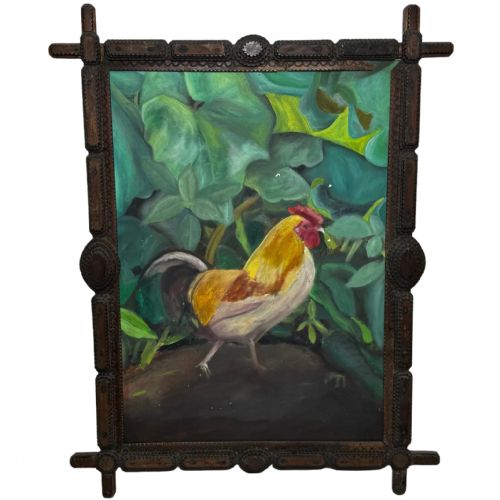


Antique Poultry Painting
An antique poultry painting captures farmyard fowl and rural life with painterly precision, offering buyers a delightful slice of agricultural history for the home.
Antique Poultry Painting
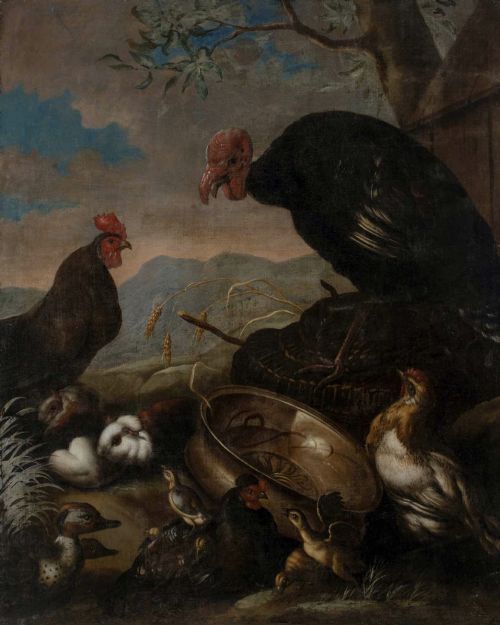
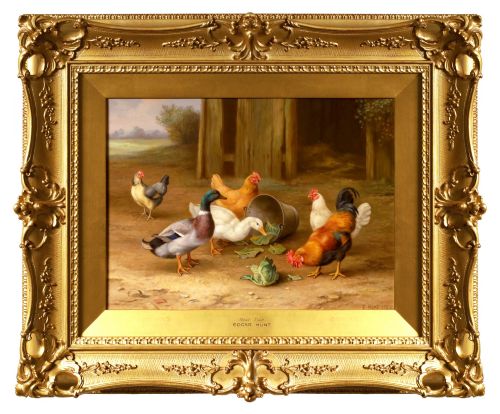
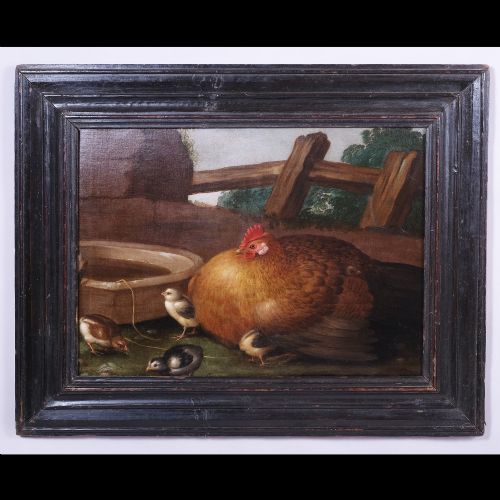
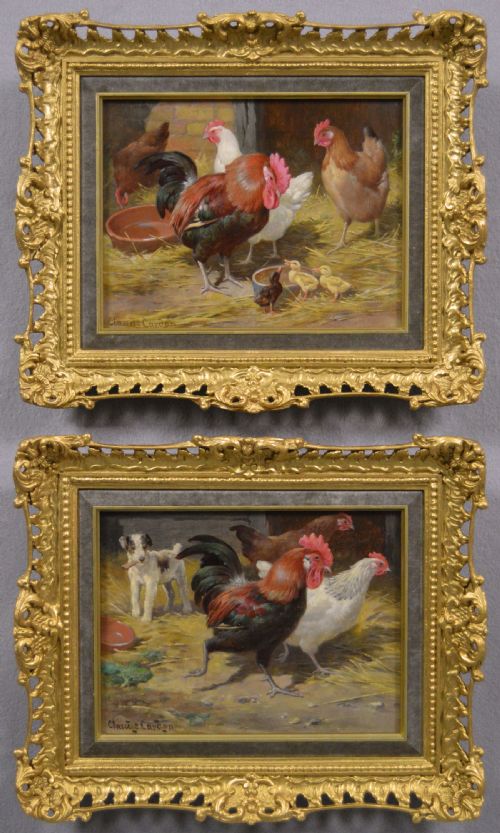
An antique poultry painting depicts birds such as cockerels, hens, and chicks within farmyard settings, pastoral landscapes, or detailed interiors. These artworks emerge from various periods including the seventeenth, eighteenth, and nineteenth centuries, alongside Edwardian and 1930s examples.
The pieces on this page span several distinct styles, ranging from Victorian Realism and British Animalier to British Impressionism and 18th Century European traditions. Buyers will frequently encounter oil paintings on canvas as well as delicate watercolours on paper.
Subjects often extend beyond single birds to include broader farmyard scenes featuring horses, pigs, goats, and cattle alongside the poultry. Whether rendered as an intimate study of chicks or a grand old master landscape with fowl near castle ruins, these works celebrate rural subjects.
How they were made
Artists primarily applied oil paint to canvas or board, building up rich textures for feathers and rustic farmyard backgrounds. Watercolours on paper also appear, offering lighter, translucent details typical of Edwardian and Victorian works on paper.
Many of these paintings are housed in period frames, frequently constructed from wood with giltwood finishes that complement the warm tones of the canvas.
Listings span from the seventeenth century to the 1930s, utilising oil paint, watercolour, and giltwood frames.
What varies in quality
Quality rests in the anatomical accuracy of the birds, the expressive handling of plumage, and the depth of the surrounding landscape or interior. Master painters capture the iridescent sheen of a cockerel's feathers and the delicate down of chicks with confident, fluid brushwork.
The integration of the poultry into the wider composition also defines the piece, distinguishing finely observed animalier studies from more formulaic farmyard depictions.
Angelo Maria Crivelli·Edgar Hunt·Claude Cardon·John Atkinson·Marmaduke Cradock·Jacob Bogdani·Percival Glenfern·Owen Bowen·B Kaufmann·Gustav Goemans·John Frederick Herring Jnr·J L Van Leemputten·R Lauritsch·Emile Lecomte·JF Slater
The Antique Poultry Painting Glossary
- Animalier
- Art depicting animals, particularly popular in the nineteenth century when painters focused on realistic portrayals of farm stock and wildlife. This tradition informs many poultry scenes.
- Oil on Canvas
- Pigment mixed with drying oil applied to a stretched woven fabric surface, providing durability and rich colour depth for centuries. It remains the primary medium for these larger farmyard works.
- Watercolour
- Paint made with water-soluble pigments on paper, yielding translucent washes and fine illustrative detail. It is frequently seen in Edwardian studies of birds.
- Giltwood
- Wood carved and coated with gold leaf or a gold-coloured finish to form decorative picture frames. These frames often accompany period canvases.
- Still Life
- An artwork focusing primarily on inanimate or stationary subject matter, sometimes incorporating game birds, fowl, and domestic objects in close arrangement.
Antique Poultry Painting: Frequently Asked Questions
What periods do these paintings come from?
These artworks span multiple centuries, including seventeenth-century old master pieces, eighteenth-century farmyard scenes, and nineteenth-century Victorian works.
Later examples extend into Edwardian watercolours and twentieth-century folk art up to the 1930s.
Which animals appear besides poultry?
While cockerels, hens, and chicks take centre stage, many compositions place them within bustling farmyards.
It is common to find horses, pigs, goats, and cattle sharing the canvas with the birds.
How are watercolours different from oils here?
Watercolour paintings use paper supports and offer lighter, transparent washes favoured by Edwardian illustrators.
Oil paintings utilise canvas or board, allowing for heavier impasto, deeper textures, and richer colour layering.
Are these paintings signed by artists?
Several pieces feature signatures from known painters such as Edgar Hunt, Claude Cardon, and John Frederick Herring Jnr.
Others remain unattributed or are attributed in the style of prominent historical animal painters.