
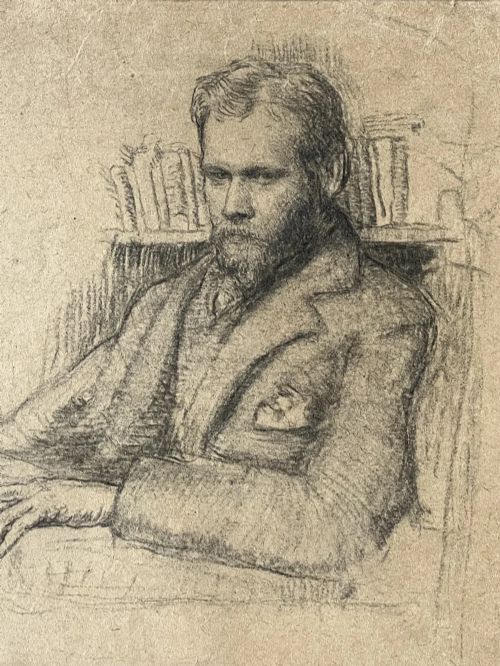
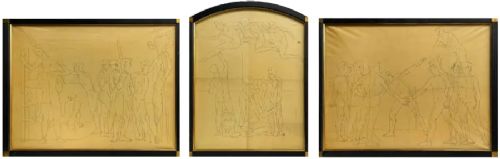
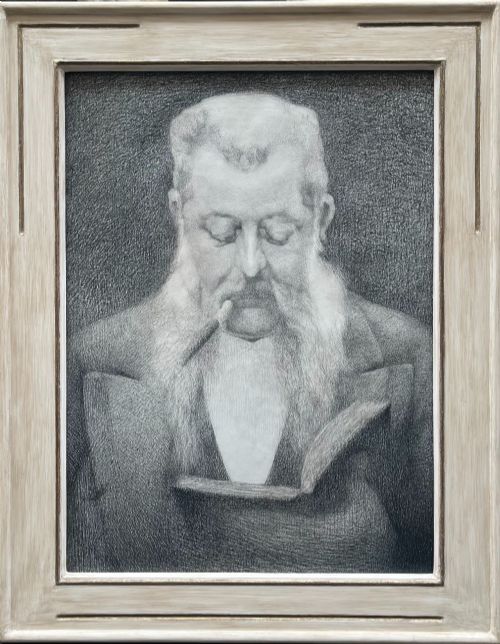
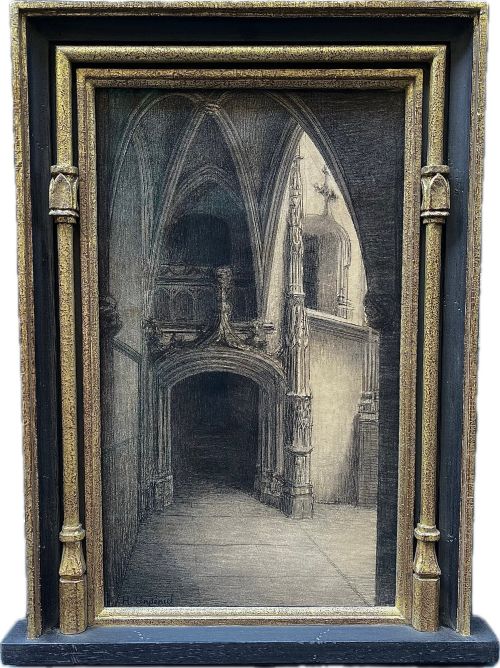
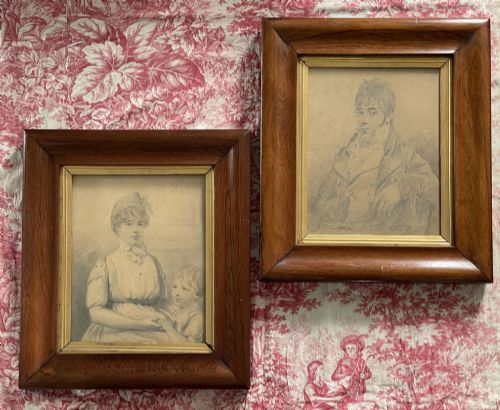
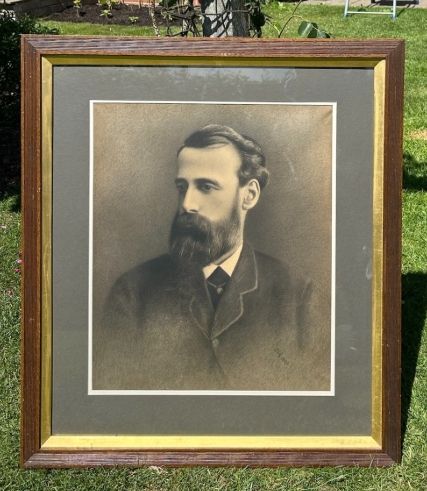
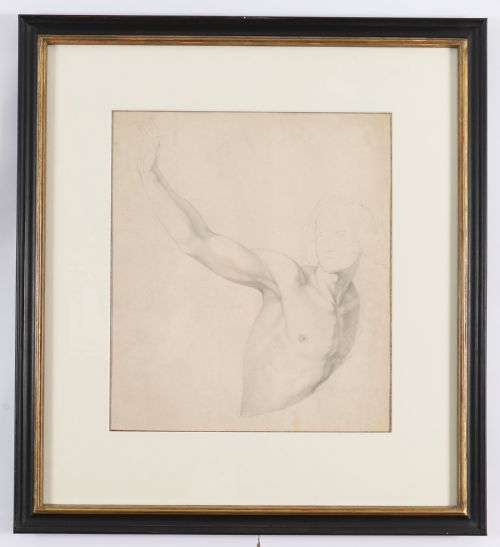
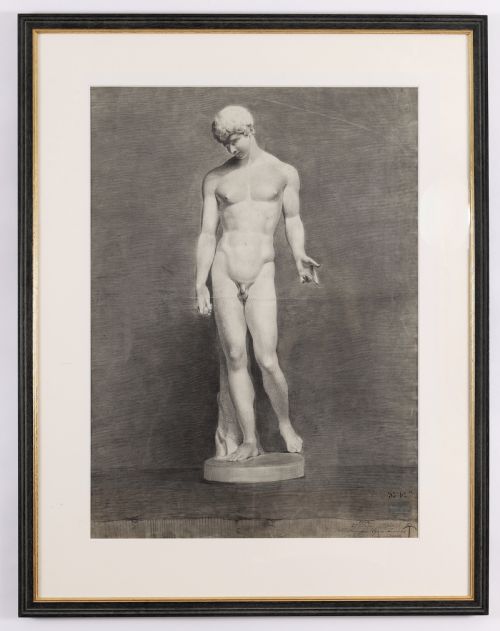
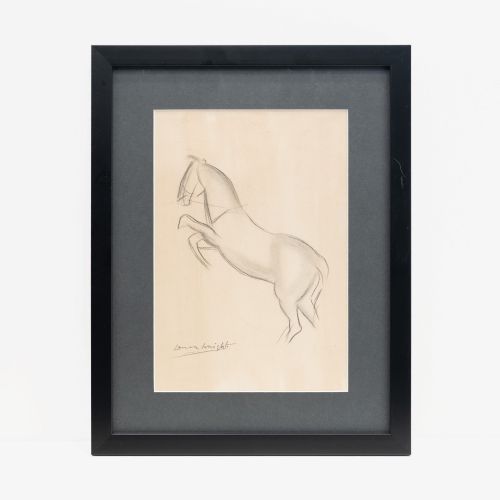
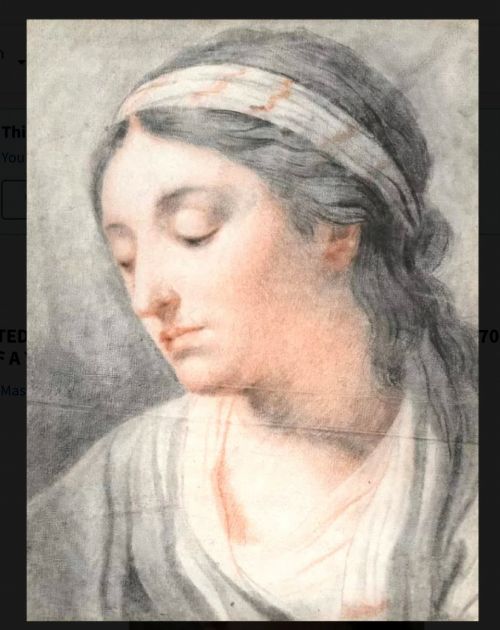
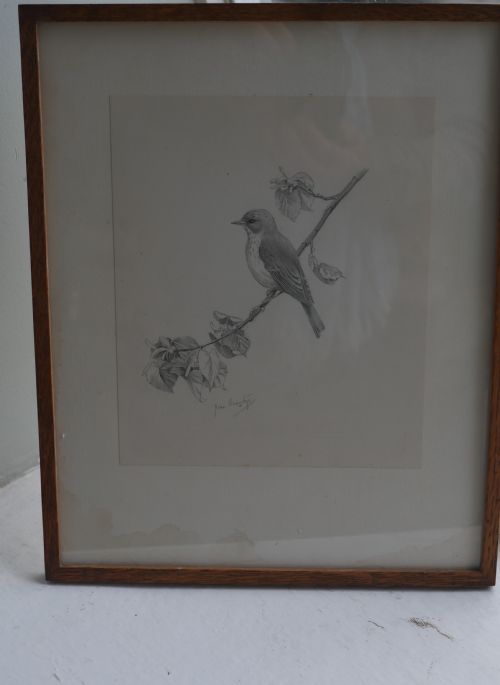
Framed Pencil Drawing
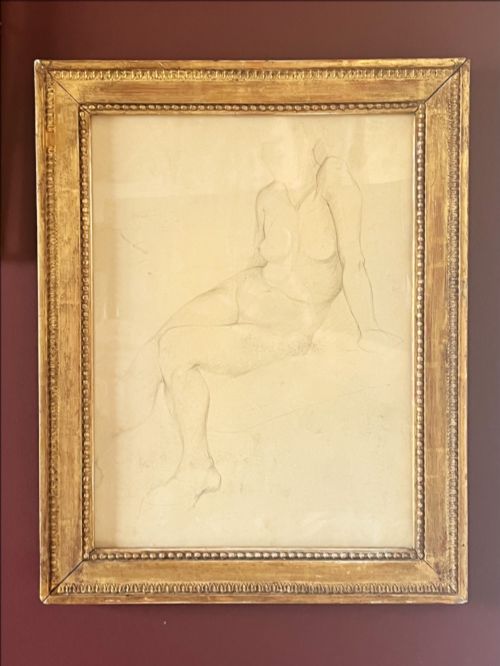
A framed pencil drawing brings the intimacy of the artist's initial study directly to the wall.
Framed Pencil Drawing
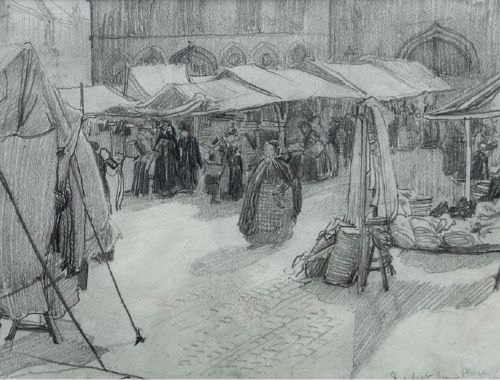
A framed pencil drawing captures direct hand-drawn observation on paper, preserved behind glass within wood or gilt surrounds.
The selection ranges from Georgian plumbago portraits and Regency character studies to Victorian figure drawings and mid-century sketches.
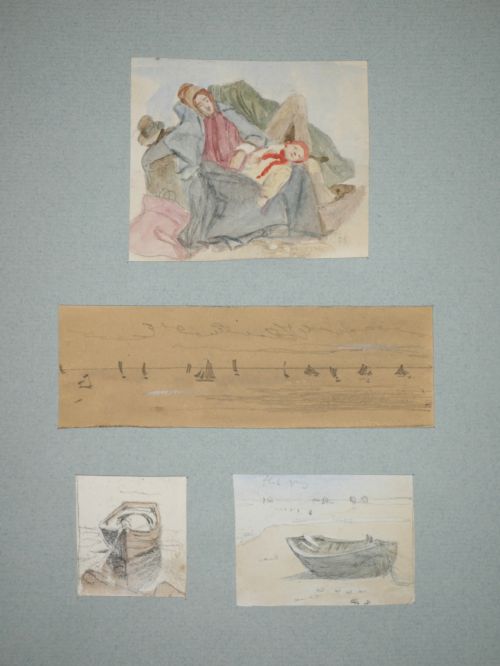
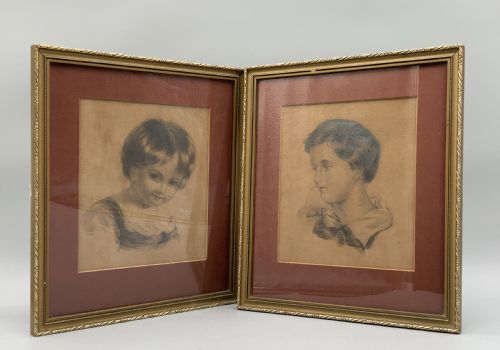
Works appear in various formats, including individual mounted sheets, paired portraits, and sets of historical sketches.
Materials and technique
Artists utilise graphite, charcoal, and plumbago on paper or buff paper support, frequently combining pencil with watercolour, gouache, or chalk washes.
Protection comes from traditional wood frames paired with glass and often accented with gold leaf moulding or mounts.
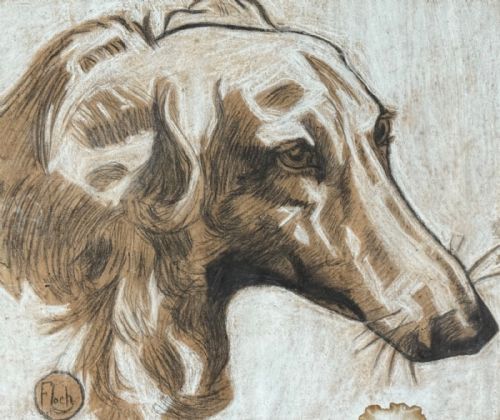
A meticulous Borzoi dog poses quietly in gouache and pencil, observing centuries of human portraits from across the room.
Assessing quality
Quality rests upon the sureness of the line and the precision of proportion, where confident draughtsmanship separates a master study from a casual sketch.
The integrity of the preservation, from stable paper condition to original framing materials, determines the enduring presence of the artwork.
Henry Percy Huggill·James Smetham·Augustus John·James Stroudley·Dame Laura Knight·Demetrios Galanis·Michael Lyne·J D Fergusson·Raoul Millais
The Framed Pencil Drawing Glossary
- Plumbago
- An early form of graphite drawing executed with fine precision, popular for detailed portrait miniatures during the Georgian period.
- Deux crayon
- A drawing technique utilising two different coloured chalks or pencils on tinted paper to create tonal depth and highlights.
- Grisaille
- A painting or drawing executed entirely in shades of grey or neutral monochrome to imitate sculpture or establish tonal form.
- Triptych
- A work of art divided into three distinct sections or panels, frequently hinged or mounted together as a unified set.
Framed Pencil Drawing: Frequently Asked Questions
How do I date a pencil drawing?
Dating relies on stylistic markers, costume details of the sitters, paper stocks, and framing methods typical of periods such as the Regency or Edwardian eras.
Signatures, dates inscribed by the artist, and archival gallery labels on the reverse provide further chronological evidence.
Should these drawings hang in direct sunlight?
Paper and graphite or watercolour pigments remain sensitive to ultraviolet light, which causes fading and paper degradation over time.
Displaying works away from direct sunlight protects the delicate media from irreversible damage.
What is the difference between plumbago and pencil?
Plumbago refers specifically to an early type of refined graphite used predominantly for highly detailed Georgian portraiture.
Standard pencil work encompasses broader graphite applications spanning nineteenth-century academic studies and twentieth-century modernism.
How are antique frames preserved?
Original gilt wood frames retain historical value and are kept intact alongside the artwork whenever structural stability permits.
Gentle dusting maintains the surface without stripping the patination accumulated across the nineteenth and twentieth centuries.