
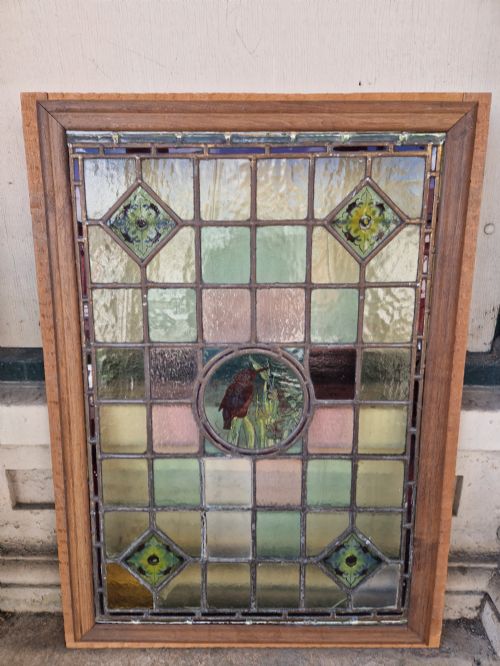


Framed Painted Glass Panel
A framed painted glass panel brings colour and shifting light into a room, joining pictorial art with architectural glasswork.
Framed Painted Glass Panel
A framed painted glass panel combines pictorial decoration with structural glass, ranging from domestic wall art and trade signs to architectural windows and mirror inserts. When you search for a framed painted glass panel, you encounter works spanning the Georgian period, the Victorian era, Edwardian houses, and the mid-twentieth century.
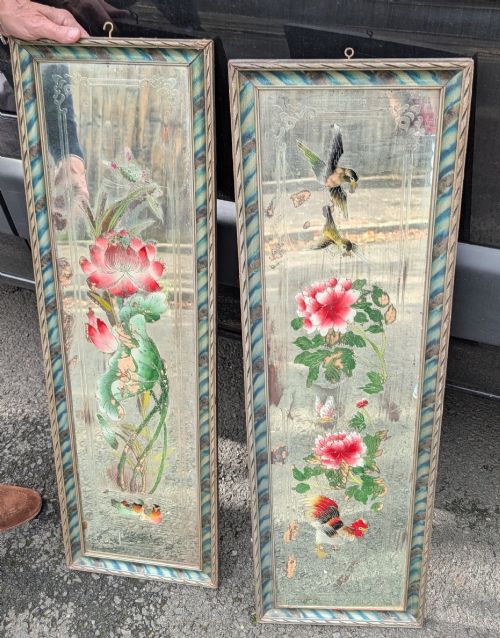
The selection here includes stained glass windows with hand-painted scenes, reverse-painted glass, tempera on panel, and eglomise panels set within trumeau mirrors. These pieces often depict heraldic emblems, religious figures, pastoral landscapes, flora and fauna, or commercial lettering.
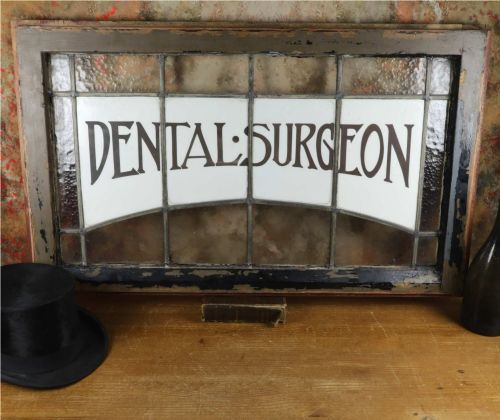
Domestic mirrors incorporate painted sections above the glass plate, while trade signs and shop windows utilise painted glass to display names and imagery. Architectural salvage pieces bring church and domestic windows into interior spaces, mounted in original timber frames.
How they were made
Makers constructed these pieces using glass, lead, and timber, enclosing the pictorial work within wooden or giltwood frames. Paint was applied directly to the glass surface, sometimes fired in a kiln for permanence, or executed as reverse painting where the design is viewed through the unpainted front.
Leaded cames held individual segments of stained and painted glass together in windows and architectural panels, providing structural rigidity. Frames were fashioned from timber, painted wood, satinwood, walnut, and giltwood, with mirrors integrating silvered glass plates alongside the painted elements.
Listings feature periods spanning the Victorian era, Edwardian decades, and the early twentieth century, utilising glass, lead, timber, and paint.
What varies in quality
The distinction between standard and exceptional pieces lies in the execution of the painted detail and the integrity of the surrounding frame. Finer works display meticulous brushwork in figurative or landscape scenes, whereas simpler examples rely on repetitive foliate motifs or standard lettering.
Original frames and leadwork preserve the historical context of a panel, while replaced timbers or extensive lead repairs alter the material authenticity. The harmony between the painted glass and its housing dictates the visual success of the piece.
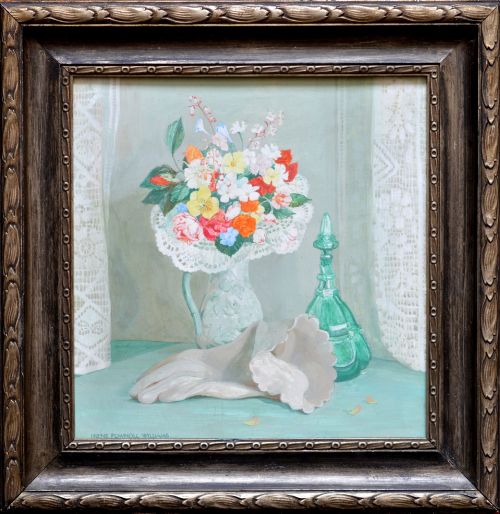
Irene Christobelle Pownoll Williams
The Framed Painted Glass Panel Glossary
- Eglomise
- A technique where gold or silver leaf is applied to the reverse of a glass panel and then etched or painted upon. This process produces a reflective, metallic background often found in eighteenth and nineteenth-century mirror panels.
- Trumeau
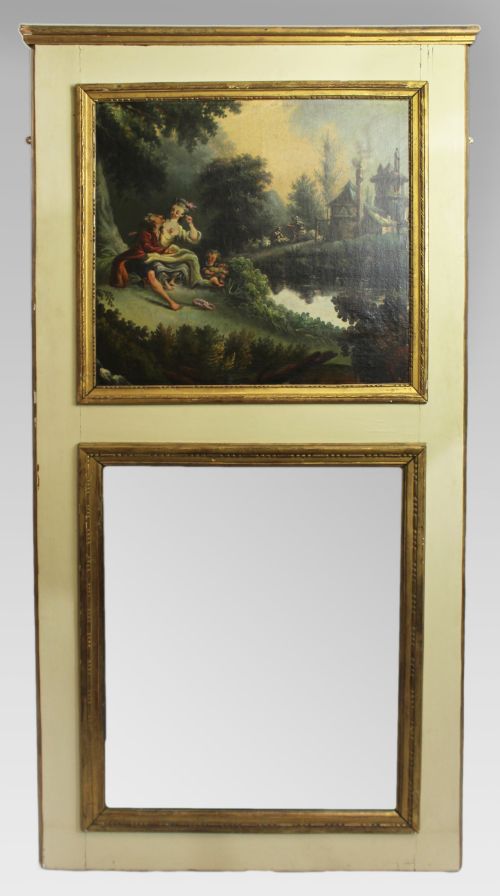
- A decorative wall mirror featuring an upper panel containing an oil painting or eglomise glass above the main looking glass. These vertical mirrors originated in France and appeared in various British and continental interiors.
- Came
- A slender strip of cast lead, zinc, or copper with an H-shaped profile used to join individual pieces of glass in a window or panel. The cames form the structural grid that supports the overall design.
- Reverse painting
- A method of applying paint to the back side of a piece of glass so the finished image is viewed through the front. This technique protects the pigment from dust and damage while creating a glossy surface finish.
Framed Painted Glass Panel: Frequently Asked Questions
How do I hang a heavy framed glass panel?
Heavy architectural windows and trumeau mirrors require secure wall fixings attached directly to structural studs or masonry rather than standard picture hooks. Utilising a French cleat distribution system supports the substantial weight of timber frames and leaded glass.
Ensure the hanging wire or brackets engage with the primary wooden framework of the piece rather than secondary decorative mouldings. Professional installation is advisable for large church windows or overmantel mirrors.
Are these panels suitable for exterior placement?
Most framed painted glass panels and mirrors are designed for interior display where fluctuations in temperature and moisture are minimal. Placing historical leaded glass outdoors exposes the lead cames and painted surfaces to environmental degradation.
Internal placement protects fragile tempera, reverse-painted glass, and giltwood frames from weathering. If hung near a window, indirect sunlight prevents the fading of delicate pigments.
How do I identify the period of a painted glass panel?
Dating relies on stylistic clues within the painting, the composition of the frame, and construction methods such as hand-drawn lead cames. Victorian and Edwardian examples often feature Gothic Revival motifs, floral sprays, or pictorial narratives reflecting contemporary tastes.
Examine the back of the panel for period timber types, handmade nails, or early trade labels. Comparing the artistic style with known movements like Arts and Crafts or Aestheticism helps narrow down the decade of creation.