
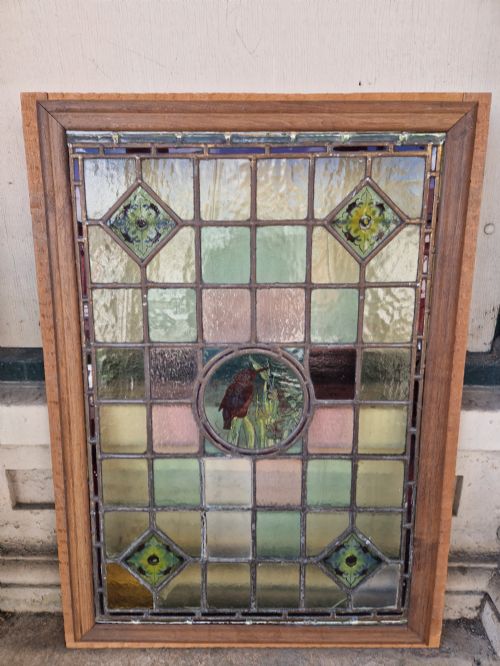


Painted Glass Window Hanging
These painted glass window hanging pieces bring rich coloured light and historic character into a room.
Painted Glass Window Hanging
A painted glass window hanging brings historic domestic and ecclesiastical glazing into modern interiors as decorative panels. When you search for painted glass window hanging, you encounter architectural salvage panels originating from the Victorian period, the nineteenth century, and the early decades of the twentieth century. The selection ranges from architectural salvage stained glass panels to individual windows.
The aesthetic of these items draws heavily on established historical styles including Gothic Revival, Victorian, and Edwardian Arts and Crafts. Pieces often depict specific imagery such as birds on branches alongside religious subjects. They serve primarily as hanging decorative objects positioned to catch the light.
How they were made
The construction of these panels relies on traditional glazing techniques using coloured glass secured within lead cames. Artisans applied vitreous enamel paint to the glass surface, firing the pieces to fuse the pigment permanently before assembling the complete composition.
Framing materials commonly include original pine wood structures surrounding the primary lead and glass matrix. The combination of structural timber and pliable lead provides the rigidity necessary to support the heavy glass panels.
Several panels feature a small bird perched on a branch, caught forever in lead and coloured glass.
What varies in quality
The artistic merit of the painted detail separates simpler decorative panels from finer examples. Fine execution in the rendering of subjects like avian or religious motifs demonstrates superior workshop skill.
The complexity of the lead work and the depth of colour within the glass sections define the visual richness of each panel. Intricate geometric arrangements and varied glass textures elevate the overall character of the piece.
The Painted Glass Window Hanging Glossary
- Stained glass
- Glass that has been coloured by adding metallic salts during its manufacture or painted with vitreous enamels. This material forms the primary visual element of each panel.
- Lead came
- Soft lead channels used to hold individual pieces of glass together in a window panel. These flexible strips create the structural grid of the design.
- Vitreous enamel
- A material made by fusing powdered glass to a substrate by firing. This pigment is used for detailed painting on the glass surface.
- Architectural salvage
- Building components rescued from demolition or renovation projects for reuse. Many panels originate from this source.
- Bullseye
- A round piece of glass with a central thick point formed during the glassblowing process. These appear in specific window designs alongside standard glass.
Painted Glass Window Hanging: Frequently Asked Questions
How do I hang a painted glass window?
Secure hanging brackets to the structural wooden frame rather than relying on the lead cames or glass elements for support. Use strong fixings attached to wall studs or window frames to bear the weight safely.
Position the panel where natural light can pass directly through the glass to reveal the painted details and rich colours fully.
What periods do these windows come from?
The available pieces originate primarily from the Victorian era and the early twentieth century, including items dated around 1890, 1910, and 1920. These dates reflect the prevailing architectural and decorative tastes of their original manufacture.
Stylistic markers such as Gothic Revival influences help identify the specific design period of each individual panel.
Are these pieces original antiques?
The inventory consists of period items sourced as architectural salvage from older buildings and churches. Materials and construction methods align with traditional Victorian and Edwardian manufacturing practices.
Each panel exhibits the wear and characteristics expected of genuine historic glazing from the nineteenth and early twentieth centuries.
What designs are common on these windows?
Common visual themes include pictorial representations of birds on branches and traditional religious iconography. These subjects reflect the decorative preferences of the Victorian and Arts and Crafts periods.
Geometric patterns and amber bullseyes also appear frequently within the leaded glass compositions.