
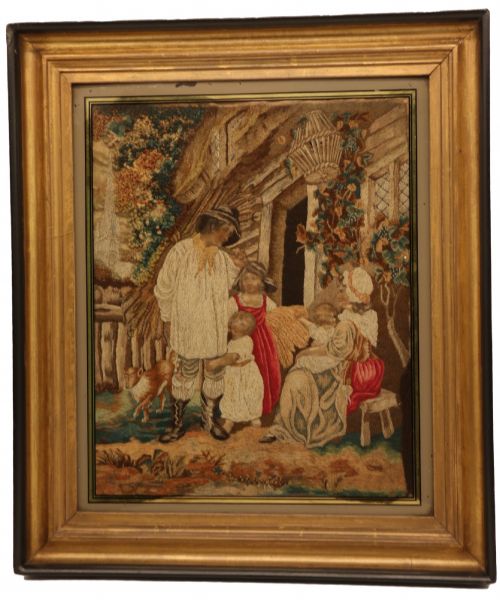
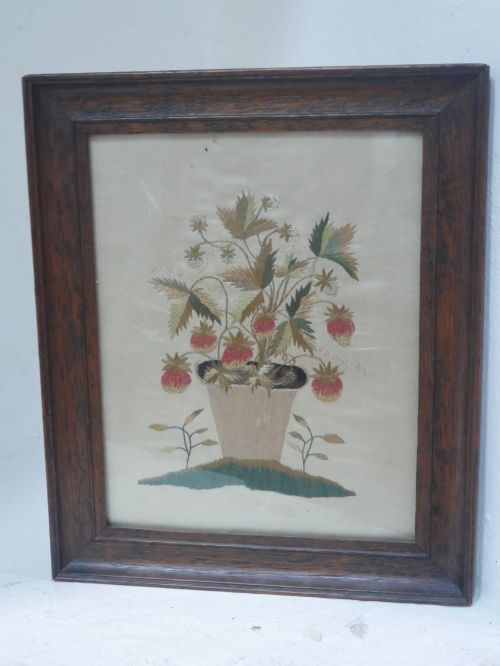
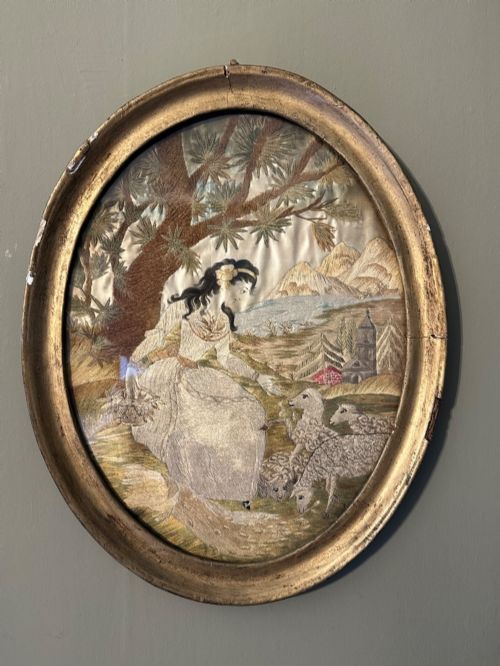

Framed Needlework Picture
These framed needlework picture examples range from early silk panels to Victorian woolwork, bringing historic textile art directly onto the wall.
Framed Needlework Picture
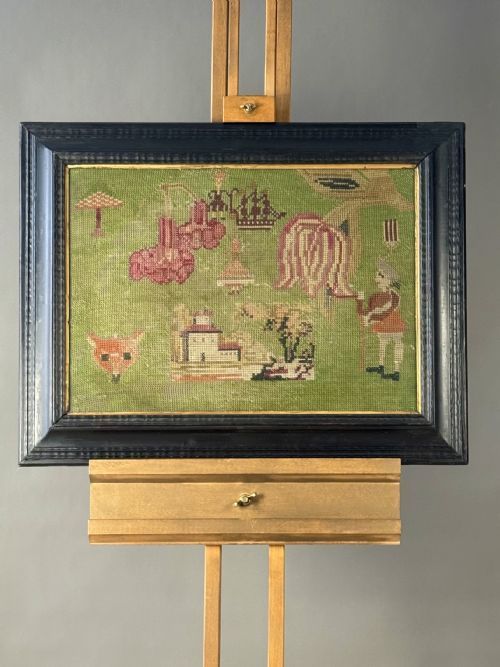
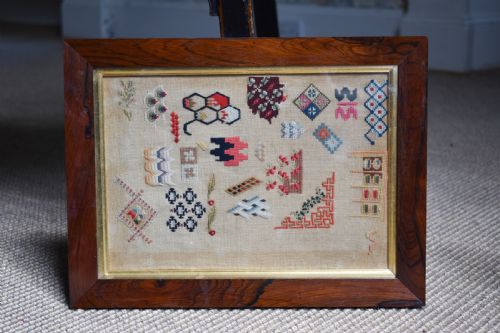
A framed needlework picture is a textile artwork worked in thread, wool, or silk, mounted behind glass within a wood or gilt frame. When searching this phrase, collectors encounter various historical expressions of thread art, from educational samplers to elaborate pastoral and literary scenes.
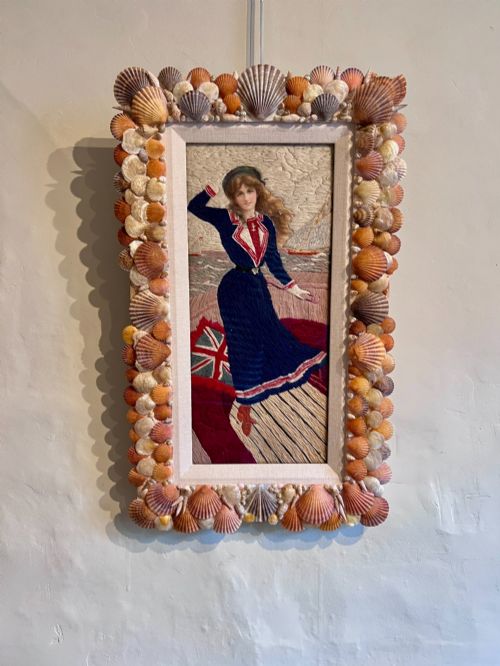
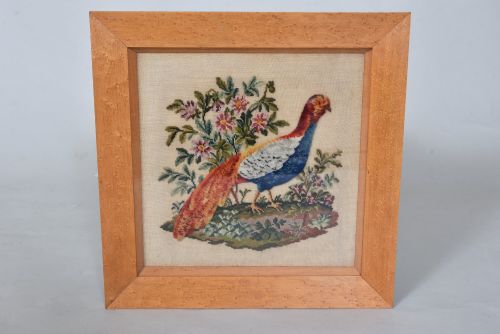
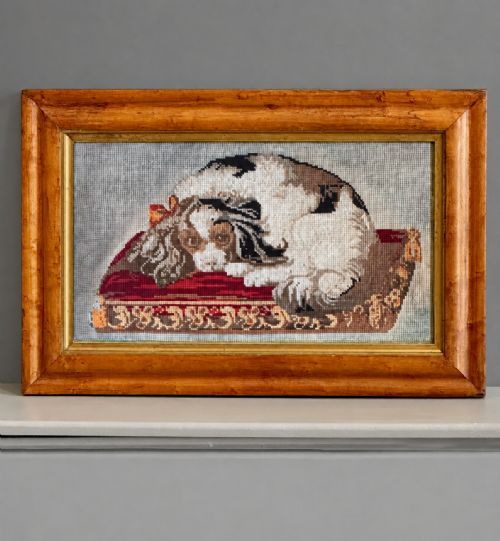
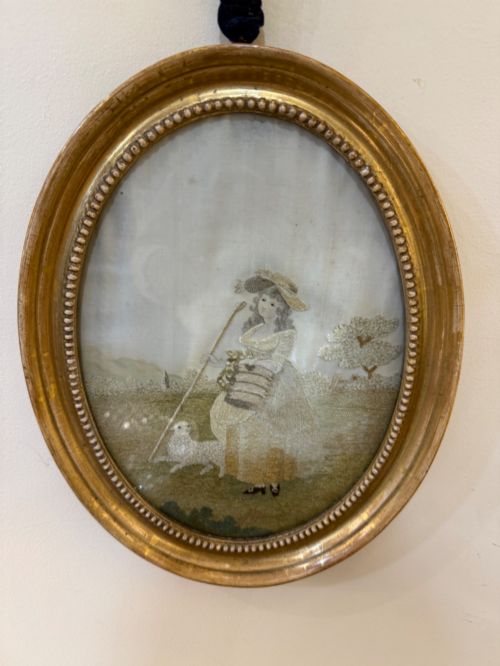
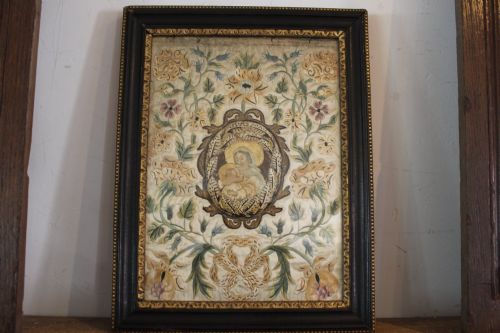
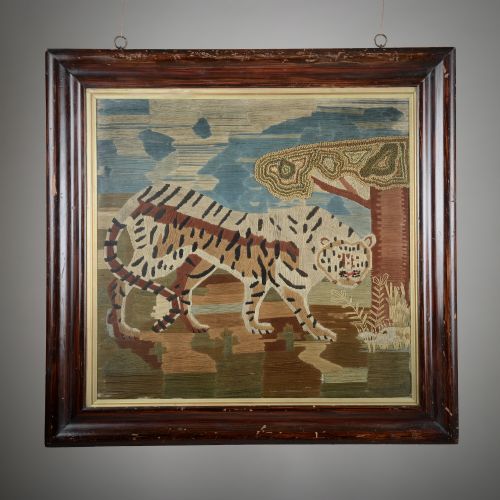
The most common examples on this page date from the nineteenth century, including Berlin woolwork, plushwork animals, and silkwork landscapes. Earlier pieces from the seventeenth and eighteenth centuries, such as Stuart stumpwork and embroidered silk panels, appear less frequently but anchor the higher end of the tradition.
How they were made
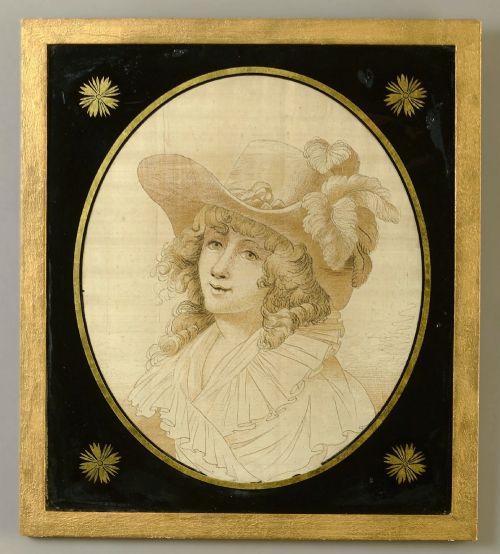
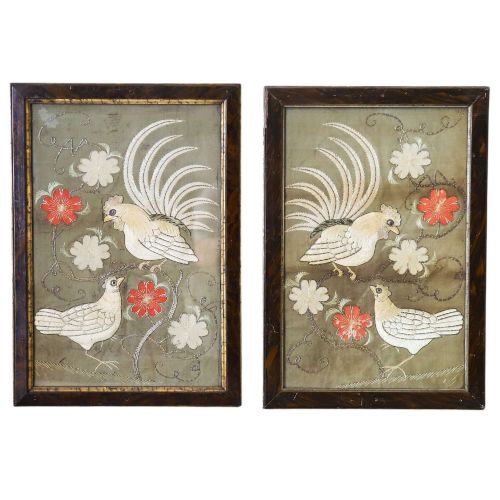
Needleworkers utilised silk, wool, and linen threads stitched onto canvas, silk, or woven grounds using techniques like long stitch, gros-point, and stumpwork relief. Hand-painted elements sometimes supplement the silk embroidery, particularly in nineteenth-century pictorial compositions.
Frames play a crucial role in the presentation, utilising timber varieties such as burr maple, rosewood, and giltwood alongside verre églomisé glass panels to protect the delicate textiles from environmental damage.
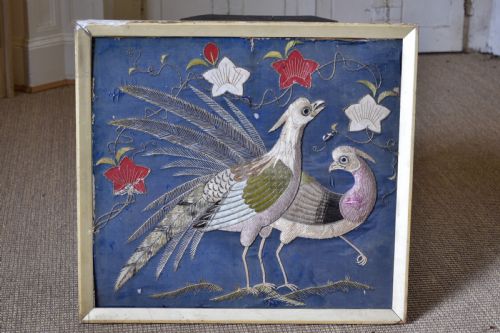
The listings span multiple centuries, incorporating seventeenth-century silk panels, eighteenth-century samplers, and Victorian woolwork.
What varies in quality
Quality rests primarily upon the skill of the needlework execution, the complexity of the design, and the retention of vibrant thread colours. Finely detailed silk work or raised stumpwork requires exceptional technical proficiency compared to standard mass-produced or simpler sampler stitching.
The original housing heavily influences overall desirability, with period frames like burr maple or rosewood retaining greater historic integrity than modern replacements.
The Framed Needlework Picture Glossary
- Berlin work
- A style of charted needlework popular in the nineteenth century that used brightly coloured wools on canvas. The method allowed makers to copy elaborate pictorial designs from printed paper patterns.
- Stumpwork
- A raised embroidery technique from the seventeenth century that used padded understructures to create three-dimensional figures. Silk and metal threads embellished these elaborate biblical and royal scenes.
- Sampler
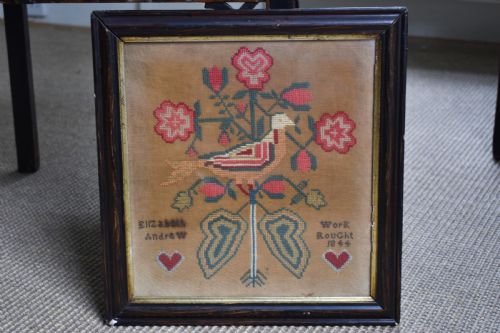
- A piece of needlework created to demonstrate proficiency in various stitches and alphabets. These works often served as educational exercises for young women.
- Plushwork
- A textured embroidery technique utilising raised, cut loops of wool to create a tactile surface. This method frequently depicted animals with a realistic fur-like pile.
- Verre églomisé
- A process of applying gold or silver leaf to glass combined with engraved designs. These distinctive borders frequently frame Regency and nineteenth-century pictures.
Framed Needlework Picture: Frequently Asked Questions
How should I hang a needlework picture?
Keep textile artworks away from direct sunlight to prevent the silk and wool threads from fading over time. Stable indoor humidity protects both the delicate fabric ground and the antique timber frame.
Ensure the picture hangs securely using appropriate wall fixings suited to the weight of the glass and wood housing.
Are all framed needlework pictures English?
While many examples originate from British workshops, continental pieces also appear within the tradition. French silk embroideries and Chinese export panels reflect distinct regional stitching styles and motifs.
Examining the framing materials and subject matter often helps determine the geographic origin of the textile.
What is the difference between a sampler and a picture?
Samplers focus on alphabets, numbers, and repeating stitch rows executed for practice or demonstration. Needlework pictures depict narrative scenes, portraits, landscapes, or animals designed specifically for display.
Both forms share similar textile materials but serve different decorative and functional purposes.
How do I identify a 17th-century panel?
Early panels from the seventeenth century often feature stumpwork figures, metallic thread highlights, and motifs like royalty or classical subjects. The weave of the linen or canvas backing and the aged characteristics of the embroidery silk provide clues to their age.
These early works typically display distinct iconography associated with the Stuart period.