

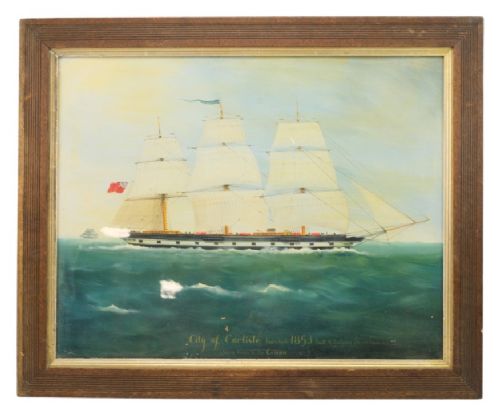
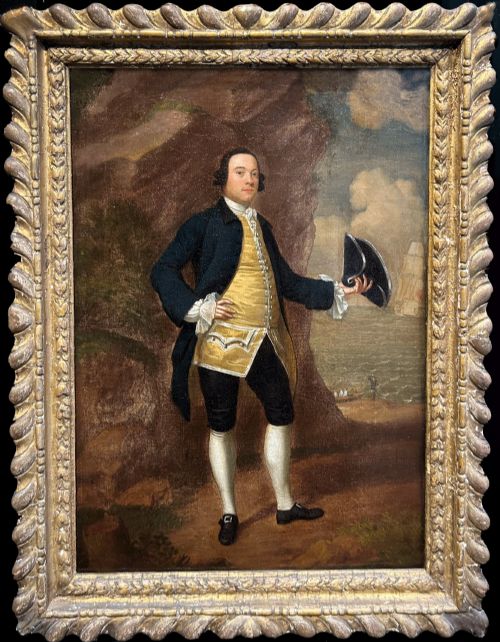
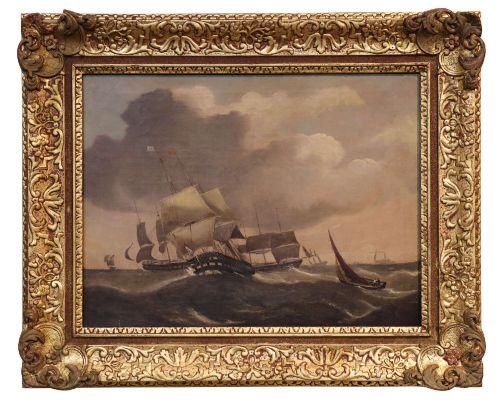

Framed Naval Oil
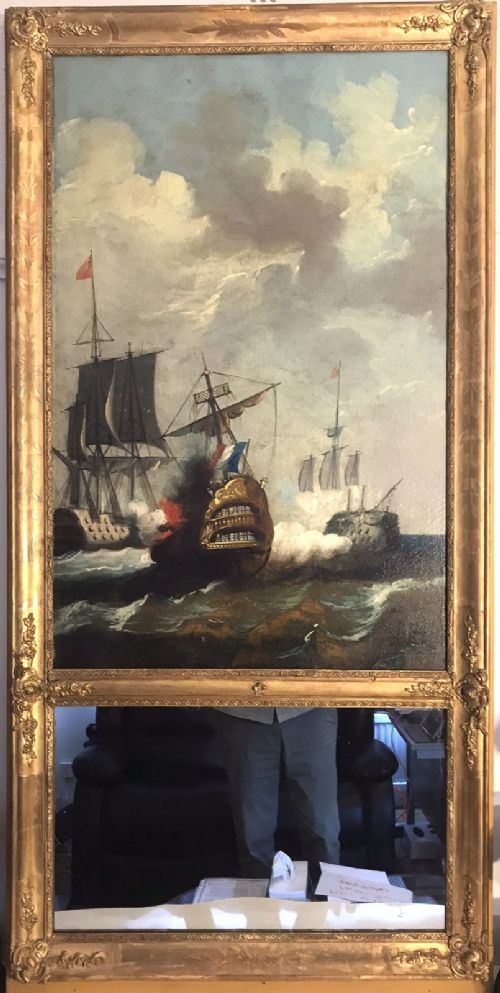
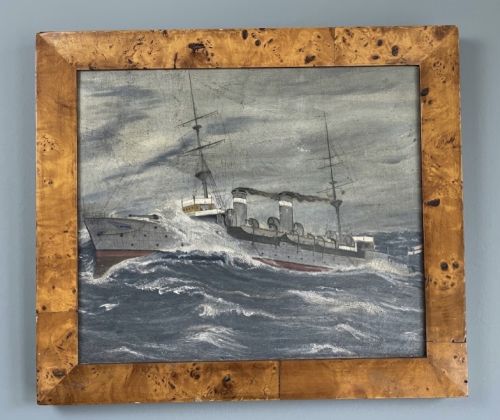
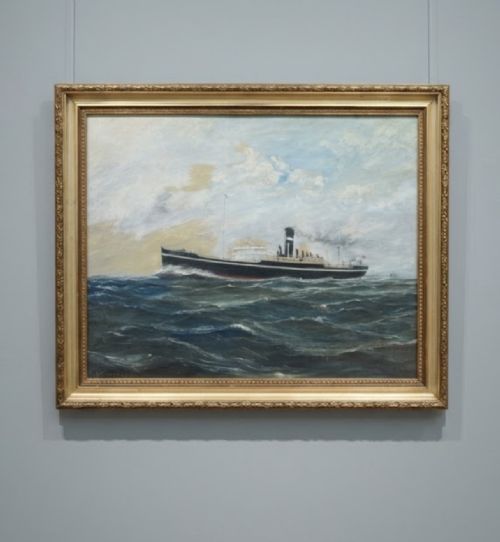
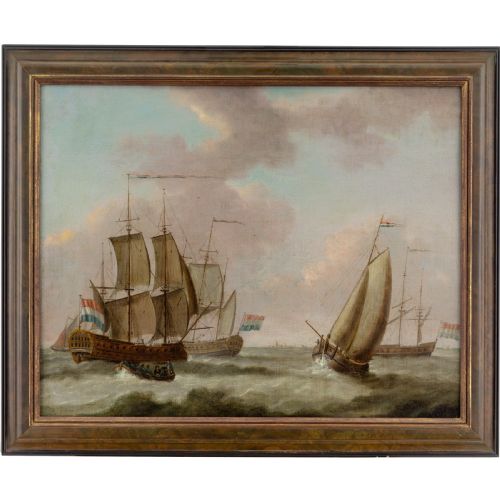
When you search for framed naval oil, you are looking at maritime canvases and panels recording warships, merchant vessels, and naval portraits from past centuries.
Framed Naval Oil
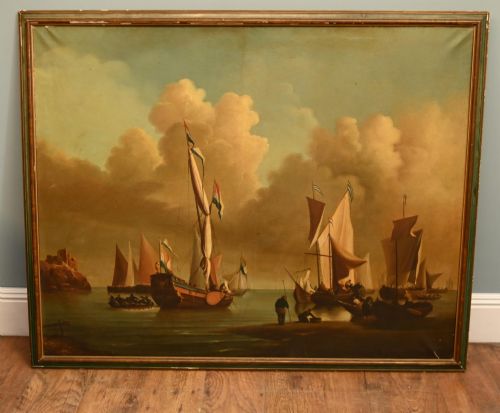
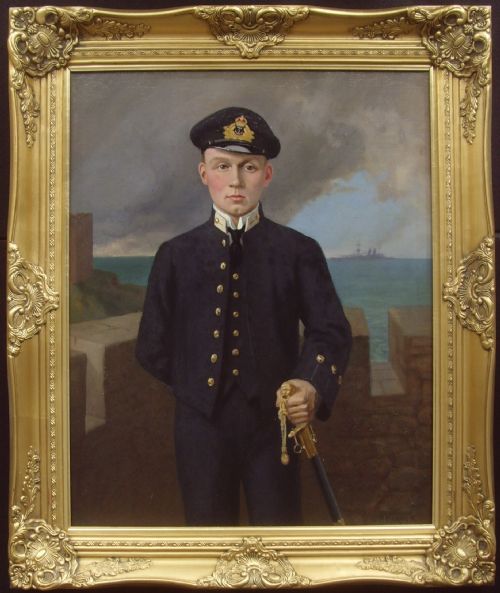
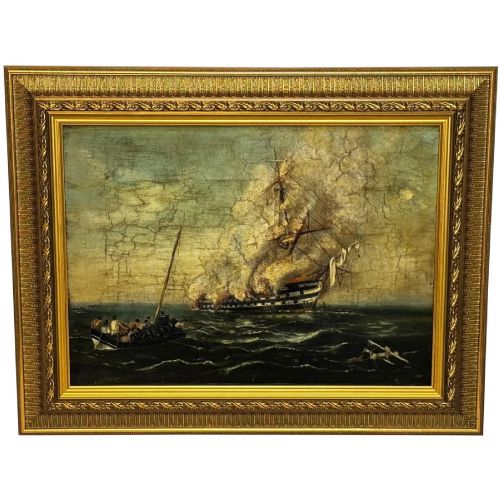
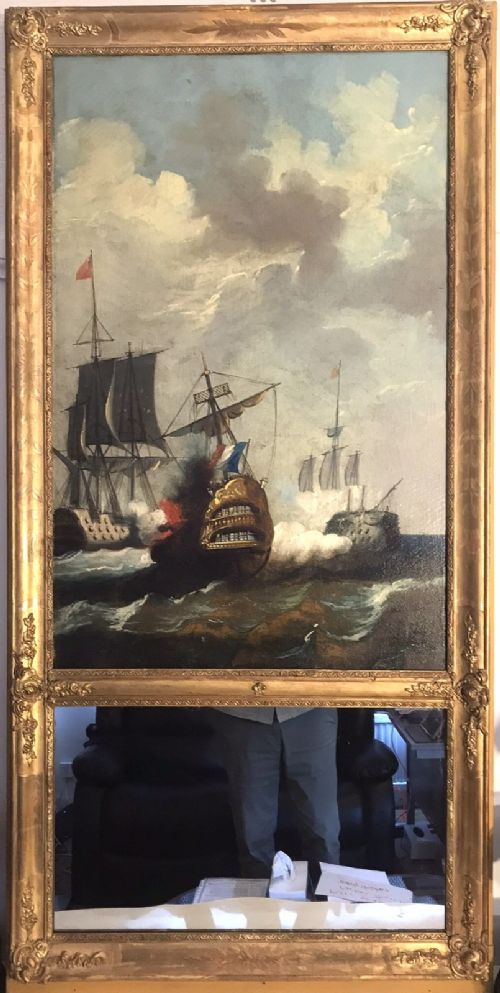
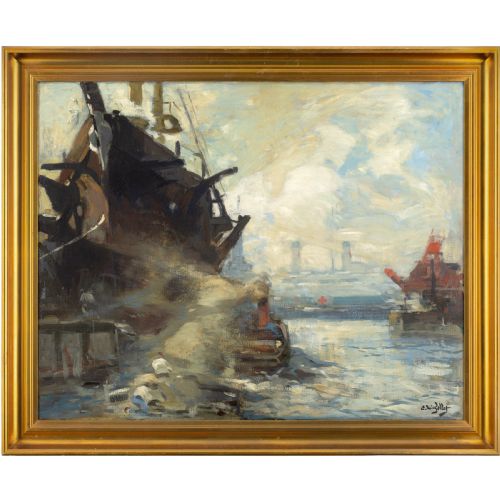
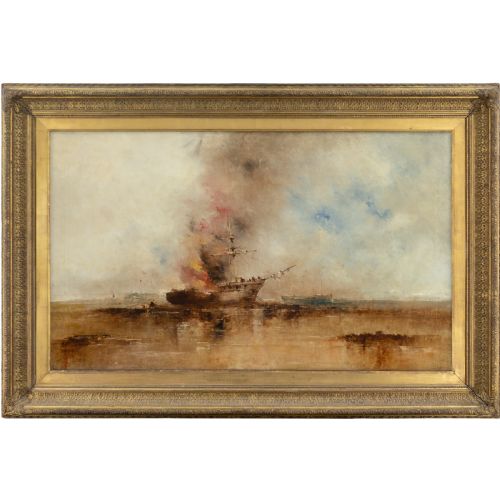
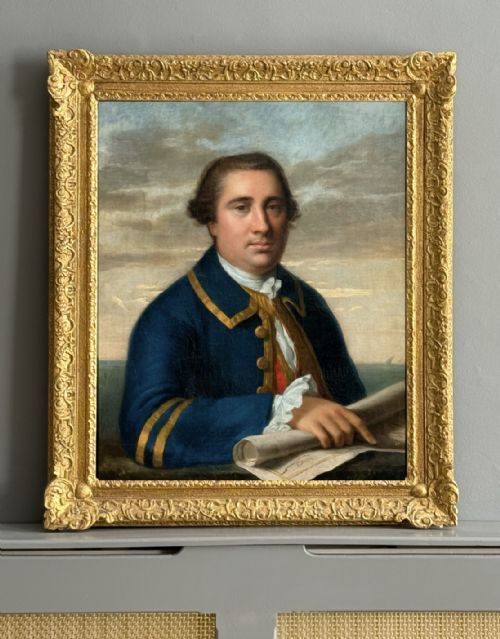
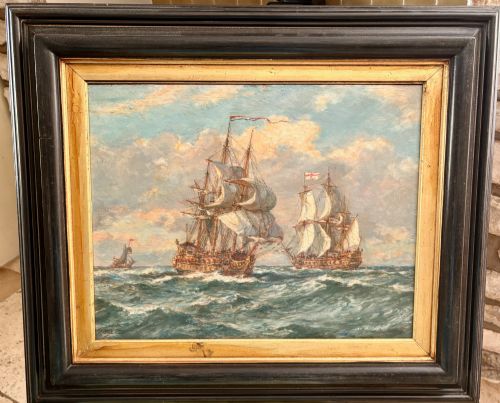
A framed naval oil typically depicts historical sea battles, sailing ships, royal yachts, and portraits of naval officers or captains. These works span from the seventeenth century through the twentieth century, encompassing Georgian, Regency, and Victorian maritime traditions.
You will encounter depictions ranging from rolling seas and coastal harbours to detailed studies of named vessels like the HMS Queen Charlotte or the clipper ship Thermopylae. The subjects involve both grand historical engagements and quiet harbour scenes involving steamships, schooners, and galleons.
Most pieces appear housed in period surrounds such as giltwood frames or simple wooden mouldings that complement the maritime subject matter. The selection includes works by named marine artists as well as pieces attributed to various European and British schools.
Materials and construction methods
Artists painted these works using oil paint applied to stretched canvas, wood panels, or occasionally board. The application ranges from smooth glazes in earlier Dutch style works to thick, textured brushwork capturing choppy waters and billowing sails in nineteenth and twentieth-century pieces.
The frames accompanying these paintings consist primarily of wood, often finished with gold leaf or giltwood mouldings that reflect the decorative standards of their respective periods.
Framed Naval Oil Retail Price Guide 2026
Typical asking prices for framed naval oil among the pieces listed under this phrase on Sellingantiques today, from the lower quarter to the upper quarter. They describe what is for sale here now, not the wider market.
The documented styles range from Dutch Golden Age and Georgian to Victorian Marine and 19th Century Maritime Art.
Factors that distinguish these paintings
Quality in a framed naval oil rests upon the precision of the maritime rigging, the accurate depiction of hull and sail construction, and the artist's ability to render light upon water and sky. Superior works demonstrate a deep understanding of nautical architecture combined with confident brushwork.
The condition of the original paint layer and the harmony between the canvas and its period frame also influence the overall character of the piece. Works that retain their original giltwood surrounds and show minimal intervention in the painted surface command greater interest.
Samuel Harry Hancock·James Hardy·Eugène-Louis Gillot·William McAlpine·Lemuel Francis Abbott·Bernard Gribble·Francis Hayman·Nicholas Condy·Claude Lorrain·John Simmons·Dion Pears·Marie-Edouard Adam·Ebeneezer Colls·Charles Dixon·Lord Howe·William Langley·George Frederick Clarke·Jacob Knyff
The Framed Naval Oil Glossary
- Giltwood
- Wood carved and coated with gold leaf or gold paint. This finish frequently appears on nineteenth-century frames surrounding maritime oil paintings.
- Seascape
- A work of art depicting the sea, ships, or coastal views. These form the primary category of framed naval oil paintings.
- Panel
- A rigid wooden support used by artists instead of canvas. Several earlier maritime works utilise wood panels for their composition.
- Clipper
- A very fast nineteenth-century sailing ship with three masts and square sails. Clippers frequently feature in Victorian marine paintings.
Framed Naval Oil: Frequently Asked Questions
What periods do these paintings cover?
The available works span several centuries, beginning with seventeenth-century Dutch school paintings and moving through eighteenth-century Georgian portraits and nineteenth-century Victorian marine art.
You will also find pieces from Edwardian times and mid-twentieth-century twentieth-century interpretations, showing how naval art evolved across different eras.
Who are the typical subjects portrayed?
Subjects include named naval officers, captains, privateers, and monarchs in naval uniform, alongside historic engagements and specific vessels.
Many canvases focus on action scenes featuring warships with raised sails and cannons, while others portray quiet coastal figures and harbour anchorages.
How should I display a framed naval oil?
These works suit traditional study spaces, libraries, or living rooms where their period frames can be appreciated against neutral wall backgrounds.
Keep them away from direct sunlight and excessive humidity to protect the oil paint and the giltwood frame from degradation.
How can I tell the age of a piece?
Age is indicated by the style of clothing worn by any figures, the type of ship depicted, the construction of the canvas or panel, and the framing style.
Comparing the painting technique and the recorded period of the artist or school provides further confirmation of when the work was created.