



Steamship Portrait Artwork
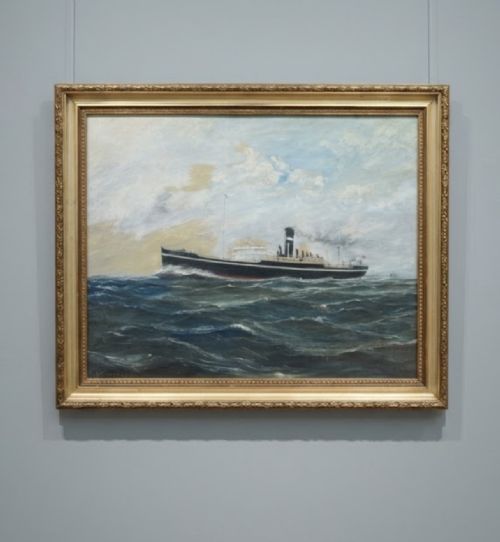
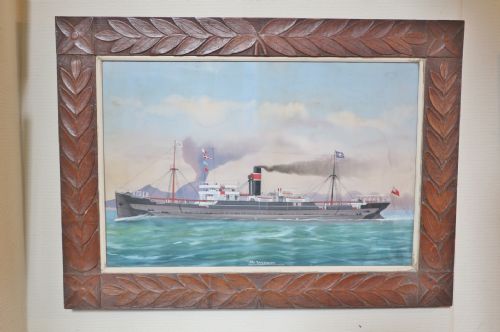
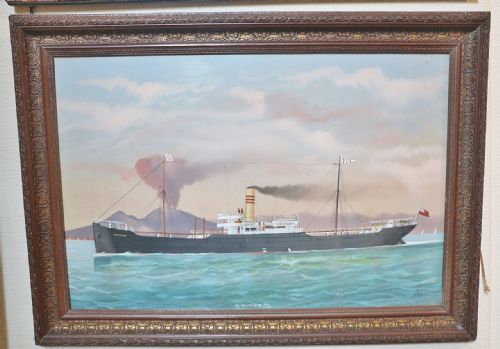
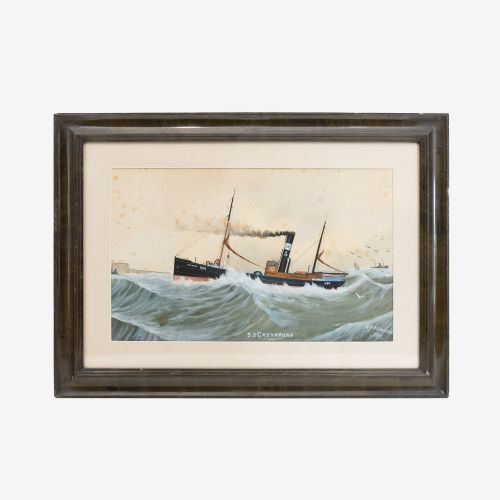
These steamship portrait artwork pieces capture the iron and steel liners, freighters and naval vessels that crossed the seas.
Steamship Portrait Artwork
When you search for steamship portrait artwork, you are looking at marine paintings and works on paper that record specific vessels by name, such as the SS Bregonian or the Queen Mary. These watercolours, gouaches and oil paintings document individual ships, often shown in profile or navigating coastal waters and heavy seas.
You are most likely to meet Edwardian examples on this page, alongside works from the interwar period and mid-century. Many of these pieces feature named vessels operating during the early twentieth century, rendered by artists recording maritime history.
The subjects range from British marine oils and Neapolitan pierhead paintings to Chinese Export and Anglo-Chinese school works. Each piece focuses closely on the vessel itself, detailing funnels, rigging and hulls against open water or harbour backdrops.
How they were made
Artists painted these works using oil on canvas, gouache and watercolour on paper, capturing the texture of water and the metallic details of steamships. Many of these paintings are housed in period frames, frequently utilising gilt or giltwood to complement the maritime subject matter.
The techniques rely on precise draughtsmanship to delineate the technical specifications of each vessel, from merchant steamers to ocean liners. Painters balanced realistic renderings of coastal geography and rough weather with the formal portraiture demands of ship owners and captains.
Steamship Portrait Artwork Retail Price Guide 2026
Typical asking prices for steamship portrait artwork among the pieces listed under this phrase on Sellingantiques today, from the lower quarter to the upper quarter. They describe what is for sale here now, not the wider market.
Some anonymous captains evidently loved their steamers so much they had them painted twice in slightly different weather.
What varies in quality
The standard of these paintings rests on the precision of the vessel's depiction and the handling of the surrounding maritime environment. Works by identified artists or established schools demonstrate a surer command of perspective, rigging detail and atmospheric effects in heavy seas.
Condition also separates examples, particularly the preservation of paper works against foxing or oil surfaces against craquelure. Original framing in period giltwood adds integrity to the piece, whereas later re-framing alters the historical context.
F Corpuz Artist·Alexander Harwood·Johan Jens Neumann
The Steamship Portrait Artwork Glossary
- Pierhead painting
- A genre of ship portraiture created in port cities, often by local artists who sold directly to sailors and ship masters wanting an accurate record of their vessel. These works typically show the ship in profile leaving or entering harbour.
- Gouache
- An opaque water-based medium that allows for rich colour saturation and sharp detail, frequently used alongside watercolour for crisp renderings of ship superstructures and flags.
- Anglo-Chinese
- A term describing artworks produced in China by local artists for Western traders and ship captains, blending European perspective with traditional Asian painting techniques.
- Giltwood
- Wood carved and covered with a thin layer of gold leaf, commonly used for the decorative frames enclosing marine oils and watercolours of this era.
- Maritime realism
- An artistic style focused on accurate, detailed representation of ships, water and weather conditions without romantic exaggeration.
Steamship Portrait Artwork: Frequently Asked Questions
What is a pierhead painting?
A pierhead painting is a specific type of ship portrait produced in port cities to provide an accurate record of a named vessel for its crew or owners.
These works usually depict the ship in profile against a known coastline or harbour entrance, prioritising documentary precision over artistic invention.
How do I date these paintings?
Dating relies on the vessel's operational history, the clothing and rigging styles, and the artist's active period noted in the signature or documentation.
Changes in steamship design, from early funnels to mid-century ocean liners, also provide clear chronological markers for when the artwork was created.
Where were these artworks made?
These pieces originate from various maritime hubs, including European ports like Naples, British studios, and Chinese export workshops operating in treaty ports.
Artists worked where shipping traffic concentrated, catering to officers and companies who commissioned portraits of their specific vessels.
How should I display them?
Display these works away from direct sunlight to protect watercolours, gouaches and oil pigments from fading over time.
Pairing them with appropriate wall space allows the detailed rigging and hull portraits to be viewed clearly without visual clutter.